The Botanical Park Chania is one of those places that surprises people. Most tourists come to western Crete for the beaches. They have Elafonisi on their list, maybe Balos, maybe Falassarna. The Botanical Park is often an afterthought, something to fill a cloudy day. Then they go. And they come back the next year and go again.
Spanning approximately 200 acres of hillside, the park is home to fruit trees from across the globe, herbs, medicinal and ornamental plants, all set within a terrain and microclimate that creates an unlikely haven for thousands of plants and animals. It is not a manicured formal garden. It is something wilder and more interesting than that. The paths wind down the hillside, past citrus groves and tropical trees and sections of herbs that smell strong enough to stop you mid-step. At the bottom there is a lake. Then you climb back up to a restaurant with views out over the valley.
Plan two to three hours. More if you eat at the restaurant, which you should.
| Distance from Chania | 17km, about 25 minutes by car |
|---|---|
| Difficulty | Easy to moderate |
| Time needed | 2 to 3 hours for the circuit, longer with lunch |
| Best season | March to June, September to November |
| Parking | Free on-site |
| Entrance fee | Small fee applies. Check the official website for current prices |
| Rental car needed? | Recommended |
| Family friendly? | Yes |
The story behind the Botanical Park Chania
This place exists because of a fire. The park was the brainchild of four brothers who saw their livelihood, land, olive groves and orange trees destroyed by a devastating wildfire. The damage was unprecedented. Sixty thousand olive trees, some over 400 years old, were destroyed, leaving the whole village ruined both financially and ecologically.
Petros Marinakis and his three brothers had the idea of transforming this burnt land into an educational botanical park. After years of replanting and restoration, the park finally opened its gates to the public in 2010.
In the midst of the landscape stands a burnt centennial olive tree, a memorial and a reference to the fires of 2003, the park’s history and origin. It is worth pausing there at the start of the walk. One tree. Everything else around it, green and growing. That contrast tells you the whole story.
Local tip: The park is genuinely popular with Greek visitors and local families, not just tourists. On weekends in spring you will find Chaniots here with their children and grandparents. That is always a good sign. If a place is good enough for the locals, it is good enough for everyone.
What you will actually see on the circuit
The park is experienced by walking a one-way 2.5km downhill-then-uphill loop. Well-signposted paths lead through various sections of the park: tropical trees, fruit-bearing trees, citrus trees, herbs, and vineyards.
The descent is the more interesting half. The paths are natural, cut into the hillside, and the planting is dense enough that you are often walking through a canopy. Information boards explain the different uses of each plant, making the visit both relaxing and educational. Some of the boards are surprisingly detailed. You learn which herbs are used in traditional Cretan cooking, which plants have been used medicinally for centuries, which trees were introduced from the tropics and somehow thrive here in the microclimate of the White Mountains foothills.
The park includes lemon and other citrus trees, cherry trees, vineyards, and various herbs, many of which are endemic to Crete. The island’s unique climate also allows the garden to include a number of plants native to tropical climate zones.
Depending on the time of year you visit, you will see fruit trees in full blossom, or alternatively heavy with fruit. This matters more than it sounds. The park is genuinely different in May versus September. Come in spring and the blossom and herbs are at their most intense. Come in early autumn and the fruit trees are laden.
The lake and the animals
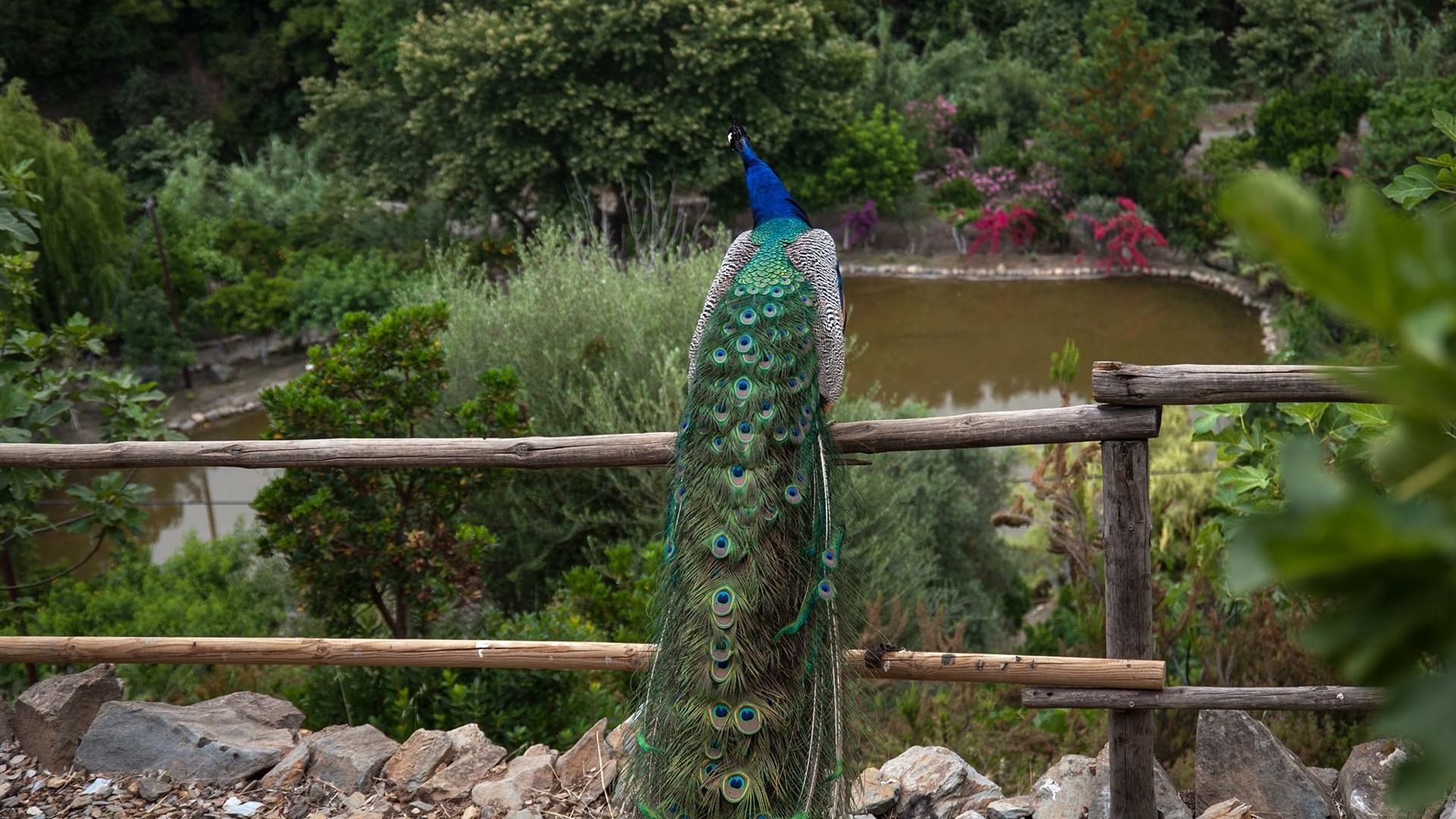
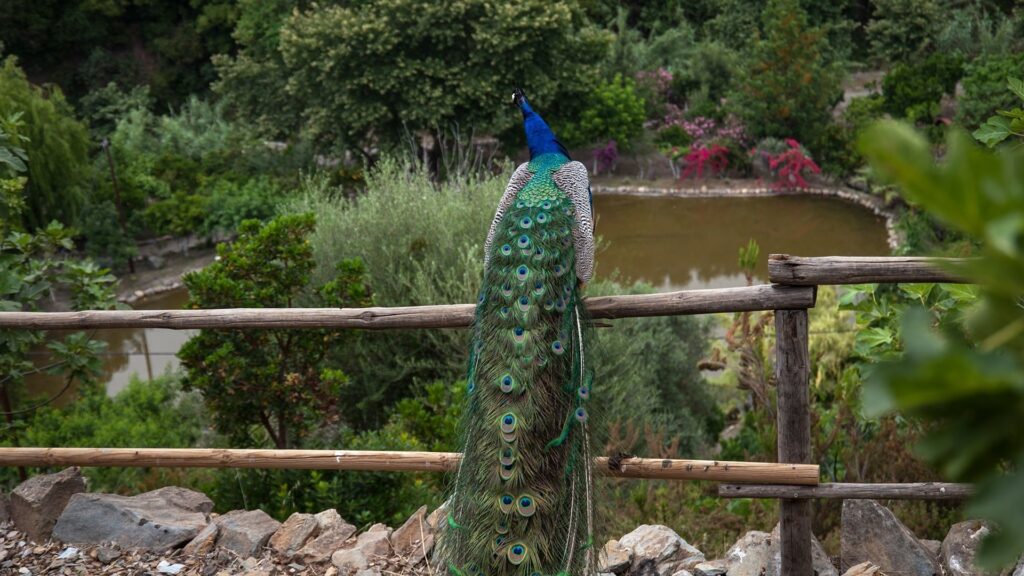
At the bottom of the circuit, the paths level out around the lake. Visitors will encounter a beautiful artificial lake that houses various wild birds, ducks and peacocks, a diversity of butterflies, and many animals including donkeys, deer, and goats. Children tend to stop here for a while. The peacocks in particular get attention.
Along the shaded trails, visitors can also spot wildlife such as hares, hedgehogs, badgers, weasels, and a variety of birds including finches and nightingales. Most of this you will not spot unless you slow down and pay attention. The park rewards a slow pace.
The restaurant
At the entrance of the gardens is a restaurant offering panoramic views of the area, traditional dishes made of locally sourced, organic ingredients and products from the plants of the park. The menu changes seasonally. The restaurant’s menu varies each day, with the garden’s very own herbs, fruits, and seeds used in its dishes.
Eat here. The views down the valley toward Chania are good. The food is honest. This is not a tourist trap restaurant churning out generic Greek food. The kitchen actually uses what grows around it.
A stone amphitheatre, in the style of ancient Greek theatres, is also built next to the gardens and the olive orchards in order to host events including traditional dance nights and weddings.
Local tip: Ask at the entrance about borrowing a traditional Cretan shepherd’s walking stick, locally called a katsouna. Some sections of the path are steep and rocky. The stick genuinely helps, especially on the uphill return section. Visitors can borrow one for free.
When to visit
The park operates from early March to late November. That covers most of the tourist season in Crete, with one important exception: avoid July and August if you can.
During the summer season, the best time to visit is in the morning, to avoid excessive heat and to allow ample time for a stroll without time pressure. But even arriving at nine in the morning in August, the return climb is hot. The upper sections have less canopy cover and the sun is fierce by mid-morning in peak summer.
Spring is genuinely the best time. March, April, May. The herbs are flowering. The fruit trees are in blossom. The temperature is perfect for walking. October and early November are also excellent: cooler air, quieter paths, the trees still carrying late fruit.
Warning: One TripAdvisor reviewer noted that in high summer, many plants look parched and flowers are largely gone by July. If you are visiting specifically for the botanical interest, time it for May or September. A mid-August visit is still enjoyable but the park is at its least impressive.
Warning: The park is not wheelchair accessible and is not suitable for visitors with significant mobility issues. The gardens are steeply sloping with many rocky staircases. If you are unsure, contact the park before visiting.
Frequently Asked Questions
How long does the Botanical Park Chania take to visit?
The average time needed for visitors to wander through the gardens is approximately two to two and a half hours. There is no time limit on how long visitors can stay. Add another hour if you have lunch at the restaurant. Half a day is a comfortable amount of time to do the circuit properly and eat.
Is the Botanical Park suitable for children?
Yes. Genuinely one of the better family options near Chania. The circuit has enough variety to hold children’s attention, the animals at the lake are a highlight, and there is no pressure to rush. Admission is charged for adults, with a reduced rate for children aged six to twelve. Entry for children under six is free.
How difficult is the walk?
The park is experienced by walking a 2.5km downhill-then-uphill loop. The walk is not difficult and is mostly shaded. There are some steep and rocky sections. As the trails are natural and dependent on the soil composition, it is recommended that visitors wear comfortable shoes such as trainers. Do not arrive in flip-flops.
Is the Botanical Park worth visiting if I only have a few days in Chania?
Yes, with one caveat. If you have three days in Chania and sunshine every day, go to the beach first. The Botanical Park is the right choice for a day when you want something different, or when the heat makes a long beach day unappealing. It is also the right choice if you are travelling with people who are not keen on beaches.
Can I get there without a car?
You can get to the botanical park by bus from Chania’s central station. The daily departure is at 9.30am, with a return at 2.30pm. The bus stops in the main seaside villages west of Chania including Agii Apostoli, Stalos, Agia Marina, and Platanias. The return time of 2.30pm is limiting. If you want to eat lunch and take your time, the bus does not give you much flexibility. A rental car or taxi is more practical.
Are dogs allowed in the park?
Dogs are prohibited inside the gardens, as they are the natural habitat of wild animals, in line with regulations of the Greek Forestry Department. However, dogs are allowed on the premises of the restaurant.
The Honest Notes
In recent years, the still-young Botanical Garden of Crete has developed into a top attraction on the largest island of Greece. That growing reputation brings crowds. Best to arrive before mid-morning as the car park fills up. This is especially true on weekends in spring, when Greek day-trippers from Chania make up a large portion of visitors. By 11am on a Saturday in May, the car park can be full.
Warning: The official website is the only reliable source for current opening hours and admission prices. These have changed over the years. Always check botanical-park.com before you go, particularly if you are visiting in the shoulder season or early spring. The park typically reopens in March each year.
The park is not a substitute for Samaria Gorge or a beach day. It is a different kind of experience. Quieter. More reflective. Good for people who find that two weeks of sand and sea starts to feel samey by the end. Good for families with mixed ages. Good for anyone interested in plants, herbs, Cretan food culture, or just somewhere that feels real rather than packaged for tourists.
The park’s restaurant uses produce from the gardens themselves. The herb tea served at the end of a meal comes from plants you were walking past an hour earlier. That is a short loop worth appreciating.
Before You Go
- Water: bring at least one litre per person. The restaurant sells drinks but having water on the trail is wise, especially in summer.
- Shoes: trainers or trail shoes. No flip-flops or sandals. The paths are natural, uneven, and have some steep rocky sections.
- Sun: the upper sections of the circuit have limited shade. Hat and sunscreen are advisable in summer months.
- Toilets: facilities are available at the entrance and at the restaurant.
- Dogs: not permitted on the garden circuit. Allowed in the restaurant area only.
- Cash: bring some. Not all rural Cretan attractions have reliable card payment. Check the official website.
Getting There
By car is by far the easiest option. The Botanical Park is 17km south of Chania, in the village of Fournes, on the road to the Omalos Plateau. Take the road to Omalos and Samaria Gorge. Plenty of signposts on the road indicate the way. Free parking is available on-site. From central Chania the drive takes around 25 minutes. From the coastal resorts of Platanias or Agia Marina, allow 20 minutes. The road is well-maintained and straightforward, the last stretch up from Fournes being the only section with any tight bends.

By bus, there is a daily departure at 09:30 from the central bus station in Chania, stopping at Agioi Apostoloi, Stalos, Agia Marina, Platanias, Patelari, Alikianos, and Fournes before arriving at the Botanical Park. The return bus leaves at 14:30. This works if you want a straightforward morning visit. The 14:30 return does not give you time for a long lunch.
By taxi, the drive from central Chania takes about 25 minutes. You can find taxis at the taxi rank near the central market or ask your hotel to call one. Agree the fare before you go and arrange a return pick-up or ask the restaurant to call one for you when you are ready to leave.
By organised tour, several tour operators in Chania include the Botanical Park as part of a half-day excursion from the city or from coastal resorts.
Practical Information
| Address | 17th km, Chania-Fournes road, Omalos, near Fournes village |
|---|---|
| Opening season | Early March to late November |
| Opening hours | 9am until two hours before sunset (check official site for exact times) |
| Entrance fee | Small fee for adults, reduced for children aged 6-12, free under 6. Check botanical-park.com for current prices |
| Parking | Free, on-site |
| Restaurant | On-site, open during park hours |
| Dogs | Not permitted in the gardens. Allowed in the restaurant area |
| Guided tours | Available on request |
| Official website | botanical-park.com |
Combine With
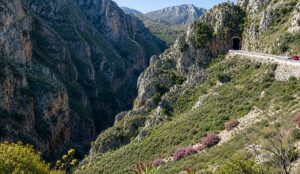
The Botanical Park sits on the road toward Omalos and the Samaria Gorge. The drive south from Chania passes through some genuinely good inland Cretan scenery. Do not just drive straight back to the coast.
Therisso Gorge is about 15 minutes north of the park. A short, easy gorge walk through a narrow canyon, with a handful of traditional tavernas at the far end. Good for lunch if you skip the park restaurant.
Samaria Gorge sits further up the same road, about 40 minutes from Fournes. If you are doing the gorge, the Botanical Park does not make logical sense on the same day. It is a full day on its own. But if you are driving the Omalos road for other reasons, the park is an easy addition on the way back.
Alikianos village is a few kilometres below the park on the same road. The village has a 14th-century Byzantine church, the Church of Agios Georgios, worth a five-minute stop. Easy to miss, worth finding.
Platanias and Agia Marina are the nearest coastal resorts, 20 to 25 minutes northwest. If you want a swim after the walk, either beach is a straightforward drive.
Local tip: The drive up to the Botanical Park in spring, when the orange and lemon trees along the Omalos road are in flower, fills the car with scent through open windows. It sounds like an exaggeration. It is not. Leave the windows down on the way up. It is a small thing, and the kind of thing you remember.