Driving in Crete is the single best decision you can make for your holiday. Full stop. A rental car unlocks a version of this island that buses and organised tours simply cannot reach. The remote beaches, the mountain villages at dusk, the back road that takes you past a goat herd and an abandoned monastery and a woman selling honey from a plastic table. You will not find any of that on the KTEL.
But driving here is not like driving at home. The roads are different, the rules have quirks, the local habits take some adjusting to, and a few practical things can go wrong in ways that ruin a holiday fast. This guide covers all of it honestly. Read it before you pick up your keys.
| Rental car needed? | Yes, for almost everywhere worth going |
|---|---|
| Drive on | Right side of the road |
| Speed limit (town) | 50 km/h |
| Speed limit (highway) | 90 km/h (one section up to 100 km/h) |
| Alcohol limit | 0.05% (0.02% for new drivers and motorcyclists) |
| Emergency number | 112 |
| Toll roads | None on Crete |
| IDP required? | Yes, for non-EU licence holders |
Do You Actually Need a Rental Car for Driving in Crete?
For most visitors, yes. If you rely entirely on public transport, you will depend on the bus timetable and miss many hidden villages, archaeological sites and beaches, concentrating mostly on the touristic northern coast. The KTEL buses are fine for getting between the big towns. They do not serve the Akrotiri Peninsula properly, they do not go to Elafonisi or Balos, and they cannot take you up to Omalos before the Samaria Gorge opens in the morning.
To truly explore everything this island has to offer, a rental car is not just an option, it is essential. That said, if your entire holiday is based in Chania town itself and you plan to do a few organised day trips, you can survive without one. Most people regret not having a car for at least part of their stay.
Book in advance, especially during peak tourist season, to ensure a seamless vehicle rental experience. In July and August, the good cars disappear fast.
The Rules: What the Law Actually Says

Licences and Documents
Licence requirements depend on where your licence was issued. EU licence holders can drive in Greece using their national driving licence. Most non-EU licence holders, such as those from the United States, Canada, Australia and New Zealand, are required to carry an International Driving Permit (IDP) when driving in Greece.
If an IDP is required, it must usually be obtained before travelling, as they are not typically issued abroad. Sort this out at home. The post office or automobile club in your country handles it. It takes a few days and does not cost much.
Documents may be requested during routine police checks, so keeping them easily accessible is recommended. Glove box, not buried in a bag.
Speed Limits
Speed limits in Crete are 50 km/h in built-up areas and 90 km/h on the highway. There is only one stretch of road in Crete where the speed limit is legally above 90 km/h. Speed limits vary from one area to another, even without any obvious or logical reason. There are spots along the north highway where the road is good, straight and with very good visibility, but suddenly a road sign indicates a low speed limit. These are the favourite spots of the police for a traffic check.
Pay attention. The signs change and they mean it.
In late 2025, Greek driving laws were updated, with stricter speed enforcement including wider use of automated checks and higher fines for speeding, especially for repeat or serious offences. Speed cameras are positioned along the highway. They are not there for decoration.
Alcohol Limits
Greece has strict laws against drinking and driving, and Crete is no exception. The legal blood alcohol limit is 0.05% for most drivers, but it drops to 0.02% for motorcycle drivers and those who have held their licence for less than two years.
A blood alcohol content of only 0.05% (equivalent to roughly two beers) will categorise you as legally intoxicated, as opposed to the 0.08% threshold of countries like the United States and England. The practical advice from everyone who knows these roads: if you are driving, do not drink at all. It is not worth the complication.
Other Rules Worth Knowing
Wearing seatbelts is mandatory for all passengers in the car, both front and back. Children under 12 or under 135 cm in height must use a child car seat appropriate for their size and weight. Children in car seats must sit in the back seat.
Using a mobile phone without a hands-free system while driving is strictly prohibited and carries heavy fines. There are no toll roads in Crete, so you do not have to be concerned about this. That is one less thing to think about compared to driving on the mainland.
Warning: The fines under updated 2025–2026 Greek traffic law are not small. Not wearing a seatbelt, using your phone, or speeding all carry significant penalties. If you are driving a rental car, any fine is traced back through the rental company and charged to your card, often with an additional handling fee on top.
Understanding the Roads
The North Highway
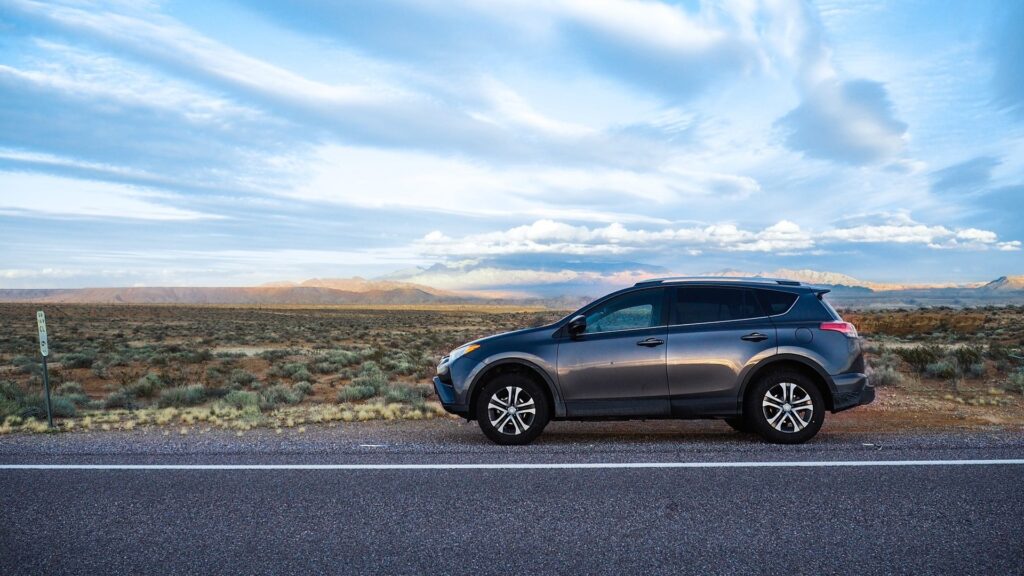
The main highway (VOAK/E75) is the island’s primary artery, connecting all major cities from Kissamos in the west to Sitia in the east, passing through Chania, Rethymnon and Heraklion. It is generally well-maintained and provides the fastest way to travel long distances.
In places it has multiple lanes, hard shoulders and a central barrier, but not along its entire length. Often it will appear like a regular road with one lane, no central barrier and regular junctions and crossroads. Do not assume it is a motorway throughout. Conditions change.
One habit to know immediately: on large roads with emergency lanes, there is an unwritten rule that you drive halfway over the hard shoulder to give space and let other cars overtake you. If a car approaching from behind flashes its lights, it means “I am coming through, please move to the right.” This happens constantly. It is not aggression. Just move over safely.
Mountain Roads
Mountain roads are where you find the real Crete, but they require your full attention. These roads are often narrow, winding and have steep inclines and hairpin turns. You will frequently encounter herds of goats or sheep on the road. Drive slowly, use your horn on blind corners, and always be prepared to stop.
Most mountain roads are made of asphalt and are in fairly good condition, though some might lack guardrails or other protection. That absence of a guardrail between your car and a 400-metre drop does concentrate the mind. Go slowly. The view is better when you are not panicking.
If an oncoming car flashes its lights, it is almost always a warning. It could mean there is a police checkpoint ahead, a herd of goats on the road, or a rockfall. Slow down and proceed with caution.
Local tip: On narrow mountain roads, the uphill driver has priority. If you meet an oncoming vehicle on a section with no passing space, the driver heading downhill typically reverses to find a wider point. Locals know every passing place on their roads. You do not. Be the one who reverses. It is faster and less stressful than a standoff.
Dirt Roads and Remote Beaches
This is where many tourists make an expensive mistake. Driving on unpaved and dirt roads voids all insurance coverage, including full damage waiver. If you break down or damage the car on a dirt road, you are 100% liable for all damages and the expensive towing costs.
The track to Balos Lagoon is the most common example. Some rental companies include a penalty clause specifically for driving on unpaved routes such as the Balos Beach road, including loss of underbody, tyre and glass coverage, plus liability for all resulting damages.
For Balos, take the ferry from Kissamos port. For other beaches with dirt access roads, consider whether the view is worth the financial risk. If you specifically plan to explore remote terrain, rent an SUV and check the contract carefully.
Even with full insurance, damages to the undercarriage, tyres and glass are often excluded. Read the rental agreement before you sign it. Not after.
Local Driving Habits: What No One Tells You
Drive defensively and be prepared for unexpected manoeuvres from other road users, as Greek drivers are known for their confidence and assertiveness. This is a polite way of saying: things will happen on the road that do not happen at home.
Many local drivers treat stop signs more as a yield sign. You should not. Always come to a complete stop at a stop sign for your own safety.
The horn is used more liberally in Crete than in many other countries. It is not always an expression of anger. A short beep-beep can mean “I am here, don’t pull out” or “I am about to overtake you on this blind corner.” Interpret it as communication, not confrontation.
Roundabouts on Crete work differently than in some other countries. Vehicles already on the roundabout must give way to vehicles entering it, which is the opposite of what you may be used to. This catches out British and Irish drivers in particular. Approach all roundabouts slowly and give way to traffic entering from the right.
Warning: Night driving in Crete is genuinely more dangerous than driving in daylight. Rural roads have little or no lighting. Animals appear on the road without warning. Drink-driving is more of a problem after dark. If you have a long mountain drive planned, do it in the afternoon and arrive before sunset. Save the taverna wine for nights when the car is parked at the hotel.
Parking: The Part Everyone Underestimates
Parking is one of the biggest challenges of driving in Crete, especially during peak season.
In Chania specifically: the Venetian Old Town is almost entirely pedestrianised. You cannot drive into it. You must park on the outskirts in designated paid lots or along the streets and pay at a nearby meter or kiosk.
The Old Town is largely pedestrian-only, so you will want to park nearby and explore on foot. The earlier you arrive, the better your chances of securing a good spot. By 10am in July, the free lots are full.
Chania has a park-and-ride option worth knowing about. Located just outside Chania, it offers free parking with a complimentary electric shuttle service that runs every 20 minutes to the Old Town. This option is especially convenient during peak tourist seasons or if you are unfamiliar with navigating narrow city streets.
For street parking, pay attention to the colour coding. Look for parking signs and blue pay-and-display areas. White zones mean parking is free and yellow means there are parking restrictions in place.
Warning: Parking enforcement in Chania city is serious. Police remove licence plates from illegally parked cars, including rental cars. Getting them back involves paying the fine, then visiting the police department between 09:00 and 12:00 with proof of payment and the rental company’s agreement. It will eat most of your day. Do not park where you should not park.
Local tip: In Chania, the Talos Square (Plateia Talou) area on the western edge of the Old Town has free parking and is a short walk to the harbour. It fills up fast in summer. The East Moat Theatre lot near the eastern entrance of the Old Town is larger, less known to first-time visitors, and often has space when everywhere else is full.

Petrol Stations
You will find many petrol stations in Crete, not only on national roads, but on small country roads and inside towns and villages. Many stations close at 8pm, but stations on the highway close much later. In every city or large town, there will be at least one station open at night.
Many stations offer full service and the attendants will fill up for you. Make sure you have some cash ready, as not all of them accept cards. Keep some euros in the car, especially if you are heading to the south coast or mountain interior.
In populated areas, fuel is generally widely available, but stations are quite rare in mountain regions, so top up before setting out on a major road trip. Do not leave Omalos heading into the Lefka Ori mountains on a quarter tank.
What to Do If Something Goes Wrong
For any emergency, dial 112, the European emergency number. This line connects you to all emergency services, including police, fire and medical assistance. Callers to 112 can receive information in English, French and Greek. Operators will stay on the line if you require translation assistance.
If you are in a minor accident, it is standard procedure to exchange contact and insurance information with the other driver. For more severe incidents, wait for the authorities to arrive to file a report. You may need a police report for insurance purposes.
If you get a traffic fine in a rental car: the fine is sent to the rental company, which may deduct it from your credit card along with service fees. Unpaid fines can result in blacklisting and substantial penalties. Deal with them promptly.
Frequently Asked Questions
Is driving in Crete safe for tourists?
Driving in Crete is generally safe for tourists who follow speed limits, respect road signs and drive cautiously on rural or mountain roads. Most challenges relate to narrow roads and unfamiliar terrain rather than traffic conditions. The main risks are speeding on bends you do not know and night driving on unlit roads. Both are avoidable.
Do I need an International Driving Permit (IDP) for Crete?
EU licence holders do not need one. Most non-EU licence holders, such as those from the United States, Canada, Australia and New Zealand, are required to carry an International Driving Permit when driving in Greece. Get one before you travel. They are not issued on the island.
Can I drive to Balos with a standard rental car?
Technically you can drive to the start of the track. But driving on the unpaved track to Balos Lagoon voids all insurance coverage. If you break down or damage the car on a dirt road, you are 100% liable for all damages and the expensive towing costs. The ferry from Kissamos port is the sensible option.
What are roundabouts like in Crete?
Different from the UK and some other countries. In Crete, the right of way in roundabouts is often given to the vehicle already inside the roundabout, unless otherwise indicated by stop or yield signs. This is the reverse of many countries. Always approach roundabouts slowly and with extreme caution.
What car size do I need?
For most travellers visiting Crete for general sightseeing, a compact car is the most practical and economical choice. Renting an SUV or 4×4 is mainly recommended for travellers who specifically plan to explore remote landscapes, mountain roads or isolated beaches where road conditions are rougher. A small car is also much easier to park in Chania and Rethymno’s narrow streets.
Are there traffic jams in Crete?
Driving in the large cities can be challenging due to high traffic during the tourist season. In July and August, avoid driving in Chania and the other cities during rush hours, especially in the city centre. Outside the cities and away from the peak season, traffic is rarely an issue.
The Honest Notes
Most of the things that go wrong for tourists driving in Crete are predictable and avoidable.
The unpaved road insurance issue catches people every year. Someone sees Balos on Instagram, drives the dirt track in a standard rental hatchback, gets a puncture or damages the undercarriage, and discovers the insurance is void. The bill is large and the mood is ruined. Driving on unpaved dirt roads voids all insurance coverage, including full damage waiver. This is not a technicality buried in small print. It is standard policy at every rental company on the island.
The parking in Chania Old Town issue also catches people regularly. It is reportedly impossible to park illegally in Chania City and not have your licence plates removed within 15 minutes. That is an exaggeration, but not much of one. Enforcement is real and the process of getting your plates back is time-consuming.
Phone signal and GPS can be weak or even non-existent in the more remote areas. Download offline maps before you leave your accommodation in the morning. Google Maps and Maps.me both offer offline downloads. Do it over Wi-Fi at breakfast.
Finally, on the question of what other drivers do: you will see locals overtaking on bends, parking on yellow lines, ignoring stop signs, and generally driving in ways that would not be tolerated at home. Do not follow their lead. Drivers in Crete sometimes pass unexpectedly or may not strictly follow lane discipline. Stay alert and anticipate unpredictable driving behaviour from other motorists. Their local knowledge is not yours.
Before You Go
Before You Drive
- Licence: EU holders use national licence. Non-EU holders must carry an International Driving Permit obtained before travel.
- Insurance: Read the rental agreement carefully. Know what is and is not covered. Unpaved roads void all coverage.
- Offline maps: Download before you leave your accommodation. Signal disappears on mountain and south coast roads.
- Cash: Carry some. Not all petrol stations or parking meters accept cards.
- Emergency number: 112. Save it in your phone.
- Rental agreement: Keep it in the car at all times, together with your licence and passport/ID.
- Car condition: Photograph every scratch and dent on the car before you drive away from the rental office. Email photos to yourself for a timestamp.
Practical Information
| Emergency number | 112 (all services) |
|---|---|
| Police | 100 |
| Ambulance | 166 |
| Road assistance (ELPA) | 104 |
| Express Service | 154 |
| Drive on | Right side |
| Speed limits | 50 km/h town, 90 km/h highway |
| Alcohol limit | 0.05% (0.02% new drivers, motorcyclists) |
| Toll roads | None on Crete |
| Roundabout priority | Vehicle already on roundabout has right of way |
| IDP required | Yes, for non-EU licence holders |
| Minimum rental age | Usually 21 with at least one year of licence |
Also Useful From Chania
Once you have the car, here are the routes that make it worthwhile.
Elafonisi Beach. 75 km from Chania, about 90 minutes. The road is entirely paved and straightforward. Go early in summer or the car park is full by 10am.
Balos Lagoon. Take the ferry from Kissamos port rather than driving the dirt track. The road to Kissamos (40 km, 45 minutes) is easy. The ferry journey is part of the experience.
Samaria Gorge. Drive to Omalos (37 km, 45 minutes) to start the gorge from the top. The road up to the Omalos plateau passes through the Topolia Gorge area and is a worthwhile drive on its own.
Sfakia and the south coast. The road over the White Mountains from the north is one of the best drives on the island. About 73 km from Chania and 80 minutes, but allow more time to stop.
Local tip: The drive back to Chania from the south coast via the Imbros Gorge road at late afternoon, when the light comes down flat across the White Mountains and the sea turns copper behind you, is the kind of thing you will talk about for years. There is a small pull-off point just after the village of Imbros with a view that looks painted. Stop there. You earned it.