The Agia Sofia Cave Chania is one of western Crete’s most quietly extraordinary places, and most tourists drive straight past it on their way to Elafonisi. That is a genuine shame. The cave sits 47km southwest of Chania, on the western walls of Topolia Gorge, close to the main road to Elafonisi. It is free to enter. It takes about 45 minutes to visit properly. And it has been used by human beings, continuously, since the Neolithic period.
What makes it unlike anywhere else in Crete is the combination of things it holds in one place. A vast geological cave. A tiny working church built inside that cave. Stalagmites the height of a tall man. Legends going back to Byzantium. And a spider species found nowhere else on earth. It is the kind of place that earns its reputation entirely by being exactly what it is, with no marketing required.
| Distance from Chania | 47km, about 55 to 60 minutes |
|---|---|
| Difficulty | Moderate (approximately 150 to 250 steps on the ascent) |
| Time needed | 45 minutes to 1.5 hours |
| Best season | Year-round. Avoid midday July and August for the climb |
| Parking | Free roadside layby at the base |
| Entrance fee | Free (donations welcomed) |
| Rental car needed? | Yes |
| Family friendly? | Yes, with older children. Younger children will find the steps tiring |
What the Agia Sofia Cave Chania Actually Is
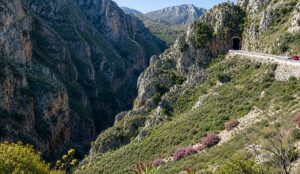
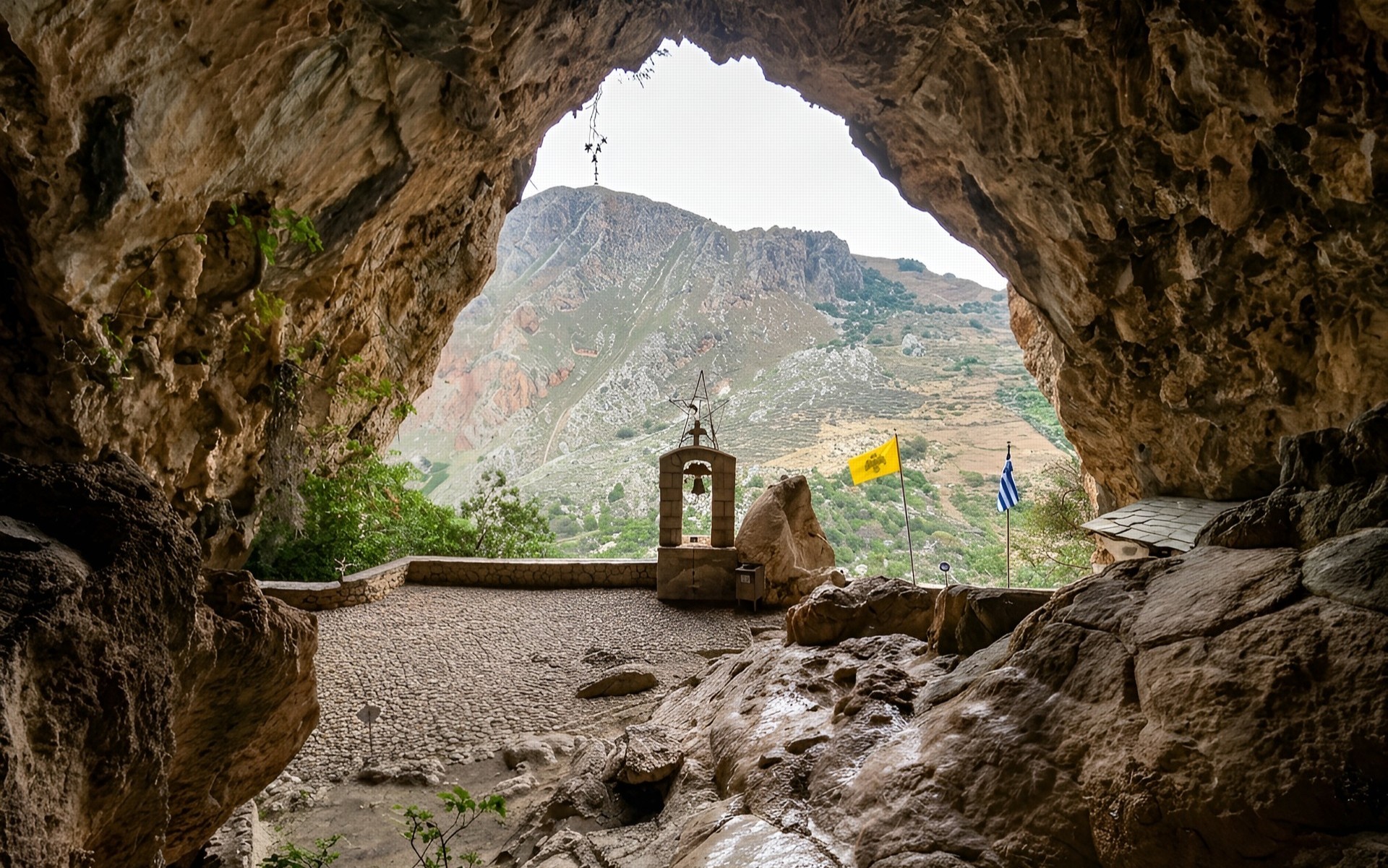
Most people who stop here did not plan to. When driving through western Crete on the road to Elafonisi, just after the village of Topolia, you pass through a small tunnel. At the tunnel’s exit, high up on your right, you will see the opening of a cave and an unusual metallic star reflecting the sun. That star is the marker. Pull over.
From the road you have to climb a number of steps and then follow a small path. As you get closer, you realise the opening is quite large, and the roof of a small church begins to appear on the left. The church is situated inside the cave itself, which is why they share the same name.
The cave’s interior comprises a large 70 by 70 metre single dome, 10 to 20 metres in height, naturally divided into smaller sections by impressive stalagmites. The scale surprises most visitors. You expect a small grotto. What you get is something closer to a cathedral, carved entirely by nature.
The stalagmites reach five to six metres in some places. The stalactites above them are approximately the same dimensions. They are still four to five metres apart from joining in the middle, which gives you some idea of just how large this cave is.
The cave maintains a constant internal temperature of around 16 to 17 degrees Celsius and a humidity level of 75 percent year-round. In August, when the road outside is baking at 38 degrees, that coolness is immediate and welcome. Bring a light layer if you feel the cold.
Unlike some show caves in Greece, Agia Sofia has no artificial lighting and no set paths. Visitors navigate through naturally worn routes winding around the cave’s features. Bring a torch or use your phone light. The interior is not completely dark, but the deeper sections need it.
Warning: The cave floor is uneven. Some sections involve stepping over or between rock formations. Wear proper closed shoes. Sandals and flip-flops are genuinely dangerous here, not just inadvisable.
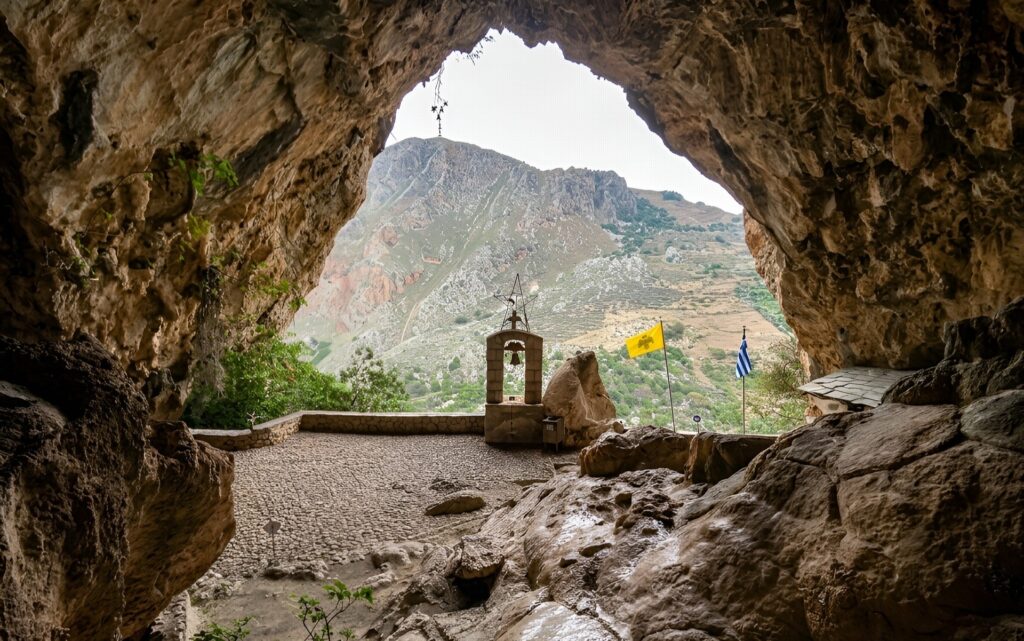
The Church Inside the Rock
The chapel that gives the cave its name is just 6 by 3 metres in size and sits literally inside the cave’s entrance, sharing its left side wall. It is small. It is plain. The church lacks any significant architectural or hagiographical features. But the context is everything. Standing inside a working Orthodox chapel built into the wall of a cave that humans have worshipped in for over 7,000 years, the plainness of the building becomes irrelevant.
Two religious holidays are celebrated here every year: the Tuesday after Easter and the 24th of December. On those days the cave fills with local families, candles, and incense. If you happen to be in western Crete at either of those times, it is worth the detour specifically for the atmosphere.
The cave is named Sophia, meaning Wisdom of God. One legend says that after the fall of Constantinople, Cretan soldiers rescued the icon of the Sophia, the Wisdom of God, and hid it inside the cave. Later, the icon was discovered lodged in the rock, precisely where the small chapel now stands. The story cannot be verified. But it is the kind of origin legend that sticks because it fits the place so perfectly.
There is also a rock inside with an indentation locals call St George’s shoehorn, believed to be the imprint of his horse’s hoof. Go and find it. There are worse ways to spend five minutes in a cave.
Local tip: The chapel is still used for genuine worship. If candles are lit and someone is inside praying, wait quietly at the entrance or explore the cave first and come back. The locals who maintain this site do so with real devotion and appreciate visitors who treat the space accordingly.
The History Goes Back Much Further Than the Church
The church is Byzantine. The cave is far older than that.
The oldest artefact found here is a figurine from the 4th century BC. Archaeological excavations show evidence of human presence from the Neolithic era right through to the present. Neolithic, Early Minoan, Late Minoan, Classical, Hellenistic, and Roman pottery traces have all been discovered inside.
This cave has been used as a place of worship for approximately 9,000 years. The current chapel is a very recent addition to that history.
Successive eras saw Romans, Venetians, and Christians all maintain the cave’s spiritual significance, with the Christians eventually building the modest church within its vast interior.
The cave is also the only known habitat of the spider species Pholcus creticus, which lives exclusively within this cave, adding a layer of scientific interest to its already long history. Speleobiologists have studied the site specifically because of this spider. You will probably not notice it. But it is there.
The Climb Up: What to Expect
The ascent involves approximately 257 steps to reach the cave entrance. Estimates from various visitors range from 150 to 250, depending on where they started counting. The honest answer: it takes about 10 to 15 minutes at a steady pace and it will get your heart rate up.
About a quarter of the way up, there is a small taverna that offers refreshments and toilet facilities. Many visitors have found it a welcome rest stop, particularly for the views from its seating area.
Parking is available only on the roadside, which can be limited during peak season. Arrive before 10am in July and August and you will almost always find space. After that, it gets competitive.
Warning: Do not attempt the climb in the heat of the day in July and August. The steps are exposed. There is very little shade on the ascent. Aim for before 9:30am or after 5pm if visiting in peak summer. The cave itself will then cool you down completely.
There are two ways to reach the cave: one via the roadside steps, the other through an olive grove. The road entrance involves around 150 steps and is considered safer and less physically demanding of the two.
Local tip: The drive through Topolia Gorge itself is worth slowing down for. The road cuts along a cliff face with a deep drop on one side. There are a handful of pull-off points to stop and look down into the gorge. Do not rush this stretch. Most people are so focused on reaching the cave or Elafonisi that they miss some of the best scenery on the whole western Crete route.
Before You Go
- Shoes: closed shoes or trail shoes are required. The cave floor is rocky and uneven. No sandals, no flip-flops.
- Torch: bring one or use your phone light. The back sections of the cave are dim.
- Water: carry water, especially in summer. The taverna on the steps sells drinks but do not rely on it.
- Clothing: the cave temperature stays around 16 to 17°C year-round. A light layer is useful if you feel the cold.
- Dress code: the chapel is still a working church. Cover shoulders and knees out of respect. This matters to the people who maintain the site.
- Toilets: the taverna on the steps has facilities. There are none inside the cave.
- Cash: the cave itself is free. If you stop at the taverna or want to make a donation at the church, bring small cash.
Frequently Asked Questions
Is the Agia Sofia Cave free to enter?
Yes. There is no entrance fee to visit Agia Sofia Cave. It is freely accessible to the public, with no ticket or payment required. Donations are welcomed to help with cave maintenance. If you find the place as good as it is, leave something in the box by the church.
How hard is the climb to the cave?
The climb involves roughly 150 to 250 steps depending on where you start from. The ascent is described as steep and can be strenuous, especially during the hottest hours of the day. Most reasonably fit adults manage it without difficulty. The stairs are not extreme and children can manage them, with places to sit and rest on the way.
Can children visit the cave?
Yes, older children handle it well. Younger children (under six or seven) may struggle with the climb and the uneven cave floor. The cave is moderately suitable for children and elderly visitors given the large entrance, but varying chamber heights and the uneven floor may require caution and assistance for small children or those with mobility challenges.
How long does a visit take?
Allow 45 minutes to an hour and a half. The climb up takes 10 to 15 minutes each way. Time inside the cave depends on how much you explore. Most visitors spend 20 to 30 minutes inside. If you add time at the taverna and time looking at the gorge views, budget 90 minutes total.
Is it worth stopping at if I am going to Elafonisi?
The cave is frequently recommended as a worthwhile stop for those travelling to or from Elafonisi beach in western Crete. It adds roughly 45 minutes to your journey and costs nothing. The cave and the beach make a very good day together. Do the cave first, on the way there, before the heat builds.
Is there artificial lighting or a guided tour inside?
No. Unlike some show caves in Greece, Agia Sofia has no artificial lighting. Guided tours inside the cave are generally not organised, and visitors explore independently. Bring your own torch. It is a completely self-guided experience.
The Honest Notes
The cave is genuinely impressive. It is also completely unpolished. There are no info panels, no lighting system, no ticket booth, no guided commentary. You arrive, you climb, you go in, you look around. That is the entire experience. Some people love that. Others feel slightly lost without structure.
Warning: The road through Topolia Gorge is narrow in sections. Buses to Elafonisi also use this road. If you meet a large vehicle coming the other way on one of the tighter bends, one of you will need to reverse. Drive carefully and stay alert. This is not a road for fast driving.
The taverna halfway up the steps has a fine view and cold drinks. Some visitors have also reported feeling pressured to purchase something there. Go in prepared. You are not obliged to buy anything. But the cold water after the climb is genuinely useful.
The cave has pigeons. Some visitors note the presence of birds, particularly pigeons, inside the cave, which adds to the atmosphere, while others who are sensitive to birds may find them unsettling. They have been there a long time. The figs trees growing at the cave entrance have been there even longer.
Getting There
By car: This is the only practical option. The journey from Chania spans approximately 47.5 kilometres with an estimated travel time of one hour. Take the main road west toward Kissamos, then follow signs south toward Elafonisi and Topolia. You will pass through the village of Topolia and then enter the gorge road. Just after the tunnel exit, high up on the right, the metallic star marking the cave entrance will catch your eye. Parking is available on the street layby near the cave entrance.

By bus: There is a KTEL bus service from Chania that runs to Elafonisi during the summer season, passing through Topolia. The bus does stop near the cave. However, times are infrequent and a bus visit gives you very little flexibility. You would also need to time your return carefully. A rental car is far more practical for this route.
By taxi: Possible but expensive for this distance. Taxis would need to wait, which adds significantly to the cost. Not recommended unless you are combining this with a full day tour of western Crete.
By organised tour: Several tour operators in Chania run full-day trips combining Agia Sofia Cave with Elafonisi beach. These work well if you do not want to drive the gorge road yourself.
Practical Information
| Address | Topolia Gorge road, near Topolia village, Kissamos, Chania |
|---|---|
| Distance from Chania | 47km, approximately 55 to 60 minutes |
| Opening hours | Open during daylight hours, year-round |
| Entrance fee | Free (donations welcomed) |
| Parking | Free roadside layby at base of steps |
| Steps to cave | Approximately 150 to 250 depending on route |
| Time needed | 45 minutes to 1.5 hours |
| Toilets | At the taverna on the steps (purchase may be expected) |
| Religious festivals | Tuesday after Easter, 24 December |
| Nearest village | Topolia (2km) |
Combine With
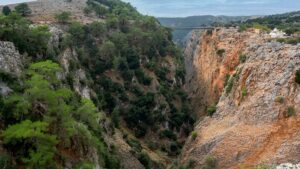
Topolia Gorge: The gorge road itself is the scenery. The road is bounded by a sheer rock face on one side and a deep chasm on the other, with the gorge plunging around 300 metres below. Stop at the viewpoints. Do not just drive through.
Elafonisi Beach: The obvious pairing. Elafonisi is 28km further south and west from the cave. Most people do the cave on the way to the beach or on the way back. It works well in either direction, though doing it on the way out means you arrive at Elafonisi earlier and beat some of the crowds.
Falassarna Beach: A larger, less crowded alternative to Elafonisi on the west coast. The drive back from Agia Sofia via Kissamos passes close to Falassarna. Good choice if you want a beach stop without the coach-tour crowds.
Chrissoskalitissa Monastery: About 20km south of the cave, on the road continuing toward Elafonisi. A clifftop monastery with real atmosphere and good sea views. Worth a brief stop if you are making a full day of the western Crete loop.
Local tip: Most visitors to western Crete follow exactly the same route: Chania to Elafonisi, beach, back to Chania. The drive through Topolia Gorge at late afternoon, when the light drops into the canyon and the rock walls turn amber, is one of the best things about this route. Stop the car somewhere along the gorge on the way home. Sit for five minutes. The gorge does not ask anything of you except that you pay attention.