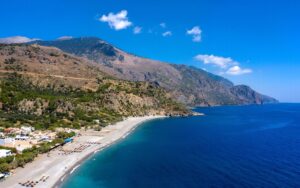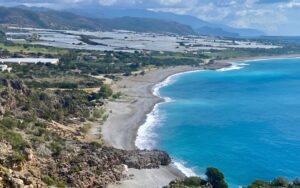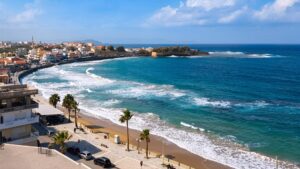
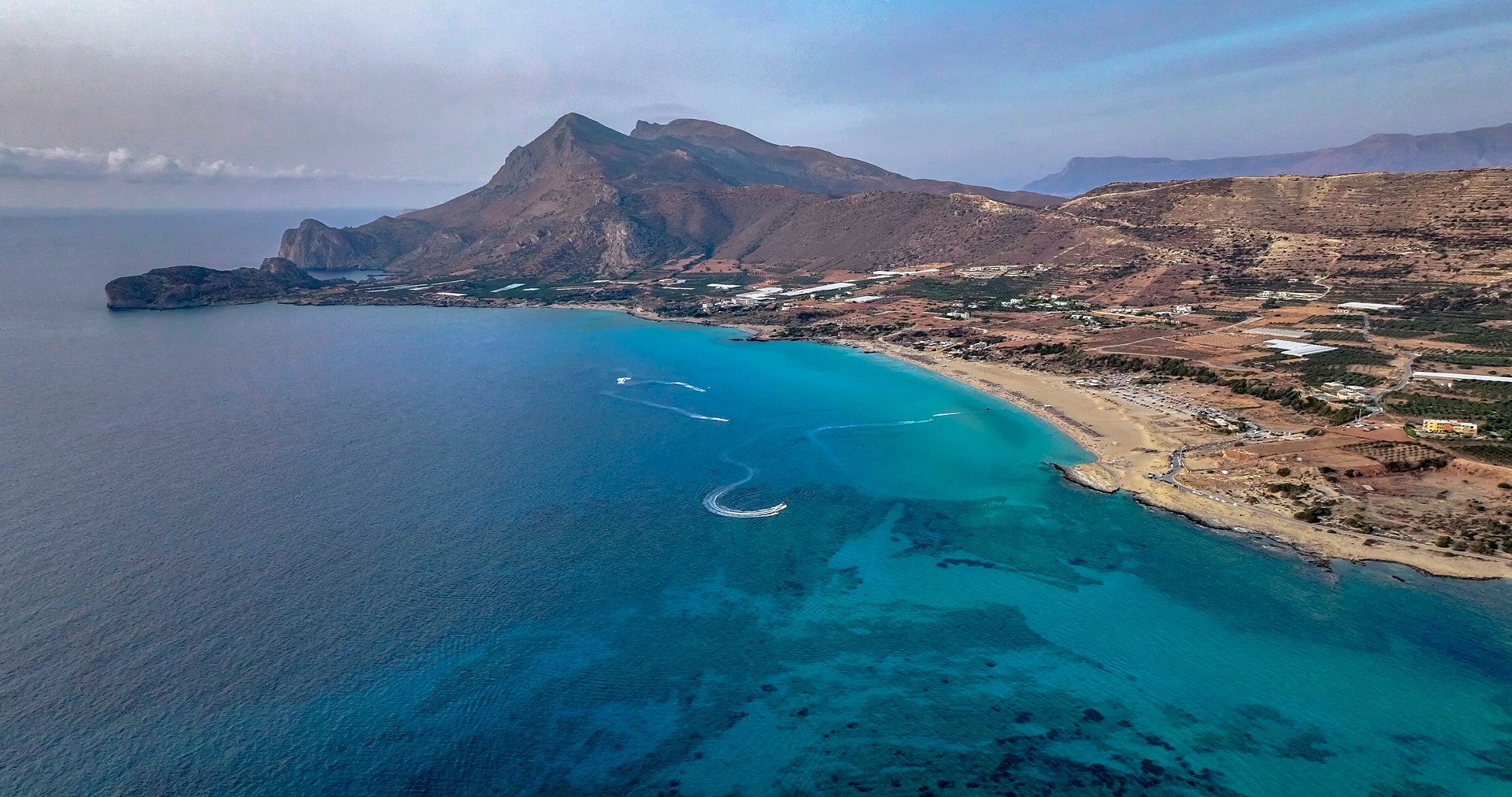
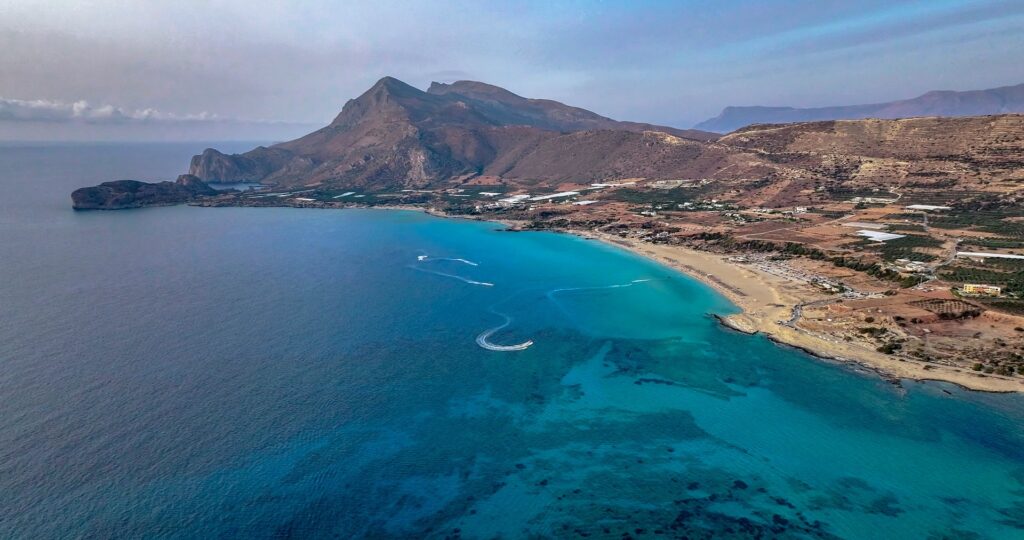
Falassarna Beach Chania is one of the great beaches of the Mediterranean, and not in the way that phrase gets used about every sandy strip in Greece. It is three kilometres of pale sand and blue-green water facing due west into open sea, with nothing between you and the horizon. On a clear evening the sun drops straight into the water in front of you, and people stop talking to watch it.
Most beaches in Crete have one selling point. Falassarna has several: space, water colour, good facilities, the best sunset on the island, and enough different sections to suit families, surfers and people who just want quiet. It also has two things the brochures leave out: an open sea that can turn rough quickly, and some of the highest sunbed prices in western Crete. Both are easy to handle if you know about them.
| Distance from Chania | About 60km, 60 to 75 minutes by car |
|---|---|
| Distance from Kissamos | About 15km, 20 minutes |
| Time needed | Half a day to a full day, ideally until sunset |
| Best season | June and September. Businesses open roughly May to October. |
| Entrance fee | None |
| Parking | Mostly free lots behind the beach, full by about 9:30am in July and August |
| Sunbeds | From around €15 to €80 depending on the beach bar and the row |
| Family friendly? | Yes, if you pick the right section and a calm day |
The Beach, Section by Section
Falassarna is not one beach but a string of sandy sections separated by rocks and dunes. Knowing which one you are heading for is the most useful thing you can do before you arrive.
- Pachia Ammos (the main beach). About a kilometre long and very wide, fully organised with beach bars, sunbeds, water sports and a volleyball court. This is where most people go, and because it is so broad it absorbs crowds better than almost any beach in Crete.
- The northern beaches. Smaller coves near the chapel of Agia Paraskevi, quieter and partly unorganised. At the far northern end, near the ancient site, is a small pebbly inlet with clear water for snorkelling. This area is also used by nudists.
- “Baby Beach” in the south. Rocks create shallow, sheltered pools, which makes this the best part of Falassarna for small children, with a few sunbeds nearby.
Swimming Safety: Read This Before You Go In
This is the part most guides skip. Falassarna faces the open sea and catches the prevailing northwest wind. Mornings are often calm, but by early afternoon, especially in July and August, the wind picks up and the waves can get big. Visitors also regularly mention that the seabed is uneven: water that looks shallow can drop off suddenly, and the waves pull harder than they look from the sand.
Warning: On windy days, swim only in front of the organised beach bars, keep children in the shallows or at Baby Beach, and do not swim out alone. If there are waves breaking on the main beach, treat them seriously. The same wind that makes Falassarna great for windsurfers makes it a poor choice for weak swimmers.
The water is also noticeably colder than on the south coast or in sheltered northern bays, especially in May and early June. By September it is at its warmest and best.
Costs, Food and Facilities
Sunbed prices vary hugely. Some beach bars charge around €15 to €25 for two beds and an umbrella. Front-row beds and cabanas at the busiest bars can cost €50 to €80. The good news is that the beach is long and much of it is free. Bring a towel and umbrella, walk away from the main bars, and you pay nothing.
There are showers, toilets and changing areas at the beach bars, and several tavernas along the beach and the road behind it, serving straightforward Greek food: grilled fish, salads, mezedes. The closer to the sand, the more you pay for the view. For a wider choice in the evening, Kissamos is 20 minutes away.
Warning: When the afternoon wind is strong, fine sand gets into everything: food, eyes, phones. If strong wind is forecast, come in the morning and leave by early afternoon, or come late for the sunset.
The Sunset
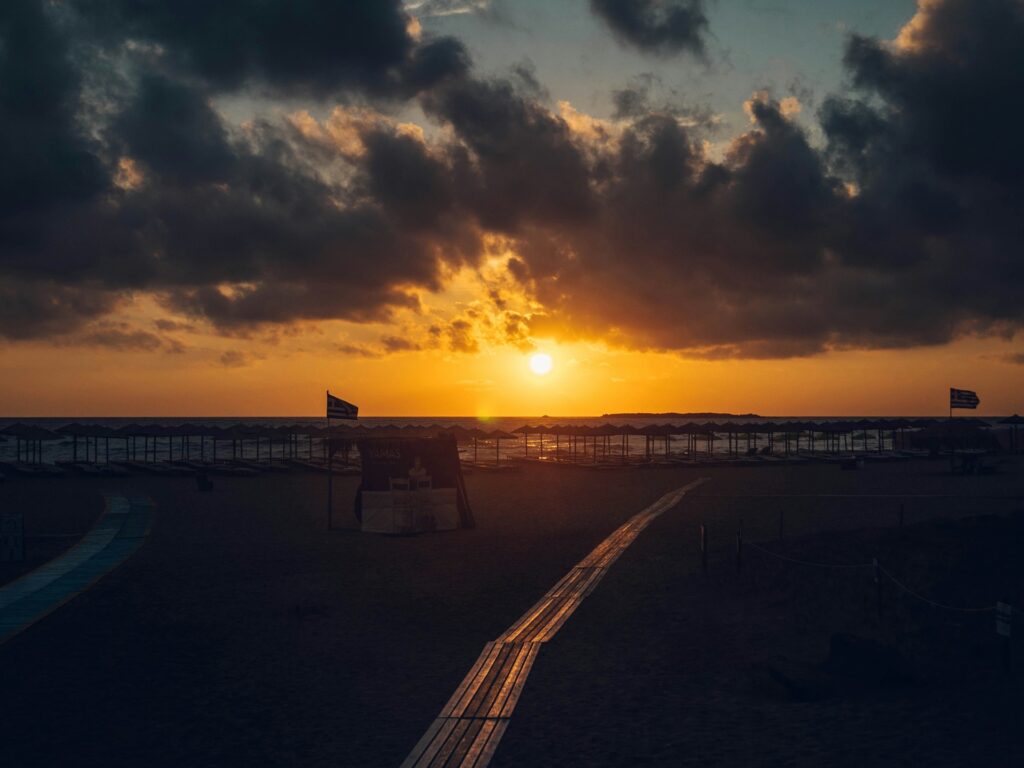
Falassarna has the most famous sunset in Crete, and it earns it. The beach faces due west with an unobstructed horizon. On clear evenings the water turns orange and then red, and the mountains behind you go purple. The day-trippers start to leave around 5pm, so the hour before sunset is often the quietest and most beautiful time of the day. Plan your day around it.
Ancient Phalasarna
At the northern end of the beach, about a kilometre from the main section, are the ruins of ancient Phalasarna: city walls, towers, an acropolis and a large stone “throne” carved into the rock. The most remarkable thing is the old harbour. The land here rose several metres in an ancient earthquake, and the harbour that once held warships is now dry ground, well away from the sea. It is free to walk around and worth half an hour, especially in the early evening light.
When to Go
June and September are ideal: warm water, calmer crowds and everything open. July and August are hot and busy, with the main parking full by around 9:30am. In October it is quiet and still warm enough to swim, though some businesses start to close. From November to April most tavernas and beach bars shut completely.
How to Get to Falassarna
By car is the best way. Take the national road west to Kissamos, continue through the town and follow the signs for Platanos and Falassarna. The last three kilometres are a narrow, winding descent to the beach, so take it slowly, especially coming back up in summer traffic. Allow 60 to 75 minutes from Chania.

By bus, KTEL runs a seasonal service from Chania bus station via Kissamos, taking around an hour and forty minutes. Outside high summer, buses are few, and timetables change every season, so check the current schedule at the bus station or on the KTEL website before you rely on it. A taxi from Kissamos is the fallback.
By organised tour, some companies in Chania run Falassarna trips or combine it with other stops in the west. They solve the driving, but usually leave before sunset.
Where to Stay in Falassarna
Staying in Falassarna means you can be on the beach in the morning before the crowds, and watch the sunset without a long drive back. Accommodation here is spread out and fills up in summer, so book early.
Frequently Asked Questions
Is Falassarna safe for swimming?
On calm days, yes. On windy afternoons the waves can be big and the seabed drops off suddenly in places. Swim in the mornings, stay near the organised sections, and keep young children at Baby Beach.
Is parking free at Falassarna?
Mostly, yes. There are large free lots behind the main beach, but in July and August they fill by around 9:30am. After that, expect a longer walk from roadside parking.
Falassarna or Elafonisi?
Elafonisi has the shallow lagoon, which is better for toddlers. Falassarna has more space, better swimming on calm days and a far better sunset. They are about 80 minutes apart, so give each its own day.
The Honest Notes
Falassarna’s reputation is earned. But the sea here is open sea, not a lagoon, and it deserves respect on windy days. The main beach bars are expensive, and you do not have to use them. And some visitors notice rubbish left around the sunbeds in the evening, blown across the sand by the wind. Take yours with you.
Before You Go
- Wind: check the forecast. Calm mornings are best for swimming.
- Water and snacks: beach bar prices are high.
- Shade: an umbrella if you plan to use the free sections.
- Shoes: sandals with a sole for the northern rocks and the ancient site.
- Snorkel mask: for the clear water at the northern end.
- Time: stay for the sunset.
Combine With
Balos Lagoon is on the Gramvousa Peninsula north of Kissamos. Go to Balos early in the day and finish at Falassarna for sunset, but do not try to rush both into one morning.
Kissamos is the nearest real town, with a harbour, seafront tavernas and the ferries to Balos. A good base for a few days in the west.
Polyrrenia, an ancient hilltop city above Kissamos, is free, quiet and has wide views over the bay.
Local tip: If you have a week in Chania, come to Falassarna twice: once on a calm weekday morning in June or September, when the sea is flat and clear, and once late on a clear evening with nothing planned for dinner, just to sit on the sand and watch the sun go down. They feel like two different places.