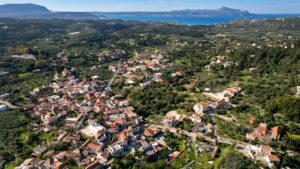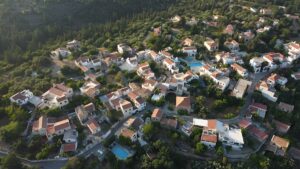
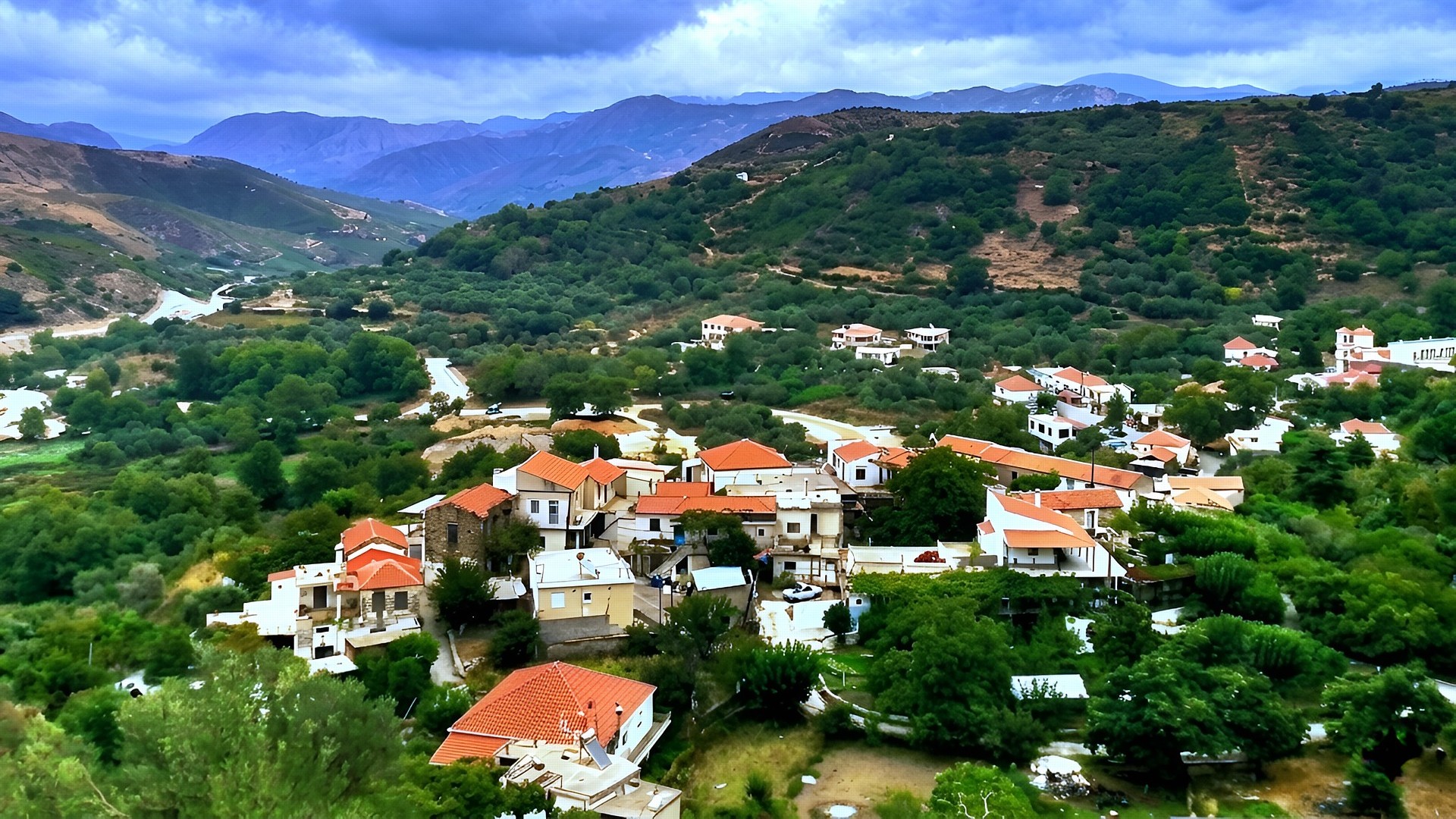
Elos village Chania sits in the hills of western Crete at 560 metres above sea level, deep in chestnut country, on the road most people only use to reach Elafonisi beach. Most tourists drive straight through. That is a mistake. This is a small, traditional village in the Chania regional unit, situated approximately 60 kilometres southwest of Chania town. It looks unremarkable at first glance. A few stone buildings, a shaded square, tavernas with tables outside. But slow down, park under the trees, and Elos turns into one of the most genuinely Cretan stops in the entire region.
The village sits at the base of Mount Ai Dikios near the origin of the Tyflos River, surrounded by lush chestnut and plane trees, numerous springs, and streams that create a cooler, refreshing microclimate, particularly at night. In July and August, when the coast is sweltering and Elafonisi is packed, Elos feels ten degrees cooler and a world away from the crowds. That is reason enough to stop. The chestnut forest is another. And if you happen to visit in late October, there is an annual festival that is one of the most authentic events anywhere in western Crete.
This is not a place with polished tourist infrastructure. There is no admission fee, no museum, no guided experience. What there is: a medieval church with remarkable frescoes, proper Cretan food, and a forest that turns a deep amber-gold every autumn. For a lot of visitors, it ends up being the most memorable stop of the whole trip.
| Distance from Chania | 57 to 60 km, about 75 to 90 minutes |
|---|---|
| Difficulty | Easy. Village walking on flat or gently sloping ground. |
| Time needed | 1.5 to 3 hours, or a full day combined with Elafonisi |
| Best season | May, June, September, October. October for the Chestnut Festival. |
| Parking | Free on the village streets and near the square |
| Entrance fee | None for the village. Church may request a small donation. |
| Rental car needed? | Yes |
| Family friendly? | Yes |
What Elos Village Chania Is Actually Like
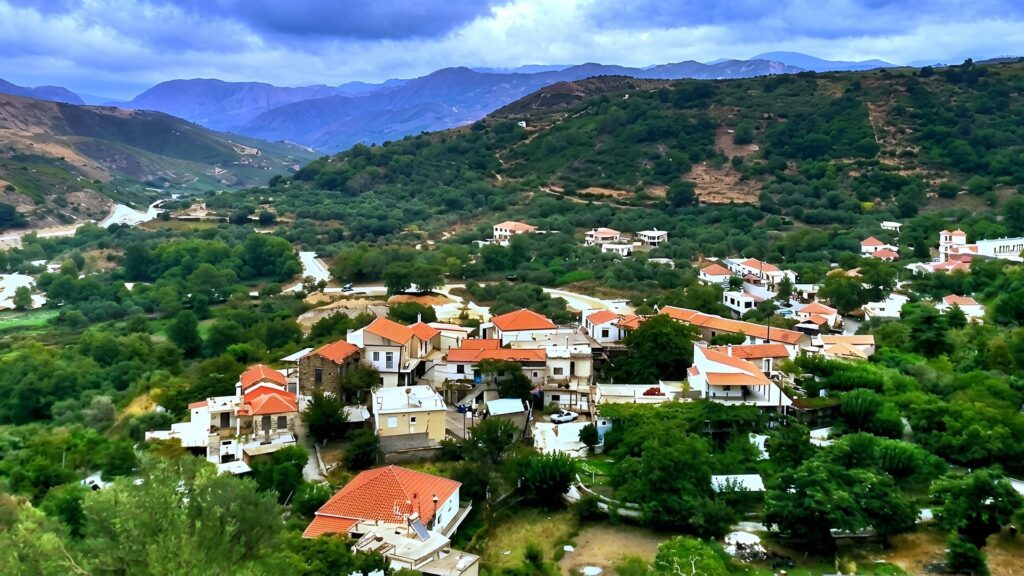
Stone-built houses with terracotta roofs, narrow cobblestone streets, and small squares shaded by plane trees give Elos its character. This is not a restored heritage village. People live here. The village had 130 residents in 2001 and 2011, decreasing to 112 by 2021. It is a small community that has stayed small. The tavernas are family-run. The local produce on sale by the road is grown locally. The raki at the end of your meal is from someone’s still.
Built at an altitude of 560 metres above sea level, this verdant village is full of running waters and lush plane and chestnut trees that provide ample shade even on the hottest summer days. In August, that matters. The coast can feel relentless. Up here it is genuinely comfortable, and the sound of water running through the village is constant.
The main product of the village is chestnuts. That is not a tourism slogan. It is simply true. There is a chestnut packing plant in the village, as well as restaurants, a gas station, grocery stores, a bakery, and rental rooms. The chestnut trees are everywhere, covering the hillsides in every direction. If you are visiting in summer they are green and full. In autumn, they are extraordinary.
Local tip: Stop at the village square and sit down for a coffee or a meal before you do anything else. The shade from the plane and chestnut trees is real. The pace here is deliberately slow. If you arrive rushing to make it to Elafonisi by 10am, you will miss what Elos actually is.
The Chestnut Forest
Elos valley holds the largest plantation of chestnut trees on Crete. The trees cover the hillsides above and around the village. They are ancient and enormous in places, with trunks that make clear these are not recent plantings. The grove paths are walkable and shaded, and even in summer they offer a different kind of landscape from anything you will find on the coast.
From mid-October to early November, the chestnuts are harvested, and the village celebrates with local festivals and feasts. This is the best time to see the forest. Elos transforms into a golden colour as the leaves turn shades of amber and chestnuts fall from the trees, ready to be harvested. You can walk the paths around the village freely. There are no trails specifically marked for tourists, but the land is open and the walking is easy. Follow the road through the village uphill and the forest opens up around you within a few minutes.
The surrounding landscape, including Elos, is protected as part of a Natura 2000 site for its biodiversity. That designation means the forest ecosystem here is considered significant at a European level, not just a local landmark.
The name Elos may come from the stream that crosses the village. The Xiropotamos stream crosses the village, and it is possible that it formed a marsh in the area, from which the village took its name.
The Chestnut Festival
Every year since the 1960s, a chestnut festival has been organised in the village at the end of October. It is one of the oldest recurring village festivals in western Crete. The Chestnut Festival in Elos Village is a cherished autumn tradition, celebrated every year on the third Sunday of October. That said, the exact date varies, and in recent years it has expanded to multiple days. The 2025 Chestnut Festival in Elos took place from Friday 24 October to Sunday 26 October.
Festival-goers can enjoy live music, traditional folk dances, and the island’s famous spirit, tsikoudia. The festival also showcases traditional Greek costumes, hosts various competitions, and provides a lively atmosphere. The food is the main attraction. Chestnuts are incorporated into a variety of traditional dishes, including chestnut soup, chestnut pies, and desserts like chestnut honey cakes.
The exact date of the festival depends on the weather and is usually announced a few days before the event. Do not rely on fixed dates found online. Check the Kissamos municipality website or the village Facebook page in the week before you plan to visit.
Warning: The festival draws significant crowds from across western Crete. The village has very limited parking. If you plan to attend, arrive early. Afternoon visits on the Sunday can involve real congestion on the single road into the village.
The Church of Agios Ioannis Theologos
This is the reason to linger in Elos even if the chestnuts mean nothing to you. Near the aqueduct in the village, you will find the 14th-century church of Agios Ioannis, which has some notable frescoes. The church is small and easy to walk past without a second glance. Go inside.
The church has a single nave with a vaulted ceiling and is richly decorated with frescoes attributed to Ioannis Pagomenos, a well-known painter from Crete who decorated many rural Orthodox churches during the Venetian rule. Pagomenos was active in Venetian-ruled Crete, and he created fresco cycles for rural Orthodox churches under commission from ordinary members of the local peasant communities.
The church measures 11.20 by 4.46 metres. There are no documents confirming its exact construction date, but based on analysis of the murals it is dated to the first half of the 14th century. The frescoes are well preserved. You are looking at art that is 700 years old, inside a functioning village church, with no ticket desk and no queue.
Local tip: The church may be locked. Ask at the taverna on the square or at a nearby house. Someone will have a key. This is normal for small Byzantine churches in Cretan villages, and locals are accustomed to the request.
The Old Aqueduct
In the village square, there is an old aqueduct, which has been designated as a historical preserved monument. Behind the taverna on the main square stand the remains of the aqueduct that used to power the old mill. It is not a grand Roman ruin. It is a quiet piece of village infrastructure that has been there for centuries, surrounded by the daily life of the square. Worth a look and a few minutes of attention.
Food and Drink in Elos
The village is home to several family-run tavernas that serve traditional dishes made from locally sourced ingredients. Fresh cheese, honey, wild herbs, and chestnuts feature prominently on the menus.
The well-known taverna Kastanofolia serves authentic Cretan cuisine under shade-giving plane trees. It is consistently mentioned by visitors as a good lunch stop on the Elafonisi route. Beyond chestnuts, the village is known for high-quality local cheese produced from sheep and goats that graze in the surrounding hills, and fresh honey, often infused with wild herbs and flowers from the region.
The chestnuts harvested from the local forests are often roasted and enjoyed as a simple snack. In autumn you will find them roasted on open fires in the square. In summer, look for chestnut products in the shops: honey, preserves, dried chestnuts, chestnut flour. These make good gifts and are genuinely local products.
Cash only is common in Elos tavernas. Bring euros.
The Drive to Elos: Topolia Gorge
Getting to Elos is part of the experience. The most common route from Chania is through Topolia Gorge. The gorge runs along the road leading to Elafonisi via Elos.
The gorge is 1,500 metres long with steep slopes. The vertical walls reach a height of 300 metres and the width of the stream bed varies between 5 and 50 metres. You drive through it, not hike it. The road is narrow in places and there is a single-lane unlit tunnel. A new fully paved road has been opened, offering a safer and more comfortable alternative to the narrowest section of the Topolia Gorge route. It starts near the village of Kaloudiana and allows drivers to bypass the tight tunnel and the most winding part of the old road.
Navigation apps like Google Maps may not yet reflect this new route accurately. GPS directions will still often guide you through the old gorge road and tunnel. Follow the road signs for the new bypass if you prefer an easier drive. Take the old road if you want the drama. Either way, you end up in Elos.
At the beginning of the narrow part of the gorge, it is worth stopping to visit the Cave of Agia Sofia, located just above the main road. There are steps up to the cave entrance, and inside it is a Byzantine church carved into the rock. Allow 30 to 45 minutes for this detour.
Warning: The old Topolia road is very narrow in sections. If you are not comfortable with mountain driving, single-lane roads, and blind corners, use the new bypass road. Large campervans and motorhomes should always take the new route.
Before You Go
- Cash: card machines are unreliable in small village tavernas. Bring euros.
- Fuel: there is a petrol station in Elos. Fill up if you plan to continue to Elafonisi.
- Church dress code: cover shoulders and knees when visiting Agios Ioannis church. It is still an active place of worship.
- Chestnut Festival: dates are confirmed only a few days in advance. Check local sources before planning a specific trip.
- Roads: the Topolia Gorge road is narrow. Drive slowly and use the passing places if you meet oncoming traffic.
- Time: Elos is most naturally combined with Elafonisi or Falassarna as part of a full day out from Chania.
Frequently Asked Questions
Is Elos village worth visiting?
Yes, if you are already driving to Elafonisi, it costs you nothing and adds 30 to 60 minutes. The chestnut forest, the Byzantine church, and a proper lunch under the trees are genuinely worthwhile. If you are visiting in October, the Chestnut Festival makes it a destination in its own right.
When is the Elos Chestnut Festival?
The festival is celebrated every year on the third Sunday of October, though in recent years it has expanded to a three-day weekend event running Friday to Sunday. The exact date depends on the weather and is usually announced a few days before. Check the Kissamos municipality website or local social media for confirmed dates each year.
How long do you need in Elos?
For a quick stop with coffee and a walk around the square, allow 45 minutes. For lunch and a walk through the chestnut forest and church visit, allow 2 to 3 hours. Combined with Elafonisi, it forms a very full day from Chania.
Can you visit Elos without a car?
Buses from Chania to Elafonisi pass through or near Elos, so it is technically possible. But the schedule is limited and a bus stop is not the same as exploring freely. A rental car is the only practical option for making the most of this area.
What is there to eat in Elos?
Traditional Cretan food: grilled meats, local cheese, dakos, wild greens, and chestnut-based dishes in season. Chestnuts are roasted and enjoyed as a snack, and also used in chestnut soup, pies, and honey cakes. Honey and cheese from local producers are available to buy and take home.
Is Elos good in summer?
Built at 560 metres above sea level, the village is full of running waters and shaded by chestnut and plane trees that provide ample shade even on the hottest summer days. It is noticeably cooler than the coast. For a break from beach heat, it works well. But autumn is genuinely the best time to visit.
The Honest Notes
Elos is not a destination that will exceed high expectations if you arrive expecting a polished tourist experience. The village is quiet, small, and unpretentious. Some visitors find it underwhelming if they stop only briefly. The payoff comes from slowing down, eating properly, and walking the forest paths.
Warning: The Chestnut Festival is genuinely popular with locals from across the Kissamos region. It is not a tourist production, which is what makes it good. But it does get busy on the main festival Sunday. The village roads are not designed for this volume of traffic. Come early or come on the Friday or Saturday instead of Sunday.
Unlike many other parts of Crete that have become heavily commercialised due to tourism, Elos retains its traditional character. That is true, and it is the best thing about the place. It is also why you should manage expectations about facilities. The tavernas do not take reservations. The church may be locked. The forest paths are not waymarked to a standard that satisfies all hikers.
Warning: Most visitors to this area drive on to Elafonisi after Elos, which gets very crowded between 10am and 3pm in July and August. If you plan to do both, start early from Chania, visit Elafonisi first, and stop in Elos on the way back. The light in the late afternoon on the drive back through the gorge is better for photography anyway.
Getting There
By car: From Chania, take the E90 coastal road west toward Kissamos. At Drapanias or Kaloudiana, turn south following signs for Topolia, Elos and Elafonisi. The road runs through Topolia Gorge on the way to Elos. The drive takes approximately 75 to 90 minutes depending on how many stops you make. A new fully paved road now offers a safer alternative to the narrowest part of the gorge route. Both roads are signposted. Parking in the village is free and informal along the main street.

By bus: KTEL buses run from Chania to Elafonisi and pass through Elos. Schedules are seasonal and limited. This works for a one-way journey but makes a return trip complicated. Check the KTEL Chania website for current timetables.
By taxi: Possible but expensive for a return trip from Chania. Better suited as a one-way option if you have the flexibility.
Organised tour: Several operators run day trips from Chania that combine Elos with Elafonisi and sometimes the Agia Sofia cave.
Practical Information
| Village | Elos, Municipality of Kissamos, Chania |
|---|---|
| Distance from Chania | 57 to 60 km |
| Drive time | 75 to 90 minutes |
| Elevation | 560 metres |
| Chestnut Festival | Third Sunday of October (usually extended to Fri-Sun) |
| Church of Agios Ioannis | In the village centre, near the aqueduct. May be locked. Ask locally. |
| Parking | Free, on street |
| Entrance fee | None for the village or forest. Church: small donation appreciated. |
| Facilities | Tavernas, bakery, grocery, petrol station, toilets at tavernas |
| Mobile signal | Generally available in the village, patchy in the gorge |
Combine With
Topolia Gorge and Agia Sofia Cave. On the road between Kissamos and Elos. The Cave of Agia Sofia is located just above the main road at the beginning of the narrow gorge section and houses a small Byzantine church carved into the rock. Allow 30 to 45 minutes.
Elafonisi Beach. About 20 minutes further south from Elos. The logical continuation of a day trip from Chania. Go early in summer to avoid the worst of the crowds, which build significantly after 10am.
Milia Mountain Retreat. A short drive from Elos near the village of Vlatos. The eco village of Milia is a restored original 17th-century rural stone village with an absolute back-to-basics philosophy. It was abandoned in 1948 and revived in the early 1990s by local descendants. Worth a meal at the restaurant even if you are not staying overnight. Do not use GPS navigators to find Milia. Set your destination as Vlatos and follow the wooden signs from there for the final 3 km.
Chrissoskalitissa Monastery. Approximately 20 minutes south-west of Elos on the road to Elafonisi. The 17th-century Orthodox monastery stands on the rocks overlooking the Libyan Sea. Check opening days before visiting. Most monasteries in Crete are closed on Wednesdays and Fridays.
Local tip: The drive back from Elos to Chania through Topolia Gorge in the late afternoon light, with the sun dropping behind the western ridges and the gorge walls turning orange, is one of those moments that earns western Crete its reputation. Do not rush it. Pull over where the road widens just north of the tunnel. Look up. Then drive home slowly.