Is Chania safe for tourists? The short answer is yes, and most visitors will never experience anything more alarming than a sunburn or an overpriced calamari. But that is not the whole picture. Chania is very friendly to tourists, but it is not a “turn your brain off completely” destination. Knowing what the actual risks are, rather than being vaguely reassured by generic travel advice, will serve you far better.
Chania is generally a safe destination for tourists, including families, solo travelers, couples, and older visitors. Violent crime is uncommon, locals are used to tourism, and most safety issues involve petty theft, traffic, heat, or minor tourist scams. That is a realistic summary. The city is calm. The Old Town is walkable at night. Women travelling alone are not going to feel constantly on guard here. But there are specific, real things worth knowing before you arrive. This guide covers all of them honestly.
Chania is genuinely one of the safer Mediterranean city-and-beach destinations for travelers. The city benefits from a strong tourism culture, a walkable historic center, friendly local hospitality, and a slower pace than major urban centers. That said, the biggest risk for most tourists here is one that other guides barely mention. It is the road.
| Type of guide | Safety and travel tips |
|---|---|
| Relevant season | Year-round, with specific summer notes |
| Who it applies to | All tourists visiting Chania and western Crete |
| Rental car needed? | Recommended for exploring the region |
| Emergency number | 112 (all services) |
| Tourist Police | 171 (English, French, German available) |
Is Chania Safe from Crime?
According to Numbeo data, Chania scores a crime index of 17.02 out of 100, with a corresponding safety index of 82.98. The level of crime is rated very low, with worries about being mugged or robbed at very low, and violent crimes such as assault and armed robbery at very low. These numbers reflect what you experience on the ground. Walking around the Old Town at midnight feels easy. There are families out late. People linger over dinner for hours. Nobody is looking over their shoulder.
Mugging is rare in Chania, especially in the main tourist areas. Most visitors walk around the Old Town, harbor, and central neighborhoods without trouble.
The crime that does exist here is almost entirely opportunistic, not confrontational.
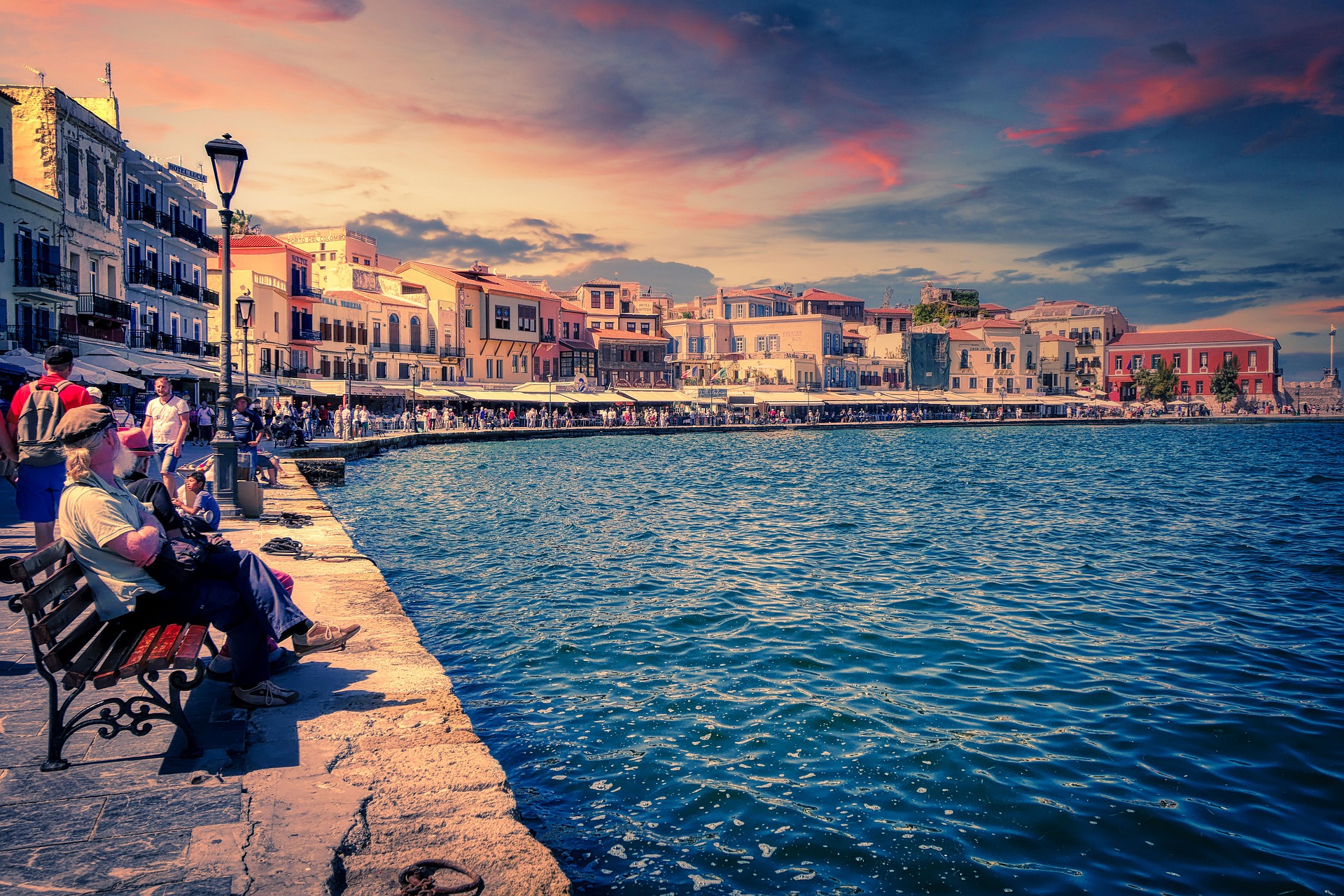
Chania does not have the same pickpocket problem as bigger cities like Athens, but crowded tourist zones still create opportunities. Be most alert around the Old Venetian Harbor, bus station, markets, packed waterfront restaurants, festivals, and beaches.
Keep bags zipped, avoid leaving phones on tables, and do not leave valuables unattended while swimming. That last one is the most realistic risk you will actually face.
Beach theft is one of the more realistic tourist problems in Chania. Do not leave phones, wallets, passports, or cameras alone while swimming. It happens at busy beaches in high season. Someone walks along the shoreline while you are in the water. Your bag is not where you left it. It is not violent, but it is deeply frustrating. Take a waterproof pouch in the water, or go with someone who can take turns watching the bags.
Warning: Beach theft is the most common tourist crime in Chania during summer. Never leave valuables unattended on the beach while swimming, even for a few minutes. Busy beaches like Stavros, Elafonisi, and Balos see the highest footfall and the most opportunistic theft.
What about scams?
Scams in Chania are usually mild rather than dangerous. The most common issues are inflated restaurant bills, vague taxi pricing, rental vehicle disputes, pushy tour sellers, or “special” menus near tourist-heavy spots.
The waterfront restaurants around the Venetian Harbour are the classic trap. They look beautiful. The menus sometimes appear in several languages with no prices on the version handed to tourists, or prices that differ from what arrives on the bill. Always check the prices before ordering, especially for fish sold “by the kilo.” Always check prices before ordering, photograph rental vehicles before driving, and use reputable tour operators for boat trips, excursions, and car rentals.
Local tip: The harbor restaurants are not all bad, but they are priced for tourists. Walk one or two streets back from the water and you will find the same food, the same quality, and noticeably better value. Locals do not eat on the waterfront unless someone else is paying.
Is Chania Safe for Solo Female Travelers?
Chania is generally safe for women travelers, including solo women. The Old Town and harbor are busy into the evening, and harassment is not a major problem compared with many destinations.
This matches what I observe living here. The city does not have the aggressive attention toward women that you find in some southern European destinations. There is the occasional comment from older men in villages, but it is rarely threatening. Walking alone at night in the Old Town or along the harbour is not something most women here think twice about.
Greece is a welcoming destination for solo female travelers. Catcalling can happen, but serious harassment is rare. Use common sense, avoid isolated areas at night, and you will likely have a hassle-free experience.
The practical advice is the same as anywhere. Stay in areas where there are other people. Use a taxi at night if you are returning from somewhere remote. Trust your instincts.
The Real Risk: Roads and Driving
Treat the roads as the biggest real risk. Chania is safe from a crime perspective, but road safety deserves more attention.
This is not said lightly. Road accidents are the leading cause of serious tourist injury in Crete, and they spike during the summer months. RTAs are unevenly distributed throughout the year, with the majority taking place during the tourist season from May to October.
Some tourists are caught off guard by local driving customs and etiquette. Confident and forceful driving is prevalent among Greek motorists, so it is important to be prepared for the unexpected. Drivers overtake on blind corners on mountain roads. Mopeds appear from nowhere. Local speed habits do not always match the signage.
Mountain roads can be narrow, and some beach routes are rougher than they look on a map. The road to Seitan Limania is a good example. On Google Maps it looks like a road. In reality it is a steep, crumbling track with no barriers and a long drop to one side. People misjudge it every summer.
Warning: Quad bikes and scooters are far more dangerous than they appear on holiday. Serious e-scooter and quad bike accidents involving tourists have been rising across Crete in recent years. Many travel insurance policies do not cover quad biking, which is classified as an extreme sport. Read your policy carefully before you rent one, and always wear a helmet.
Quad biking carries the risk of serious injury or death. You need specific travel insurance to cover quad biking; it is defined as an extreme sport and excluded on many policies. Always read the details of your insurance cover.
If you do rent a car, take photos and videos of the vehicle before leaving the lot, including tires, mirrors, bumpers, windshield, and fuel level. Understand insurance coverage clearly. If the price looks weirdly cheap, read the fine print twice.

Summer Heat and Wildfires
This is the section most travel guides skip. They should not.
Crete can experience earthquakes, summer wildfires, heatwaves, strong winds, and occasional heavy rain or flash flooding. Chania is not dangerous day to day, but nature deserves respect here. Summer travelers should watch fire-risk warnings, avoid hiking during extreme heat, and follow local advice if roads, gorges, beaches, or ferry routes are affected by weather.
In July 2025, a major wildfire broke out in the Temenia area of the Chania prefecture. Gale-force winds reaching 10 on the Beaufort scale fanned the flames. Several homes, a historic church, and vehicles were lost to the fire. The fire came close to Paleochora. It was real and it was serious.
At the same time, fewer wildfires and faster rescues made 2025 one of Chania’s safest summers overall. Wildfires in Chania dropped from 180 in 2024 to 124 in 2025. The infrastructure for response is improving. But the risk is not going away. The summer months bring heat and dry conditions that create the perfect environment for fires to spread rapidly. With the risk of wildfires increasing every year, it is essential for both locals and visitors to stay vigilant and adhere to the safety guidelines set by local authorities.
The practical points for summer visitors are these. Do not light fires anywhere outdoors. Do not barbecue outside designated areas. If you are hiking during high summer and see fire risk warnings in place, take them seriously. Check the Greek Civil Protection website for fire risk maps before heading into the mountains. Download the 112 Greece app, which gives real-time emergency alerts by location.
Take extra care when planning a hike or walk, especially during higher temperatures than you are used to. Trails often lack shade and the quality of route markings can vary.
Local tip: Download the 112 Greece app before you arrive. It sends geo-targeted emergency alerts in English, including wildfire evacuations, severe weather, and road closures. It is free and takes thirty seconds to install. More than once it has given people in the Chania region advance notice of fires before the news picked it up.
Is Chania Safe for Families?
Crete continues to be seen as a safe, welcoming, and comfortable destination for couples, families, solo travelers, and groups.
Families do particularly well here. The culture is genuinely child-friendly. Children are welcomed in restaurants at all hours. The evenings in the harbour are relaxed and sociable. Beaches close to the city are calm and organised.
The things to watch with families are practical rather than safety-related: the Old Town has cobblestones that are awkward with prams and pushchairs, beach theft risk increases if parents are distracted watching children, and the summer heat between noon and 4pm is serious. Children dehydrate faster than adults in 35-degree temperatures. Keep water with you always, build in rest time in the middle of the day, and do not underestimate the sun.
The emergency number for all services, including medical emergencies, is 112. Chania has a hospital and several health clinics providing comprehensive medical services. Pharmacies are widely available and can offer over-the-counter medications as well as prescription drugs.
Frequently Asked Questions
Is Chania safe at night?
Yes. Chania feels safer because it has a good balance of activity and calm. The Old Town and harbor stay lively, while nearby neighborhoods and beaches offer quieter escapes. Walking around the historic centre at night is comfortable. There are no “no-go” areas for tourists in central Chania. Standard common sense applies: stay where there are people, keep your phone in your pocket, and use a taxi if returning late from a more remote location.
Is Chania safe for solo female travelers?
Chania is generally safe for women travelers, including solo women. The Old Town and harbor are busy into the evening, and harassment is not a major problem compared with many destinations. It is one of the more relaxed places in the Mediterranean for women travelling alone.
What is the biggest safety risk in Chania for tourists?
The biggest risks are road conditions, summer heat, beach carelessness, and nature-related events such as wildfires, strong winds, earthquakes, or flash flooding. Crime is not the main concern. The roads are.
Is Chania safe for families with young children?
Very much so. The city is genuinely family-friendly. Healthcare facilities, tourist police units, and well-regulated tourism businesses contribute to a travel environment where assistance is available if needed. The main considerations are practical: sun protection, hydration in peak summer heat, and careful beach supervision.
Is the tap water safe to drink in Chania?
Tap water is safe to drink, although bottled water is preferable, and the island’s food safety standards are high, making it safe to enjoy local cuisine. Most locals drink bottled water as a preference, not out of necessity.
What are the emergency numbers in Chania?
Tourism Police: 171. The tourist police operate a 24-hour call centre, offering information and assistance to tourists in Greek, English, French, and German. The emergency number for all services, including medical emergencies, is 112.
The Honest Notes
The overall picture for Chania is genuinely good. But there are a few things worth being direct about.
Warning: Waterfront restaurants around the Venetian Harbour are not all equal. Some have multi-language menus where the tourist version omits prices, or sells fish “by the kilo” without clearly stating the weight. Always ask to see the price per kilo before ordering fresh fish, and check your bill before paying.
Warning: If you are arriving in Chania via Athens and using the Athens metro, be careful there. Pickpocket operations on the Athens metro, particularly the airport line and at Monastiraki, are well-documented and more organised than anything you will encounter in Chania. The risk is on the Athens leg of your journey, not in Chania itself.
International travel authorities, including the U.S. Department of State, continue to classify Greece as a destination where visitors should exercise normal precautions, the lowest level of travel advisory. The UK Foreign Office, Australian Department of Foreign Affairs, and most European equivalents take the same position.
Major government travel advisories currently rate Greece as a low-risk destination where visitors can generally exercise normal precautions. Violent crime against tourists is rare, and the country benefits from a strong tourism infrastructure. Most visitors experience nothing more serious than a lost wallet, a delayed ferry, or a mild case of sunburn.
That is about right for Chania. It is honest. Most people have no problems at all. The ones who do, in my experience, either left valuables on the beach, rented a scooter without checking their insurance, or got caught by the heat on a long hike in August.
Practical Information
| Emergency number | 112 (police, ambulance, fire) |
|---|---|
| Tourist Police | 171 (English, French, German) |
| Chania Hospital | Chania General Hospital, Mourniés |
| Tap water | Safe, bottled water widely available |
| Currency | Euro (€). ATMs widely available in Chania town |
| Cards | Accepted most places. Carry some cash for villages |
| Best months for safety | May, June, September, October (lower heat, lower wildfire risk) |
| Peak risk months | July, August (heat, road accidents, beach crowds) |
| Travel advisory level | Normal precautions (US, UK, Australia, Canada) |
What to Combine With a Chania Holiday
If safety is part of your planning, the following practical points about nearby destinations are worth knowing.
Elafonisi and Balos are both worth visiting, but they are extremely crowded in July and August. Both are long drives on narrow roads. Do not rush the return in the dark. Allow more time than you think you need.
Samaria Gorge deserves careful preparation. It is a physically demanding 16km hike in heat. Chania’s firefighters do not just fight flames. They also rescue lost and exhausted visitors. In 2025, they responded to 403 rescue and support calls, many of which involved tourists and hikers in need of assistance. Start early, carry enough water, and wear proper shoes.
The Akrotiri Peninsula (Stavros, Kalathas, Seitan Limania) is close to Chania and generally very manageable. The road to Seitan Limania is the one exception. It is steep and rough. If you have a standard hire car, drive slowly and do not attempt it in poor light.
Sfakia and the south coast requires a mountain road crossing. Beautiful drive. Take your time on it. Do not attempt it after a night out.
Before You Go
- Insurance: Make sure your policy covers medical evacuation, car hire excess, and any activities you plan (quad bikes and scooters are often excluded).
- App: Download the 112 Greece app for real-time emergency alerts in English.
- Cash: Keep some euros available. Villages, small beaches, and some car parks are cash-only.
- Sun: July and August temperatures regularly exceed 35°C. Hat, sunscreen, and water are not optional.
- Beach: Never leave valuables unattended while swimming. Bring a waterproof pouch.
- Car: Photograph the vehicle all around before leaving the rental lot. Understand your insurance coverage before you drive away.
- Fire: Monitor the Greek Civil Protection website for fire risk during summer. Do not light fires outdoors.
Local tip: The people in Chania are genuinely helpful if something goes wrong. If you are in difficulty, whether it is a car issue, a health concern, or something more serious, ask a local directly. A taverna owner, a pharmacy, a hotel reception. The instinct here is to help. It is one of the things about this place that does not make it into any safety guide, but it is real. You are not on your own.