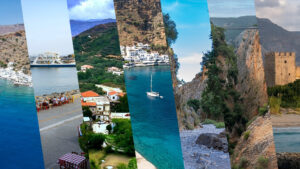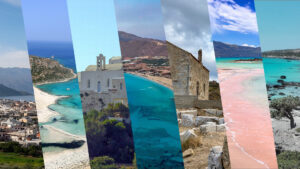
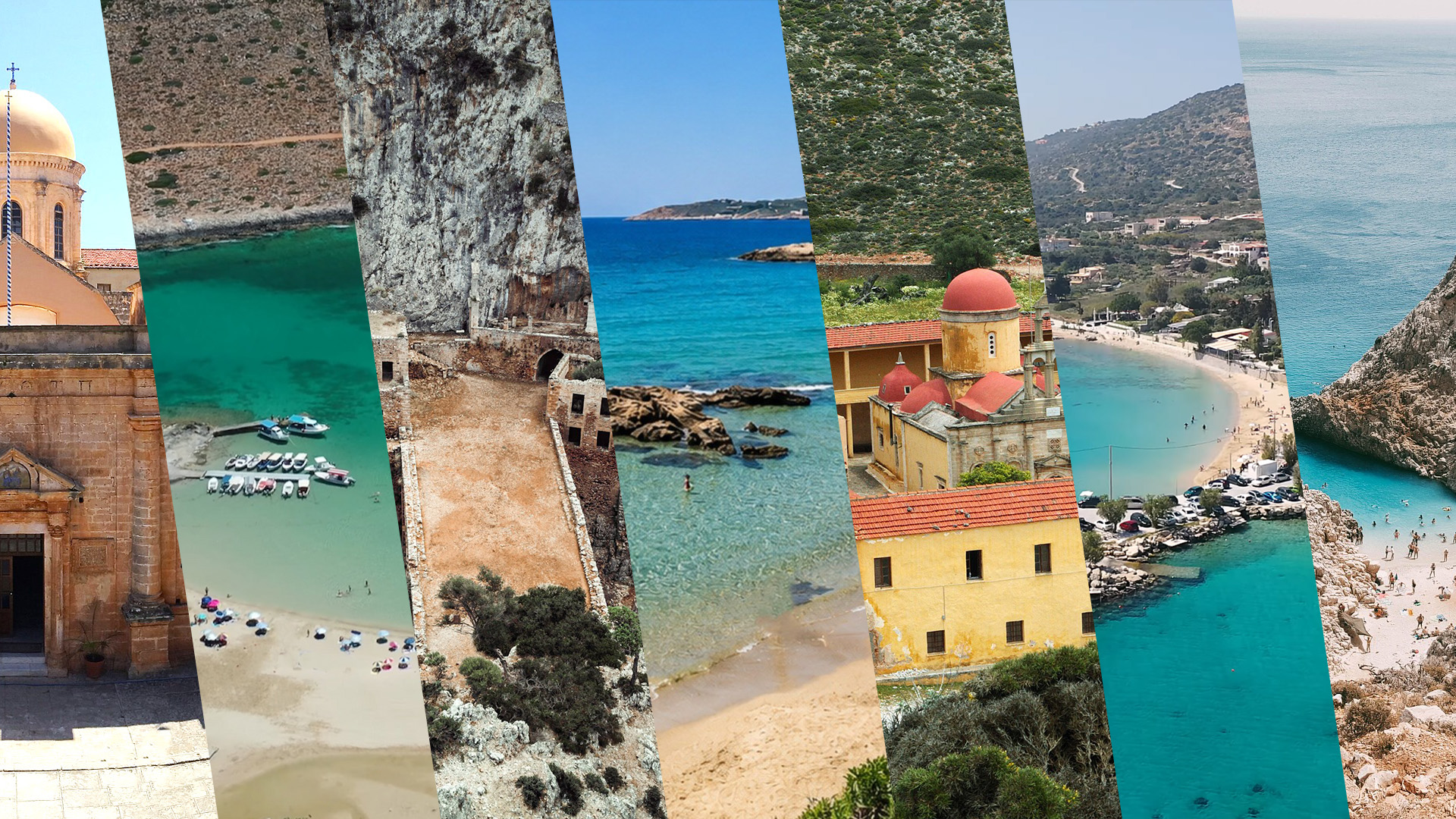
The Akrotiri Peninsula Chania sits right outside your door if you are staying in the city, and most visitors miss most of it. They drive through it on the way to the airport and see nothing. Or they go once to Seitan Limania, tick it off, and leave. That is a mistake. This area covers some 44 square miles and contains ancient monasteries, broad views, and some of the most important historical sites on the whole island. You could fill three full days here without repeating yourself.
The peninsula sits northeast of Chania, above Souda Bay. Locally it is sometimes called Chania’s Acropolis. Most of it is an undulating plateau, with a mountain range along the north coast reaching 528 metres at its highest point. The airport is here. There are also NATO military installations and an American naval base on the peninsula. None of that diminishes the place. The northern coast is cliffs and hidden coves. The interior is olive groves, monasteries, and old villages. The southern edge looks over Souda Bay, one of the finest natural harbours in Europe.
In recent years the different villages on the peninsula have seen rapid development, with more villas and hotels opening every year. It is still, in parts, genuinely quiet. Go on a weekday in May or June and you will have sections of it almost to yourself.
| Distance from Chania | 5 to 22km depending on destination |
|---|---|
| Time needed | Half day minimum, full day recommended |
| Best season | May, June, September, October |
| Parking | Free at most sites |
| Entrance fee | Small fee at Gouverneto; check official sites for current prices |
| Rental car needed? | Strongly recommended |
| Family friendly? | Yes, with some exceptions noted below |
What Is the Akrotiri Peninsula Chania?
The arrival of Christianity on Crete made the rocky Akrotiri Peninsula a refuge for monks seeking prayer and freedom to practice their religion. It was not until Byzantine rule that the peninsula evolved into a genuine centre of monasticism and Orthodox Christian spirituality. Centuries later it became politically important. The tombs of Eleftherios Venizelos and his son Sophoklis are here, on a hillside overlooking Chania. At this same site, the Greek flag was raised in defiance of the Turks and the Great Powers during the Cretan Revolution.
The peninsula is not remote. It begins effectively where Chania ends. But it contains layers, and you only discover them by slowing down and going past the obvious signs.
Local tip: Kounoupidiana is the practical centre of the peninsula and has pharmacies, supermarkets, petrol stations, and several good local tavernas. If you need to refuel or restock before heading north to the monasteries, do it here. It saves time later.
The Venizelos Tombs: The Right Place to Start
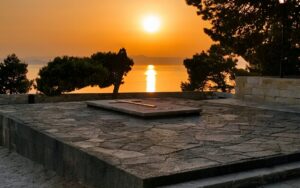
Most organised tours begin here and so should you. The Venizelos family tombs are one of the most popular spots for a panoramic view of Chania, a few kilometres east of the city on the road toward Akrotiri and the airport. At the small church of Profitis Ilias lie the tombs of the famous Greek statesman Eleftherios Venizelos and his son Sophocles, set in a pretty park with an uninterrupted view of the city.
Eleftherios Venizelos was born in Turkish-occupied Crete in 1864 and died in self-imposed exile in Paris in 1936. He chose this burial site himself. His body was brought from Paris, while in 1965 a tomb was built for his son Sophocles, who served as Prime Minister of Greece from 1943 to 1952.
During the bombardment of Cretan revolutionaries by the fleet of the Great Powers in February 1897, the hero Spyros Kayales used his body as a flagpole to hold the Greek flag, which had been shot down by shells. There is a statue of him in the same park. It is worth reading the inscription.
The view from here is the best free view in the Chania region. The old harbour, the White Mountains behind the city, the long sweep of coast to the west. Come at sunset if you can. If you do not have a car, bus number 11 runs from the centre of Chania with Venizelos Tombs as its end destination.
The Monasteries of Akrotiri
This is what most people come for, and rightly so. Three monasteries are found in the hills to the north of the peninsula. They are different in character and worth visiting in order.
Agia Triada (Holy Trinity Monastery)
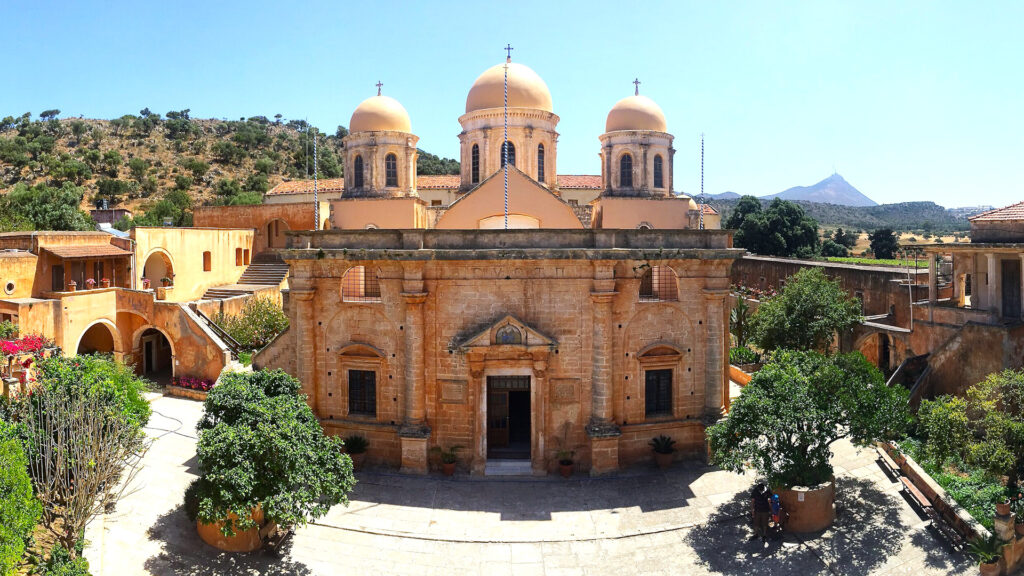
Agia Triada dates from the 17th century and was founded by two Venetian monks who had joined the Orthodox church. The imposing buildings are visible across the plateau, from planes arriving at the airport, and are set among olive and orange groves.
Today it is one of the most economically active monasteries on the whole island, producing raki, wine, and olive oil for the export market. The Renaissance façade of the monastic church dates to its construction in 1631. The Turks burned it to the ground in 1821, but it was rebuilt by 1830.
To the left of the monastery, a separate entrance accessible from the car park lets you view the wine cellar and buy products made by the monks. The olive oil and wine here are genuinely good. Worth bringing some home.
The monastery is well worth a visit but can get busy with tour groups. It houses a small museum. There is a small entrance fee. Be aware that it may be closed during midday hours.
Warning: Tour buses from Chania arrive at Agia Triada throughout the morning. If you want to visit without crowds, arrive before 9am or after 4pm. Midday in summer is the worst time. The atmosphere is very different with 50 people milling around versus six.
Gouverneto Monastery
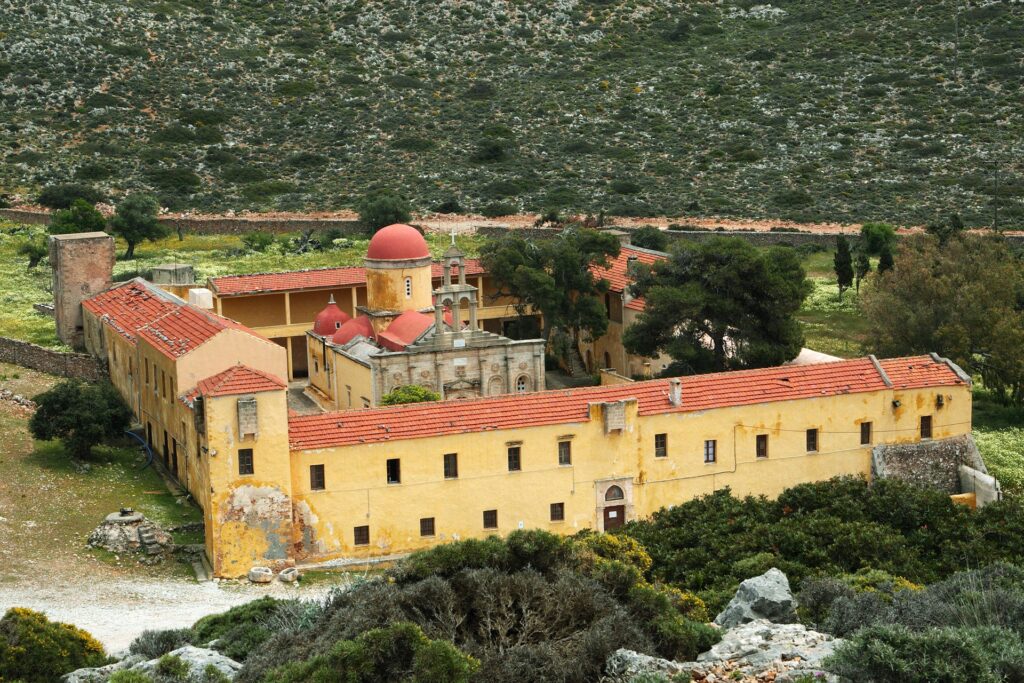
About 4km further north, accessible by car through a small gorge, is Gouverneto Monastery. The buildings appear fortress-like, with a large square building around a central courtyard, in which stands the church dedicated to the Virgin Mary.
It was built in 1573 by monks and is one of the oldest active monasteries on the island. The exterior is plainer than Agia Triada. Do not let that put you off. The interior contains significant religious art, and it is the gateway to the best hike on the peninsula.
The monastery is closed entirely on Wednesdays and Fridays. On Mondays, Tuesdays, and Thursdays it opens from 9:00am to 12:00pm and 5:00pm to 7:00pm. On Saturdays and Sundays it opens from 9:00am to 11:00am and 5:00pm to 8:00pm. These hours matter. Plan around them carefully.
Dress modestly when visiting. No shorts or bare shoulders are permitted. There is a strict no-photography policy inside the historic Katholikon church.
The Hike to Katholiko and the Sea
This is the best thing you can do on the Akrotiri Peninsula. Most people do not do it.
The hike starts through the gardens of Gouverneto Monastery. Parking at Gouverneto is free, but there is a small cash-only entry fee for the path. Bring cash.
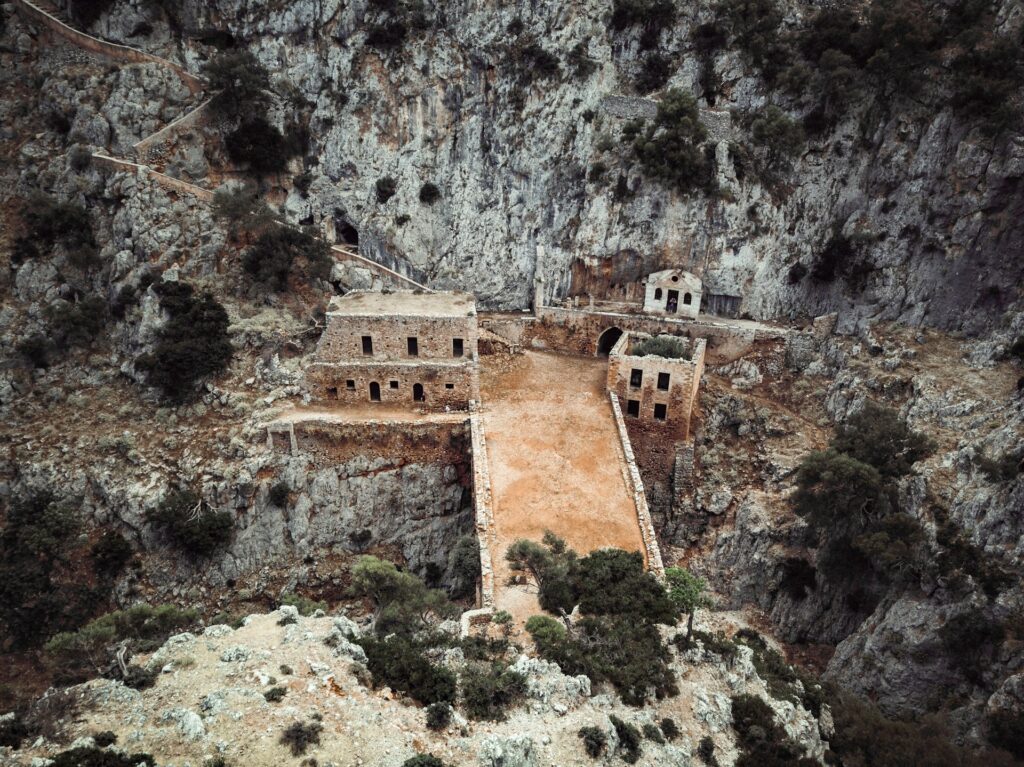
The path descends about 2 kilometres through the Avlaki Gorge to the sea. Along the way you pass through a remarkable sequence. After about 600 metres, there is the small church of Ipapanti. Next to it is the cave of Panagia Arkoudiotissa, in the centre of which there is a stalagmite in the form of a stooping bear. Legend says the Virgin Mary turned the bear into rock as it was drinking the water of the monks.
Further down is the abandoned monastery of Katholiko. The monastery here was abandoned in the 18th century but remains impressive to view. The highlights are seeing the cells of the hermits and a large bridge built into the gorge. The monks fled because of pirates, moving up to the safety of Gouverneto.
After about 15 more minutes you reach a small fjord with turquoise waters, with the remains of the old quarry of the monastery and a small abandoned port. It is completely isolated. No sunbeds. No canteen. Just cliffs and clear water.
The return is sharply uphill and requires either good physical condition or enough patience and plenty of resting stops. Allow at least 2 to 2.5 hours total. More if you stop at the cave and monastery, which you should.
Warning: The hike is only accessible when Gouverneto Monastery is open. The monastery is closed on Wednesdays and Fridays, and access to the trail is blocked when the gates are shut. Check the day of your visit in advance. Arriving on a Wednesday to find the gates locked is one of the most common complaints from visitors.
The Beaches of Akrotiri
The most well-known beaches on the peninsula are Marathi, Tersanas, Kalathas, and Stavros. Each is different in character.
Stavros
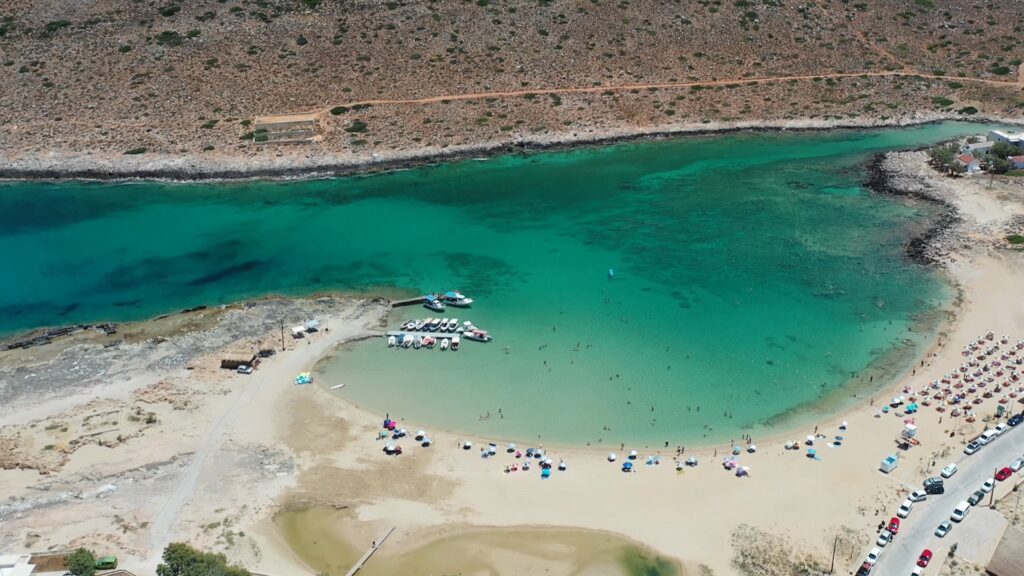
Known locally with some affection as the “bath tub”, the bay at Stavros is almost circular and its shoreline descends very gradually into the sea, making it perfect for small children. This is also where Anthony Quinn danced the famous Zorba’s Dance for the 1964 film. The large rock that formed the backdrop to that scene still stands at the far end of the bay. People still climb it.
It is a very shallow and calm bay, well protected from winds and usually waveless, with a wonderful emerald colour and fine white sand. It is especially safe for children. Stavros beach is about 16km from the city centre of Chania and is fairly well organised. One area allows you to rent sun loungers and umbrellas, while another section is completely free and unorganised. Near the beach there are showers, bars, and tavernas. Free parking is available.
Local tip: When the north wind is blowing and every other beach on the peninsula has waves, Stavros stays calm. It is shaped like a bowl and is one of the few spots that remains swimmable in rough weather. Locals know this and head here specifically on windy days.
Kalathas
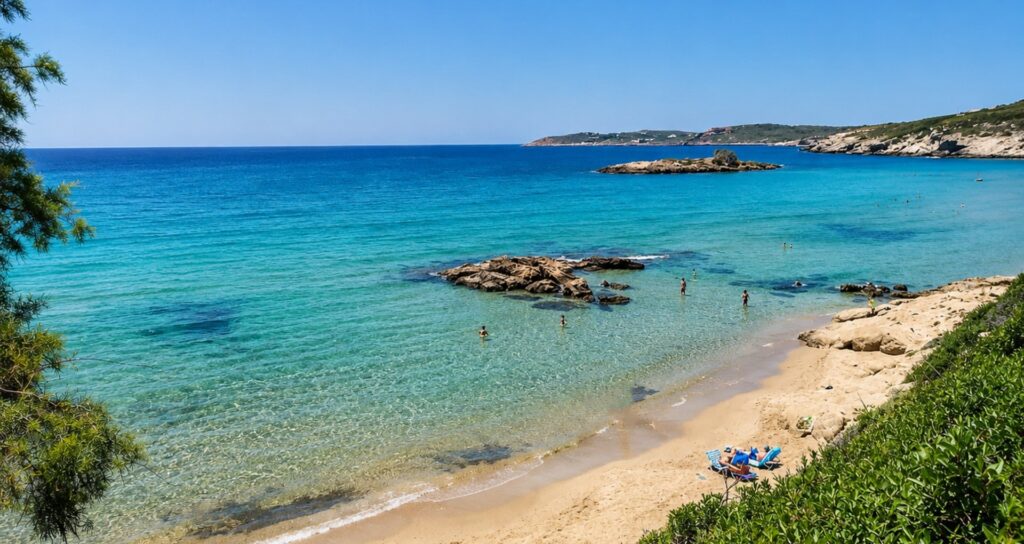
Kalathas is a large, quite popular beach on the west shore of Akrotiri. It is considered one of the most beautiful in the area and is well organised. There is a small islet about 200 metres from shore, easily reachable by swimming. On weekends in high summer it is very popular with locals. That is not the time to expect to be alone.
Weekdays in May, June, or September are a different story. Arrive early, find a spot, and you have one of the genuinely good beaches near Chania.
Marathi
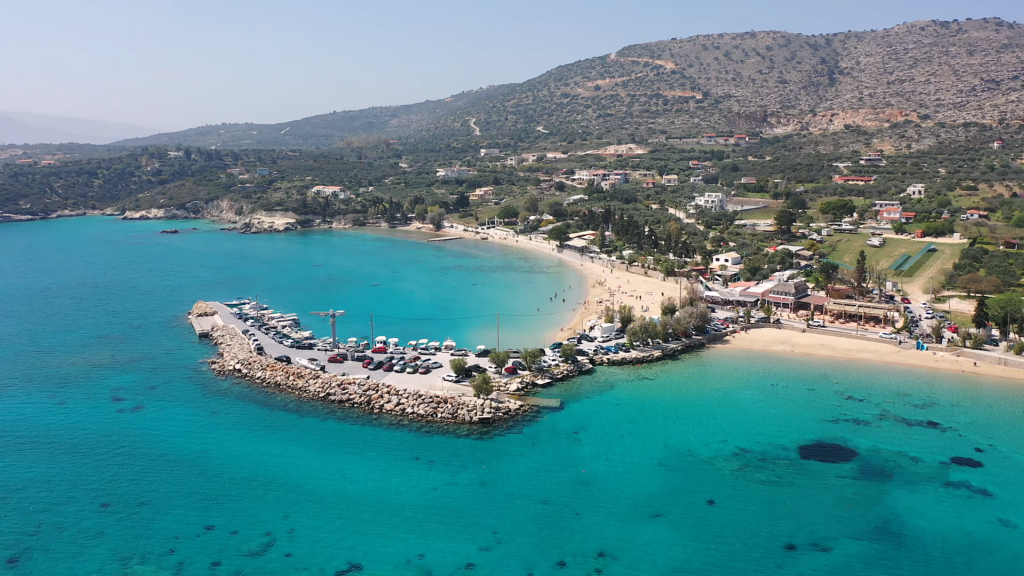
Marathi is one of the better beaches on Akrotiri. Crystal clear water, and sheltered even on days with strong wind. It sits on the southeastern edge of the peninsula and has a small port nearby. There are several good tavernas right on the beach at Marathi, serving fresh fish. This is where the locals come for Sunday lunch by the sea. Come for dinner and you will often find more Cretans than tourists.
Seitan Limania
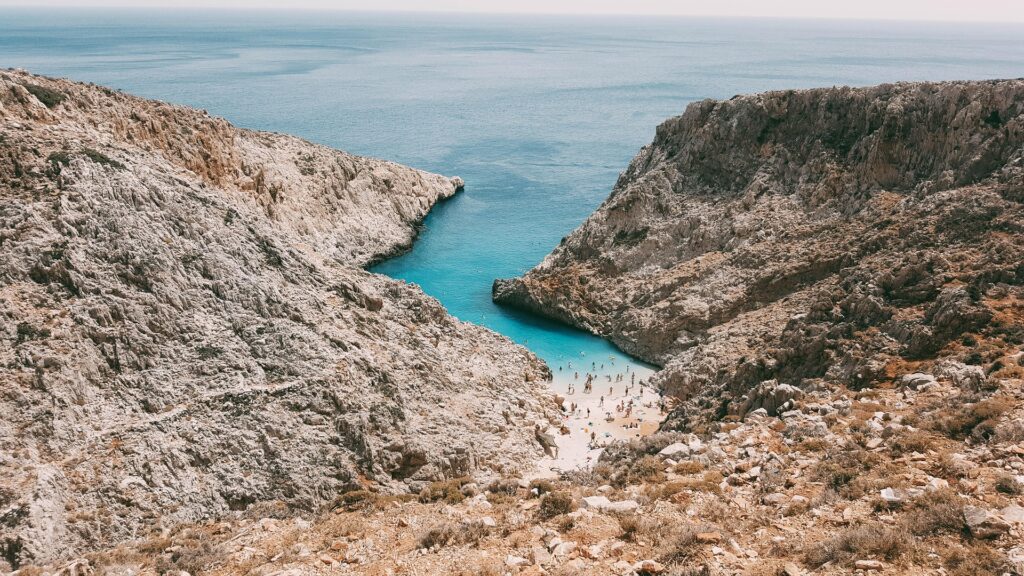
This one demands its own honest conversation.
Seitan Limania, also called Agiou Stefanou beach, is a secluded beach accessible via a challenging downhill trail, with a compact shoreline of coarse sand and pebbles surrounded by steep limestone cliffs and clear turquoise waters. The water colour is electric. The cliffs close in on either side. There is nothing quite like it in Crete.
But it is no longer a secret. It is beautiful seen from above, but it is as small as it is crowded. The route is overall well marked but difficult both downhill and uphill because in some places it is narrow and overhanging without protections. If you suffer from dizziness it is not easy.
The road to drive there is very steep, especially when going uphill. Several cars and motorcycles have had trouble on the incline. The parking area is small. Arrive early. The beach is small and fills up very quickly. Free parking exists, but if you arrive late you will have to leave your car along the uphill road.
Warning: Seitan Limania is not suitable for young children or anyone with a fear of heights. The descent involves chains and steep exposed rock. People have underestimated it. Wear proper shoes, not sandals, and never flip-flops. In high summer it is genuinely overcrowded. In July it can be beautiful but way too crowded, and it lacks toilets and rubbish bins. Go in May, June, or October for a very different experience.
The Souda Bay War Cemetery
Most tourists drive past and miss it. The Allied War Cemetery is located in Souda overlooking the bay and holds the graves of men who lost their lives in World War I and during the Battle of Crete in World War II. The cemetery contains a total of 1,500 burials, 776 of which are unidentified.
In May 1941, the Commonwealth force in Crete defended five areas along the north coast, including around Souda Bay. The Germans launched their attack on 20 May with airborne troops. The airfield at Maleme was quickly captured and used to land German reinforcements.
The burials include soldiers from the UK, Canada, Australia, New Zealand, South Africa, India, and others. It is immaculately maintained. Quiet, well-shaded, and genuinely moving. It takes 20 minutes. There is no reason not to stop.
The cemetery is free to enter, open year-round, and located about 5km east of Chania city centre. There is a car park at the entrance. Bus 13 from central Chania also stops nearby.
Before You Go
- Water: bring at least 1.5 litres per person if doing the Gouverneto hike. No water source on the trail.
- Shoes: proper closed-toe shoes for the monastery hike and for Seitan Limania. Sandals are not suitable.
- Monastery dress code: shoulders and knees must be covered at all monasteries. Wraps or sarongs are fine.
- Cash: the Gouverneto trail entry fee is cash only. ATM in Kounoupidiana before you head north.
- Monastery closures: Gouverneto is closed Wednesday and Friday. Plan around this.
- Sun: very little shade on the Gouverneto hike. Hat and sunscreen essential from May onwards.
- Photography: no photos inside the Katholikon church at Gouverneto.
Frequently Asked Questions
How long does a full day on the Akrotiri Peninsula take?
A comfortable full day covers the Venizelos Tombs (30 minutes), Agia Triada Monastery (45 minutes), Gouverneto and the hike to Katholiko Bay (2.5 to 3 hours including walking time), and one beach stop in the afternoon. The peninsula is only a short drive from Chania and you could easily spend a whole day visiting the main monasteries and a couple of beaches. You will not do everything in one visit. That is a reason to come back.
Can children visit Akrotiri?
Most of it, yes. Stavros beach, known locally as the “bath tub”, is almost circular with a shoreline that descends very gradually and is perfect for small children. Kalathas and Marathi are also excellent for families. Seitan Limania is not suitable for young children. The hike down to Katholiko Bay has steep sections and uneven ground that require care with younger visitors.
Is the Gouverneto hike difficult?
The stairs and downhill element make it moderately challenging due to the exposure to sun and heat. You can do this hike without special equipment, but bring at least 1.5 litres of water. Sneakers are fine but sandals or flip-flops are a bad idea. Older adults in reasonable fitness have done it without trouble. The return uphill is harder than the descent. Allow time for it.
Is Seitan Limania worth the effort?
Yes, if you go at the right time and are prepared for it. In July and August the beach is small and gets crowded fast, and the parking situation is stressful. In May, June, or October it is a different place. It features a compact shoreline surrounded by steep limestone cliffs and clear turquoise waters that are genuinely unlike anywhere else on the island. Go early in the day. Wear proper shoes.
Can I visit the Akrotiri Peninsula without a car?
Partially. Public buses run from Chania to Stavros several times per day and stop at Kalathas. There may be the odd bus to Seitan Limania and Marathi in summer. Public transport does not reach Gouverneto Monastery directly, so a rental car is the most convenient way to visit. For the monasteries and the hike to Katholiko, a car is effectively essential.
What time should I visit Seitan Limania to avoid crowds?
Arriving early in the morning or later in the afternoon helps you avoid the worst crowds and enjoy a more peaceful experience. In July and August, by 10am the parking area is often full and the beach is packed. Before 8am or after 5pm are the best windows. Shoulder season visits in May or October are significantly quieter.
Are the monasteries open every day?
Agia Triada is open most days but may close at midday. Gouverneto follows stricter hours and is closed entirely on Wednesdays and Fridays. Always check current opening times before making a specific trip. A wasted drive to a locked gate is a common and avoidable problem.
The Honest Notes
The Akrotiri Peninsula is one of those places that is very good and also, in specific circumstances, quite bad.
Warning: Seitan Limania has become genuinely overvisited in peak season. In July it is beautiful but way too crowded, and it lacks toilets and rubbish bins. The parking area and the narrow access road create real stress in August. If your only window to visit is a Saturday in August at midday, lower your expectations significantly. Or take the occasional small bus that runs from Chania in peak season, which removes the parking problem entirely.
Warning: Tour buses are allowed at Agia Triada Monastery and can disrupt the atmosphere. The influx makes it harder to experience the monastery’s spiritual significance. Go early or late in the afternoon to avoid this. The monks are there before the coaches arrive.
Warning: Strong underwater currents exist at Seitan Limania, particularly when the wind is up. There are often strong underwater currents, and it is not recommended to swim far out, especially when it is windy. The water looks calm from above but can be deceptive. This is not a beach for inattentive swimming.
The Souda Bay War Cemetery is consistently undervisited by tourists who did not come here for military history. That is a shame. You do not need to be Australian or a history buff to be moved by it. Spend 20 minutes. Read a few of the headstones. It matters.
Getting There
By Car
From Chania city centre, head east toward Souda. The Venizelos Tombs are signposted just before the road branches for the airport and Akrotiri. From there, continue east and north past the airport perimeter. Follow signs for Agia Triada Monastery, then continue 4km further north on the same road to reach Gouverneto. For Stavros, follow signs north from Kounoupidiana. For Kalathas, branch left before Stavros. For Seitan Limania, take the turn near the airport toward Hordaki and follow signs.

All the roads on the peninsula are in excellent condition with the exception of the final stretch to Seitan Limania, which is steep and narrow. Drive carefully there, especially going back uphill. A small car is better than a large one.
By Bus
Public buses run from Chania to Stavros several times per day and will stop at Kalathas on request. For the Venizelos Tombs, bus number 11 runs from the city centre. For the monasteries and the Gouverneto hike, a car is needed. There is no reliable public bus to Gouverneto.
By Organised Tour
Several operators run half-day and full-day tours of the Akrotiri Peninsula from Chania, typically combining Agia Triada, a beach stop, and the Venizelos Tombs. These work well if you have one day and do not want to drive. They do not cover the Gouverneto hike, which requires more time than a standard tour allows.
Practical Information
| Agia Triada Monastery | Open most mornings; check current hours locally. Small entrance fee. Closed midday. |
|---|---|
| Gouverneto Monastery | Open Mon/Tue/Thu and weekends (morning and late afternoon). Closed Wed and Fri entirely. |
| Venizelos Tombs | Open year-round, free entry. Bus 11 from Chania centre. |
| Souda Bay War Cemetery | Open year-round, free entry. Car park at entrance. |
| Stavros Beach | Free parking, facilities including showers, cafes, tavernas. |
| Kalathas Beach | Organised section with sun loungers and canteen; free section also available. |
| Seitan Limania | Free parking (small and fills fast). No facilities on beach. Small canteen at top. Cash useful. |
| Marathi Beach | Multiple tavernas and fish restaurants. Sheltered from wind. |
Local tip: Most visitors do Akrotiri as a single long loop and rush it. A better approach is to split it across two mornings. First morning: Venizelos Tombs at dawn, then Agia Triada when it opens at 9am, then the Gouverneto hike and a late lunch at Marathi. Second morning: a swim at Seitan Limania before 8am, then Kalathas or Stavros for the afternoon. Do it this way and you will actually see the place, rather than completing a checklist of it.