Elafonisi beach Chania is the most famous beach in Crete, and probably one of the most talked-about beaches in the entire Mediterranean. That reputation is well earned. But before you drive two hours through the mountains and arrive at midday in August expecting to find yourself alone on a strip of pink sand, there are some things you need to know. This guide will tell you what the beach is actually like, when to go, how to get there without losing your mind to traffic, and whether it lives up to the photographs. Honest answers only.
The short version: yes, go. The water and the landscape are genuinely extraordinary. But the crowds in peak season are equally extraordinary. If you go in July or August, you need a strategy. If you go in May, June, September or October, you will likely have one of the best days of your holiday.
| Distance from Chania | 75 km, about 90 minutes by car (longer in peak season) |
|---|---|
| Beach type | Sandy lagoon, shallow, family friendly |
| Time needed | Full day recommended |
| Best season | May, June, September, October |
| Parking | Paid parking lots near the beach; small fee per day |
| Entrance fee | No entrance fee |
| Rental car needed? | Strongly recommended |
| Family friendly? | Yes, excellent for young children |
What Makes Elafonisi Beach Chania Worth the Drive
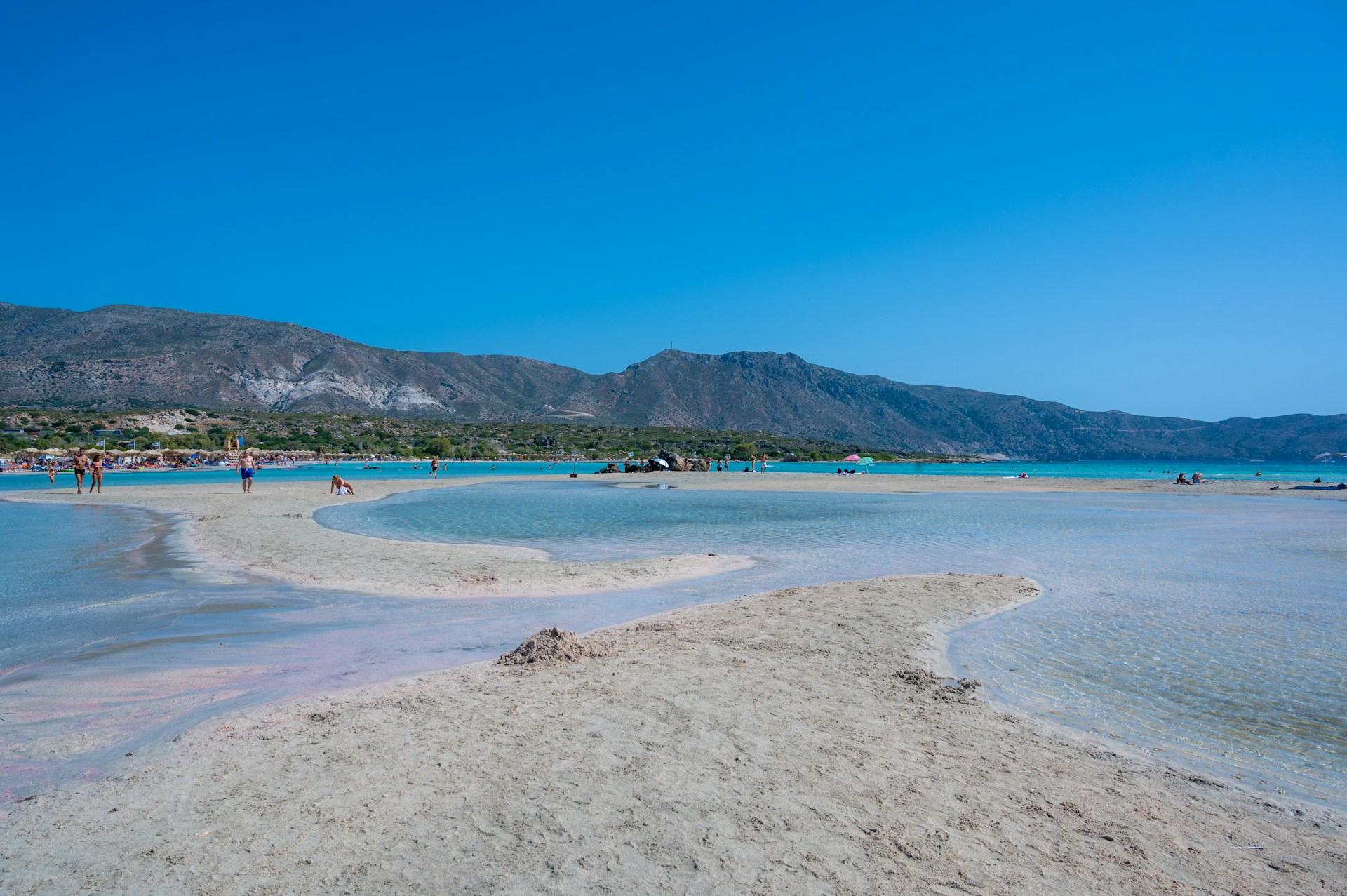
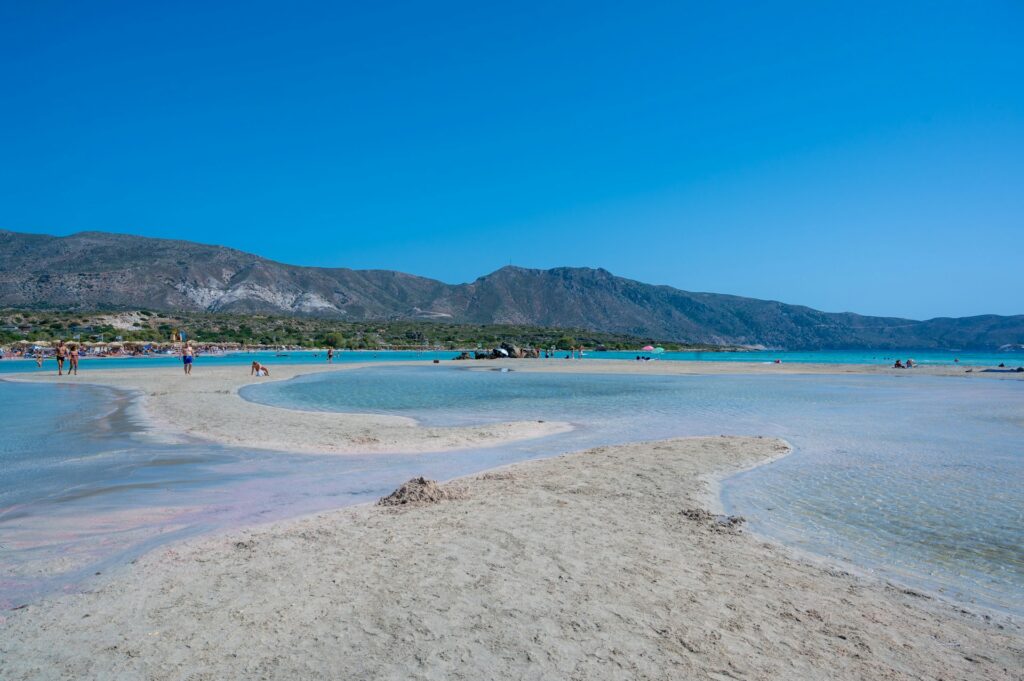
Technically, Elafonisi is an islet separated from the Cretan mainland by a shallow lagoon that reaches no more than a metre in depth. You can walk across to the island. Most people do, wading through warm, knee-deep water that shifts between turquoise and pale green depending on the light and the time of day. On the other side, the island has its own beaches, quieter than the main beach, with dunes and cedar trees.
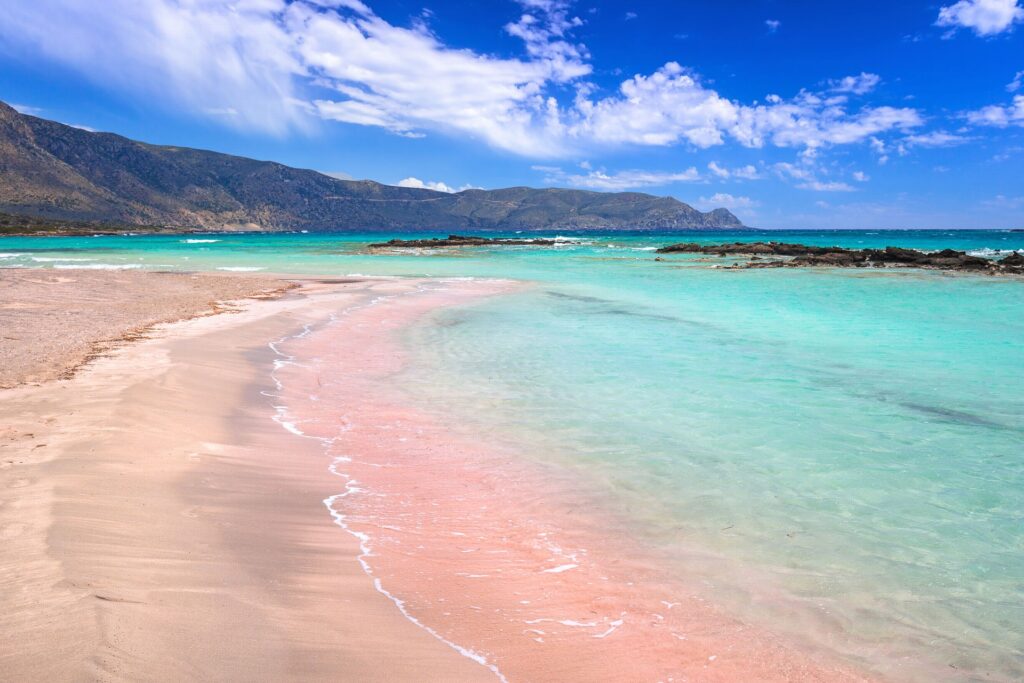
The sand gets its famous pink colour from crushed seashells and coral fragments that mix with the white sand. It is worth being clear about this: the pink is subtle. It is not the vivid magenta of the Instagram photographs, which are almost universally colour-enhanced. What you actually see is white sand with a warm rosy tint in certain conditions, most visible in the early morning and late afternoon light, and most obvious on the south-facing beaches of the islet itself. It is beautiful. Just do not expect Barbados.
Elafonisi is part of a protected natural environment, the Natura 2000 network, where the small islet sits just off the coast connected to the mainland by a shallow sandbar and lagoon. This protected status is part of why the beach looks the way it does. Development is restricted. There are no hotels on the sand, no bars blasting music, no jet ski rentals. The landscape has been left largely intact.
The area houses rare flora, including the protected Androcymbium rechingeri, and is home to 110 plant species. This is also a resting place for migratory birds on their long journey to and from Africa, and a place of reproduction for the loggerhead sea turtle, Caretta caretta, which nests and lays eggs here. Certain sections of the beach are fenced off during nesting season. Respect the barriers. Do not walk into the marked areas.
Warning: Taking sand, shells or any material from the beach is strictly prohibited. Elafonisi is a protected Natura 2000 site. Fines apply. Do not even pick up a handful of pink sand “just to see”. You will see other tourists doing it. That does not make it legal.
The Lagoon Side vs the Island
Most visitors set up on the main beach, on the lagoon side. This is the organised area with sunbeds, umbrellas, snack bars and facilities. It is also the busiest part of the beach. The lagoon water here is exceptionally calm and shallow, which makes it ideal for children.
On the southern side of the island, there are many smaller beaches where visitors can enjoy a more peaceful swimming experience. These south-facing beaches catch the open Libyan Sea. The water is slightly deeper and the swimming is better for confident swimmers. There are no facilities over there. Bring water.
The far nicer part to sit is to wade across the lagoon and walk up the long beach behind the sand dunes. It is much quieter and this is where you see the famous pink sand most clearly.
The Honest Reality: Crowds and How to Deal With Them
In August, around 6,000 visitors a day have been recorded on the beach at Elafonisi. Six thousand people. Think about what that looks like on a stretch of sand, even a generous one. The parking lots fill. The road jams. Sunbeds go early.
Elafonisi’s fame means crowds are here to stay, especially in July and August. Long lines of cars and full parking lots are part of the experience. Even so, if you arrive before 9:30 in the morning, you can enjoy a more peaceful visit, walking along the shallow lagoon before the day-trippers arrive.
Visiting outside peak season, in May, early June, September and October, makes a huge difference. The water is warm, the sand is quiet, and you can often have entire stretches of the beach to yourself.
If you are coming in July or August, leave your accommodation no later than 7:30am. You will still have a ninety-minute drive ahead of you. Arriving by 9am gives you a fighting chance of decent parking and uncrowded water.
Local tip: The coaches and organised tour buses from Chania typically arrive at Elafonisi between 11am and noon. If you are driving yourself and arrive before 9:30am, you will have the beach largely to yourselves for a couple of hours before the wave of day-trippers reaches you. This is the single most effective strategy at this beach in high season.
The Pink Sand: Managing Expectations
The photographs online are misleading. The translucent waters are real, and a small strip of sand is indeed a bit pink, but be cautious of misleading photos. The honest picture: the sand is white with a rosy tint that varies significantly depending on the time of day, the season and where exactly on the islet you are standing. The lovely colour moves with the tides and is more intense depending on the time of year.
Early morning light brings out the warmth in the sand. Midday sunshine bleaches everything. If you want the pink in photographs, get there early and head to the far side of the islet.
The History Beneath the Sand
Most visitors come for the water. Few know what happened here. Elafonisi has a dark history that sits quietly beneath the surface of its beauty.
On Easter Sunday of 18 April 1824, several hundred Greeks, mostly women and children, were killed on Elafonisi by Ottoman soldiers. To avoid advancing troops, forty armed men had taken refuge on the island with women, children and elderly people, waiting for a ship to take them to the Ionian Islands. The Ottoman soldiers camped on the beach opposite. One of their horses walked across the shallow water to the island and the people hiding there were discovered. According to several sources there were between 640 and 850 people in total, most of whom were killed and the remaining survivors were sold into slavery in Egypt. There is a memorial plaque at the highest point of the island. Worth finding.
A large wooden cross also commemorates a shipwreck from 22 February 1907. It was an Österreichischer Lloyd passenger steamer called the Imperatrix. On that night, the ship was travelling from Trieste to Bombay when, sailing down the western coast of Crete in a severe gale and already several kilometres off course due to a navigation error, she was driven onto the rocks off the northwestern extremity of Elafonisi. Parts of the shipwreck are located near the north side of the island at a depth of 10 metres. Snorkellers sometimes find them.
Elafonisi translates from Greek as “Deer Island”. The name reflects the island’s ancient reputation as a place connected to Artemis, the goddess of the hunt.
Facilities at Elafonisi Beach
The eastern side of the beach is organised, featuring umbrellas, sunbeds, a beach bar, showers, changing rooms and a parking area, attracting the majority of visitors. This is the main beach, on the lagoon side.
On the right side of the beach there is a hut where you can rent kitesurfing equipment and book classes. On the left side you can learn how to windsurf. Water sports are available here, though this end of Crete can get wind off the Libyan Sea on certain days.
On the beach and in a short distance from the coastline you can find a canteen and a couple of tavernas. However, as the facilities are limited, it is a good idea to bring plenty of water, snacks and food. The food at the beach taverna is fine but expensive for what it is, as you would expect at any remote tourist beach. Bring a cooler bag if you can. You will be glad of it at 2pm in August.
Sunbeds are available for hire at a small fee per pair with a parasol. Check current prices on arrival. Cash is useful here, though many operators have moved to card. There is no shade anywhere on the beach unless you pay for it or bring your own umbrella. The sun at Elafonisi is relentless from about 10am onwards.
Local tip: Once you cross the lagoon to the island, there are no facilities at all. The south-side beaches of the islet are wilder and quieter but there is no shade, no snack bar, no toilets. Fill your water bottles and take snacks before you cross. It is easy to lose track of time over there.
Warning: The sun at Elafonisi is extremely strong. The lagoon water is very shallow, which means the UV reflection is high from all sides. Children and fair-skinned visitors burn quickly here. Factor 50 sunscreen, a hat and UV-protective swimwear for children are not optional. Reapply after every swim.
Frequently Asked Questions
Is Elafonisi worth visiting?
Yes, without question. The lagoon, the light and the colours are genuinely unlike anywhere else in Crete. The crowds in peak season are also genuinely difficult. Go in May, June, September or October and it is one of the best beaches in Europe. Go in mid-August without a plan and it is a very different experience. The beach itself has not changed. Only the timing matters.
How crowded does Elafonisi get?
Elafonisi is one of Crete’s most popular destinations, and during the summer months it attracts large numbers of visitors from around the world. The beach can become particularly overcrowded in July and August, with limited parking spaces and crowded shorelines. Arriving before 9:30am in peak season makes a significant difference.
Is Elafonisi safe for young children?
The lagoon is incredibly shallow. You can walk for a long distance and the water barely reaches your knee, which makes it ideal for young children. The main lagoon beach is one of the safest swimming spots in western Crete for toddlers. There are lifeguards on duty during the summer.
How long does a day at Elafonisi take?
Allow a full day. The drive from Chania is roughly 90 minutes each way. You will want at least four hours at the beach to explore the lagoon, cross to the island and find the quieter south-side beaches. If you leave Chania at 7:30am, you can be back by early evening.
Can I do Elafonisi as a day trip without a rental car?
During the tourist season, a daily bus operated by KTEL runs from Chania’s main bus station to Elafonisi. It takes around two hours. It leaves at 9:00am and the return bus departs Elafonisi at 4:00pm, giving you around five hours on the beach. This works, but you lose flexibility. Check the current timetable on the KTEL website before you travel, as schedules are updated each season.
Is the pink sand real?
Yes. Elafonisi beach is famous for its pink sand, created from crushed Foraminifera shells, and its Caribbean-like turquoise lagoon waters. But many online photographs are heavily edited. Expect a warm rosy tint rather than vivid pink. The best spot for pink sand is the far side of the islet, away from the main crowd. Early morning light is the best time to see it.
Is Elafonisi better than Balos?
Different beaches for different purposes. Balos requires a boat or a rough 4×4 track. Elafonisi is easier to reach and better for families with young children due to the lagoon. Both are genuinely extraordinary. If you can only do one from Chania, Elafonisi is the more accessible choice.
The Honest Notes
Elafonisi is a protected site. That protection is fragile. Every year, millions of footsteps, sunscreen chemicals and general tourist traffic put pressure on the ecosystem. The sand dunes are easily damaged.
Warning: Stay on marked paths across the dunes. Do not walk through the fenced areas, especially during Caretta caretta nesting season (June to August). The turtles nest on the beach at night. Nesting sites are marked with stakes and tape. Crossing these markers, even accidentally, can destroy an active nest.
The beach receives enormous numbers of visitors but remains remarkable. That is not an accident. It is the result of legal protection and ongoing enforcement. Help it stay that way. Pack out what you pack in. Keep your sunscreen out of the water if possible, or use reef-safe products.
Warning: On the drive down to Elafonisi you will pass multiple people in high-visibility vests trying to wave you into roadside parking areas. Some of these are a long walk from the beach and charge more than the official lots. Drive past them and continue to the main parking area near the beach entrance. It is a small fee for a full day and is the most convenient option.
Before You Go
- Water: bring at least 2 litres per person. The beach canteen exists but is expensive and very busy in high season.
- Sun protection: hat, factor 50 sunscreen and a beach umbrella if you are not renting a sunbed. There is no shade on the islet.
- Cash: useful for parking, toilets and sunbed hire, though many operators now accept cards.
- Shoes: the walk from the parking area to the beach is easy, but the terrain on the islet is uneven in places. Flip-flops are fine for the lagoon crossing.
- Snacks: bring your own food if you want a proper lunch. The beach options are limited and expensive.
- Reef-safe sunscreen: strongly recommended given the protected ecosystem.
- Signal: mobile signal is generally fine on the main beach, weaker on the far side of the islet.
Getting There
By Car
A rental car is by far the best way to reach Elafonisi. The distance is about 75 kilometres, and the drive usually takes around 1.5 to 2 hours depending on traffic and your exact starting point in Chania.
From Chania there are two main options by car: the mountainous inland road or the coastal road that hangs above the cliffs. The standard inland route via the Topolia Gorge is the faster and more commonly used option. The roads have changed in recent years, and a new bypass around Topolia Gorge makes the entire experience smoother for many drivers.
The roads are fairly safe, but do not expect to speed. They are mountain roads, some very narrow, featuring bends and blind hairpin turns. Drive carefully. The last stretch down to the beach is particularly tight. Do not be tempted to stop on the road itself.
For parking: cars stop at the designated parking zone, which is paid, and from there it is a five to ten minute walk along a well-maintained path to the main beach. In high season the car park fills up very quickly. Arriving before 10am is strongly recommended to secure a spot near the front.

By Bus
There is one direct bus from Chania Bus Station to Elafonisi Beach during the summer season, operated by KTEL Crete. The bus usually departs in the morning at around 9:00am and returns in the afternoon at approximately 4:00pm. Always check the current schedule on the KTEL website (e-ktel.com) before travelling, as times are updated at the start of each season.
Once you arrive, the bus drops you off at a parking area about 650 metres from the beach. A short walk. Not a problem.
By Organised Tour
Several companies run day trips from Chania. Many operators offer day trips by private bus to Elafonisi, often combined with other attractions like the Monastery of Chryssoskalitissa. Guided tours can provide valuable insights into the area’s history and ecology. The downside is you are locked into the tour schedule. Most organised tours leave the beach around 3pm, well before sunset.
By Boat from Paleochora
In summer during high season, a ferry service departs from the port of Paleochora from Monday to Saturday at 10:00am, reaching Elafonisi in one hour. The return trip is at 4:00pm. Paleochora is about an hour’s drive southwest of Chania. This is a good option if you are already in the Paleochora area.
Practical Information
| Location | Southwestern Crete, municipality of Kissamos, Chania region |
|---|---|
| Distance from Chania | 75 km, approx. 90 minutes by car |
| Entrance fee | None |
| Parking fee | Small fee per day at main car park |
| Sunbeds | Available for hire (small fee per pair with parasol) |
| Facilities | Beach bar, canteen, changing rooms, toilets, showers |
| Lifeguards | Yes, during summer season |
| Water sports | Kitesurfing and windsurfing hire and lessons available |
| Best months | May, June, September, October |
| Avoid | Mid-July to mid-August if crowds are a concern |
| Bus from Chania | Daily in season, departs 9:00am, returns 4:00pm |
Combine With
Elafonisi is at the far southwestern corner of Crete. The drive from Chania is long, so make the most of the journey. These places are all on or near the route.
Chrisoskalitissa Monastery. As you drive down the west coast toward Elafonisi, you can spot the monastery of Chrissoskalitissa set on a rocky outcrop from some distance away. From here it is only 5 km north to Elafonisi. It is a natural stop on the way. Check opening days before you go. Most monasteries in Crete are closed on Wednesdays and Fridays.
Kedrodasos Beach. Just a short drive plus a walk from Elafonisi, Kedrodasos is a peaceful, cedar-fringed beach with clear water and soft white sand. It is perfect if you want to avoid the tour bus crowds. You need to walk in from the parking area, so bring shade and water. The solitude is worth it.
Topolia Gorge. The road from Chania passes through this narrow gorge. Stop for ten minutes and stretch your legs. Right after you pass the tunnel of Topolia there is the Agia Sophia cave chapel, worth a stop. After a steep climb of over 150 steps you reach the imposing entrance of this unique cave, about 285 metres above sea level.
Falassarna Beach. If you are doing a full western Crete day, Falassarna is about 80 minutes from Elafonisi along the west coast road. A completely different kind of beach: wide, open, waves, more casual. Good for surfing the rest of the afternoon away after the calm of Elafonisi’s lagoon.
Local tip: Leave the beach around 5pm rather than 4pm if you can manage it. The light at Elafonisi in the late afternoon is something else entirely. The lagoon goes from turquoise to something closer to gold, and most of the day-trippers have already left. Then drive back through the mountains with the sun dropping toward the sea on your left. That part of the drive, the western coast road toward Falassarna, with the cliffs and the Libyan Sea below, is one of the best 30 minutes of driving in all of Crete. Do not rush it.