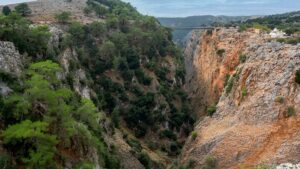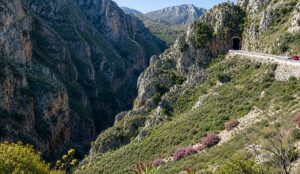
Samaria Gorge is the biggest day out in western Crete, and probably the one your friends will ask about when you get home. In the prefecture of Chania, the Samaria Gorge is the longest gorge in Europe at 16 kilometres, and one of the most impressive gorges in Greece. Thousands of people walk it every season. Some say it changed their holiday. Some say it nearly broke their knees. Both things can be true.
The honest version: this is a serious full-day walk, not a stroll. The difficulty is usually rated as moderate, but that label can be misleading. The trail is not technical and does not require special mountaineering skills, and thousands of casual walkers complete it safely every day in high season. At the same time, it is a long, sustained walk on rough, rocky footing with a serious descent, particularly in the first third of the route. If you are reasonably fit, properly shod, and start early, you will be fine. If you arrive in flip-flops at 11am in August, the gorge will have something to say about that.
From Chania, this is the one excursion that almost everyone does at least once. And it is worth it. Just go in knowing what you are actually signing up for.
| Distance from Chania | 44km, about 60 to 75 minutes by road |
|---|---|
| Difficulty | Moderate (challenging for unfit hikers or those with knee problems) |
| Time needed | Full day. 5 to 7 hours hiking, plus ferry and bus return |
| Best season | May, June, September, October |
| Parking | Free at Xyloskalo trailhead |
| Entrance fee | Small fee at trailhead. Check the official website before you go |
| Rental car needed? | No. Bus is the better option for this hike |
| Family friendly? | With older children and teenagers only |
What the Samaria Gorge Hike Actually Involves
Starting at the plateau of Omalos, the trail begins at an elevation of approximately 1,230 metres. As you traverse the 16-kilometre trail, you will be descending almost the entire way, ending at sea level in the coastal village of Agia Roumeli.
This is a point-to-point hike, not an out-and-back walk. You begin at around 1,200 to 1,250 metres above sea level at Xyloskalo and finish at sea level on the Libyan Sea coast. Almost the entire route runs downhill, with a total descent of roughly 1,200 metres. That makes it easier on the lungs than on the knees, and the steep first section can feel punishing even if you are reasonably fit.
The most challenging part is right at the beginning of the walk, in the first 6km of the trail, with a couple of steep downhills followed by two demanding sections. Nothing impossible, but take your time. Once the first 6km are done, the path levels out and becomes much more enjoyable.
The official national park information describes a central trail of 13 kilometres inside the gorge, plus an additional two to three kilometres from the park exit to the seafront at Agia Roumeli. In practice, most hikers cover between 15 and 16 kilometres from ticket booth to village.
Warning: The gorge closes to new entries at 13:00. After that time, you can only walk the first 2km from the northern entrance. If you want to hike the full route, you must be through the gate well before midday. Do not arrive late thinking you can slip in.
How Long Does It Take?
The Samaria Gorge hike is a full-day adventure, typically taking between 5 to 7 hours to complete. Fit hikers who push can do it faster. Anyone who stops regularly, takes photos, and eats lunch in the abandoned village should allow the full 7 hours, possibly more.
Arriving at Agia Roumeli by 2 to 3pm will allow you to eat, have a swim at the beach, and be ready for the boat without being in a rush. That is the target to aim for.
Local tip: Do not underestimate the last 3km from the park exit to Agia Roumeli. After 13km of downhill on rocky terrain, your legs are tired and this flat, exposed, sun-baked stretch feels twice as long as it is. Budget 45 minutes for it, not 20.
The Route: What You Will See
The walk begins at Xyloskalo, which translates loosely as “wooden staircase.” The name comes from the old wooden steps that once marked the beginning of the descent. The trail starts with a precipitous hike downhill along a switchback path sometimes bordered by a wooden handrail. Views from the top, before you descend, are remarkable. The White Mountains rise around you in every direction.
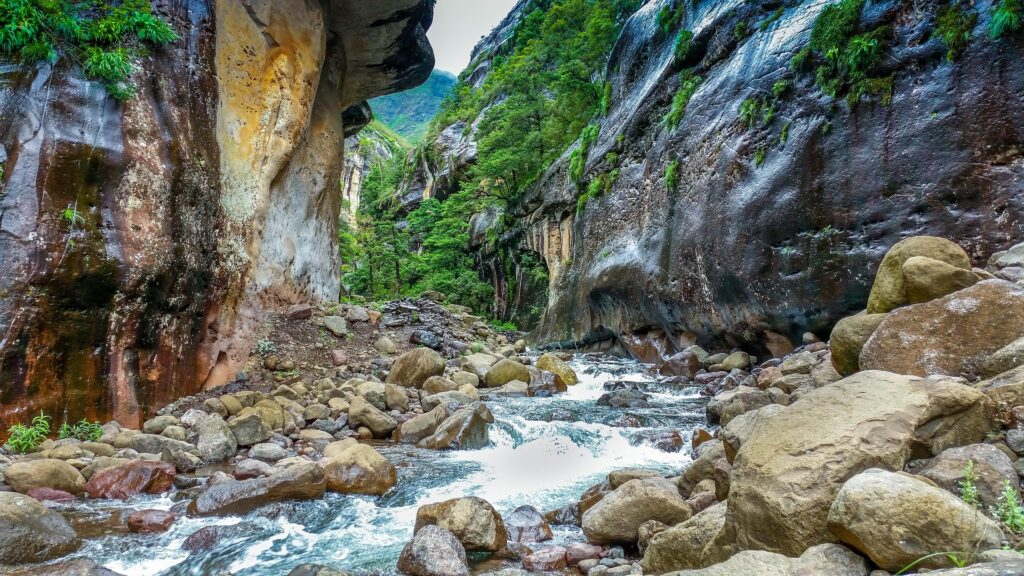
As you drop into the gorge, the trees close in. Cypress, pine, and plane trees line the path. The air smells of resin and wild herbs. The river Tarraios runs the length of the gorge. In spring it flows strongly enough that you will cross it on stones and wooden bridges. By late summer it is mostly dry.
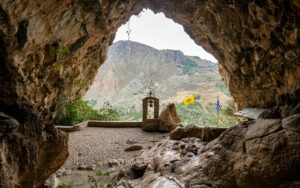
Halfway down the gorge lies the old village of Samaria, whose few houses are now used by the park wardens. The village of Samaria lies just inside the gorge. It was finally abandoned by the last remaining inhabitants in 1962 to make way for the park. The village and the gorge take their names from the village’s ancient church, Óssia María. There are rest areas here with benches, water, and toilets. Worth stopping.
After Samaria, the gorge walls begin to close in. The landscape becomes more dramatic. Then you reach the Gates.
The Iron Gates
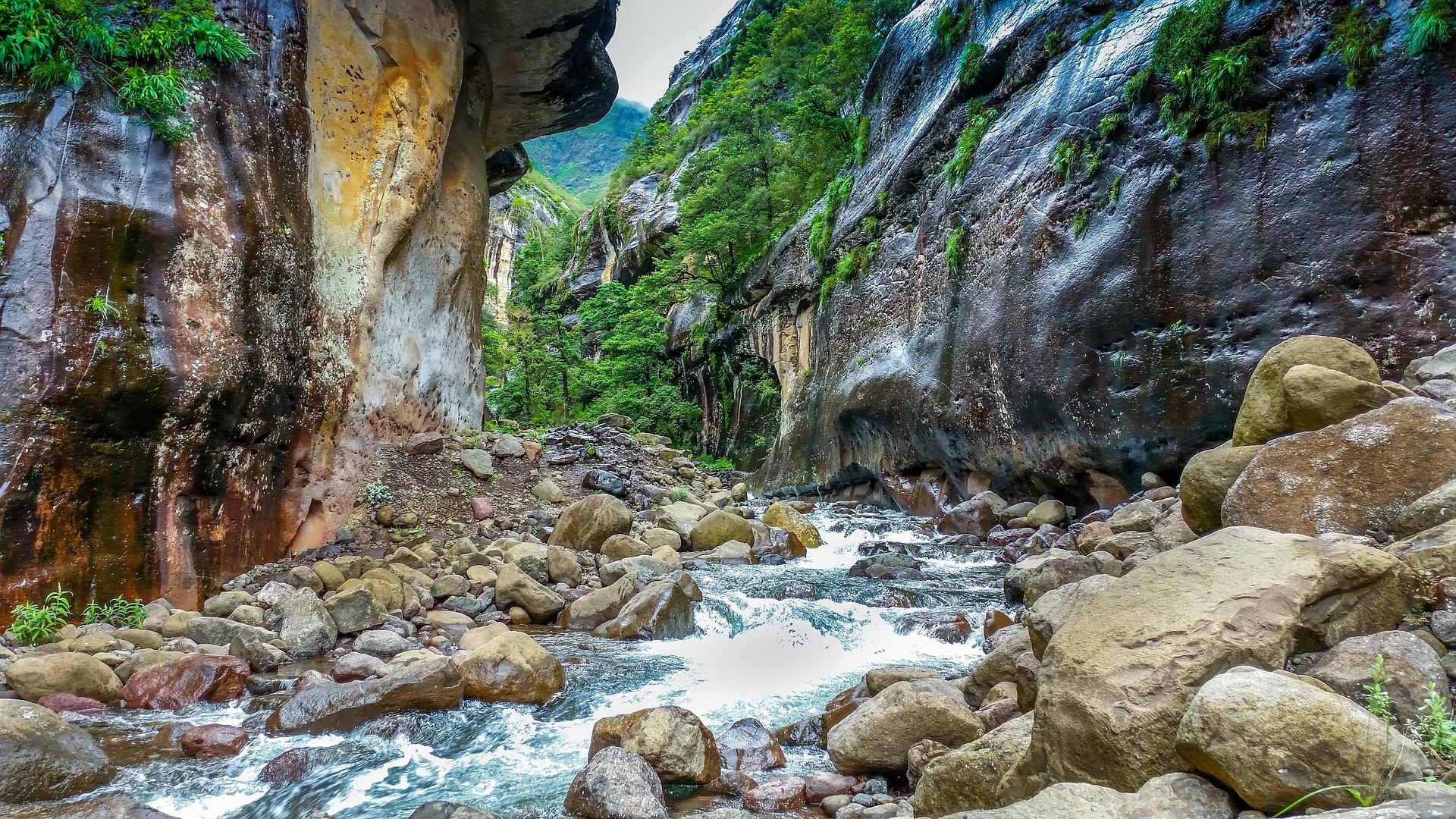
The most famous part of the gorge is the stretch known as the Gates, where the sides of the gorge close in to a width of only four metres and soar up to a height of almost 300 metres. This is the photograph every visitor takes. And fairly enough. The walls on either side rise almost vertically. The sky above you becomes a narrow strip of light. You walk through in silence, or as close to silence as several hundred other hikers allow. It does not disappoint.
The gorge at its widest point is 150 metres across. At the Iron Gates, it narrows to 3 to 4 metres. The walls here rise nearly 300 metres above your head.
The Kri-Kri: Crete’s Wild Mountain Goat
The gorge became a national park in 1962, particularly as a refuge for the rare kri-kri, the Cretan goat, which is largely restricted to the park and an island just off the shore of Agia Marina.
The kri-kri is a feral goat inhabiting the Eastern Mediterranean. Today it is found only in Greece, specifically on Crete and on three small islands off its coast. There are still only about 2,000 animals on the island and they are considered vulnerable.
In the wild they are shy and avoid humans, resting during the day. The animal can leap some distance or climb seemingly sheer cliffs. You may spot them on the cliffs above the trail, if you look up. They avoid tourists, although in the old village of Samaria, you may meet a few more habituated individuals, which approach people without fear and look into backpacks.
Along with the surrounding slopes and a number of smaller gorges, Samaria Gorge forms the whole of the area designated as a national park, a status that offers protection to over 450 species of plant and animal, 70 of which are endemic to Crete.
Local tip: Your best chance of spotting kri-kri is very early in the morning, near the abandoned village of Samaria, or on the high cliff sections in the lower gorge. They rest during the midday heat, so groups arriving after 9am rarely see them.
When to Go
The best time to visit the Samaria Gorge is in May and the second half of September through October. Spring is the best time to arrive: the wildflowers are in bloom and temperatures are cooler than in the midsummer months.
In July and August, it is boiling hot and very crowded. There could be over 1,500 visitors a day on a very busy day. If you are going in peak summer, you will be in a slow-moving stream of people for much of the route. The gorge is still impressive. But it is a different experience.
Starting at dawn will give you a head start. Spend the night in Omalos where you can easily find good accommodation, and you will have no travelling time in the morning. The first tourist buses arrive at around 7:30am. If you want something close to solitude, be inside the gate by 7:15.
Samaria Gorge National Park is open every day from 1st May until 31st October, from 07:00 to 16:00. The gorge may be closed due to weather conditions including rain and strong wind. Always check the official website the day before. This happens more often than tour operators will tell you.
The Honest Notes
Warning: The gorge can close with no notice. Conditions are checked the morning of, sometimes the evening before. If you arrive at Xyloskalo and the gates are shut, there are no refunds on your entrance ticket. Check the official Samaria National Park website the night before every time.
Warning: This hike is not suitable for people with bad knees. The first 3 to 4km descend roughly 500 metres on a steep, rocky path. Many otherwise fit people find this section genuinely hard, and the cumulative descent over 16km leaves most hikers with sore legs for at least two days. If you have knee issues, be honest with yourself before committing.
Warning: The logistics here matter more than at almost any other day trip from Chania. You start at the top, finish at the sea, and cannot walk back. You need a ferry from Agia Roumeli and a bus back to Chania. If you miss the last ferry, you are spending the night in Agia Roumeli. There is nothing wrong with Agia Roumeli, but it is not what most people planned for. The last ferry typically departs around 17:30. Check current timetables before you go.
Before You Go
- Shoes: proper trail shoes or hiking boots with ankle support. No sandals, no trainers with thin soles. The rocks are sharp and some are polished smooth by years of foot traffic.
- Water: there are well-maintained springs on the way, so you do not have to carry much water. Bring at least one litre and refill at the springs.
- Food: there are no shops inside the gorge. Pack lunch and snacks. The cafe at the end of the gorge (before the final 3km to Agia Roumeli) sells drinks and basic food.
- Toilets: there are toilets in several places along the path. Also at the start point.
- Sun: the upper section has tree cover, but the lower gorge and the last 3km to Agia Roumeli are fully exposed. Hat and sunscreen essential in summer.
- Transport: sort your return before you descend. Buy bus and ferry tickets in Chania the night before in peak season.
- Mobile signal: unreliable inside the gorge. Download offline maps before you start.
- Keep your entrance ticket. Rangers check it at the exit.
Getting There
By Bus (Recommended)
Buses depart from the central KTEL bus station in Chania. In high season, departures usually start between 5:15am and 6:00am. The timetable changes slightly by month, so check the current schedule the day before. The ride takes about 1 hour and 15 minutes.
The bus drops passengers directly at the Samaria Gorge entrance at Xyloskalo, right where the hike begins.
The return journey is the part most first-timers do not fully think through. The sequence is: Chania to Xyloskalo by bus, hike Samaria Gorge to Agia Roumeli, ferry at approximately 17:30 to Hora Sfakion, then bus back to Chania at approximately 18:30.
Buy all your transportation tickets at the same time. At the Chania bus station ticket window, they sell both bus and boat tickets. Tell them you want a ticket to the Samaria Gorge, a ferry ticket, and a ticket back. They will sell you three tickets for each person in your party.
In peak season, buy your tickets the evening before. Buses fill up and ferry seats are limited.
You can buy bus tickets online at the KTEL website (e-ktel.com) or at the station. Gorge entrance tickets can be pre-purchased online at samaria-tickets.necca.gov.gr.
By Car
Driving to Xyloskalo is straightforward from Chania. Arrive early in the morning at the mountain village of Omalos, park at the national park entrance for free, and start the hike. The problem, of course, is that you finish at Agia Roumeli. Your car is 44km away in the mountains. Alternatively, explore the surroundings of Agia Roumeli before taking the ferry to Sougia, then the bus from Sougia back to Chania, which goes through the Omalos plateau where you left your car parked. This works, but adds time and cost. For most visitors, the bus from Chania is simpler.

By Organised Tour
Tours from Chania handle all the logistics for you: bus to the trailhead, entrance ticket, ferry from Agia Roumeli, and bus back. Transfers and day tours to the Samaria Gorge are offered from Chania, Rethymno, and Heraklion. If logistics stress you out, a tour is worth it.
Practical Information
| Open | 1 May to 31 October (dates vary slightly by year) |
|---|---|
| Entry hours | 07:00 to 13:00 for full route. Until 15:00 for first 2km only |
| Entrance fee | Small fee. Check samaria-tickets.necca.gov.gr for current prices |
| Tickets | Buy online in advance or at the entrance |
| Last ferry from Agia Roumeli | Around 17:30. Verify before you go |
| Parking at trailhead | Free at Xyloskalo |
| Facilities | Toilets, water springs, rest areas along route |
| Official website | samaria.gr |
| KTEL buses | e-ktel.com |
Frequently Asked Questions
How difficult is the Samaria Gorge hike?
It is a long, sustained walk on rough, rocky footing with a serious descent, particularly in the first third of the route. For anyone who is unaccustomed to full-day hikes, has knee issues, or struggles in the heat, it will feel challenging rather than moderate. If you walk regularly and can manage 5 to 7 hours on your feet, you will complete it comfortably.
How long does the Samaria Gorge take?
The hike is a full-day adventure, typically taking between 5 to 7 hours to complete. Add the ferry crossing (around 1 hour) and the bus back to Chania. You will leave Chania before 7am and return around 8 to 9pm. Plan for a full day.
Is Samaria Gorge worth it?
Yes. It is the most impressive natural landscape in western Crete and one of the great gorge walks in Europe. The Iron Gates alone are worth the effort. Just prepare properly, wear the right shoes, and go early.
Can children do the Samaria Gorge hike?
Children are allowed to hike Samaria Gorge, but whether your kids should do it is up to you as parents. Most experienced hikers would not bring young children under 15 unless attempting only the short version from Agia Roumeli. It is a long, hot, rocky walk. Teenagers who walk regularly will manage it. Young children will struggle.
What shoes do I need for Samaria Gorge?
You need to be very careful to avoid slipping on the rocks, many of which are quite smooth due to water and high foot traffic. Good grip hiking shoes are essential. Trail shoes or hiking boots with ankle support. No trainers, no sandals.
Is Samaria Gorge better than other gorges in Crete?
It is the most famous and the longest, but not necessarily the most beautiful or the most peaceful. Other gorges in western Crete, such as Imbros or Aradena, are shorter, less crowded, and arguably more atmospheric. If crowds matter to you, Imbros Gorge is worth serious consideration. Samaria is on a different scale, but it comes with the crowds that scale attracts.
Can I hike just part of Samaria Gorge?
Yes. The “lazy way” involves starting at Agia Roumeli and walking up to the Iron Gates, then turning back. Some guides promote this as an alternative, but since the Gates are at the end of the gorge, you do not actually get inside the main gorge this way. It gives you the most dramatic section without the full day commitment. A reasonable option if you have mobility concerns.
Combine With
After finishing at Agia Roumeli and taking the ferry to Hora Sfakion, you are on the south coast of western Crete, one of the most dramatic and least developed stretches of coastline in Greece. A few places worth knowing about.
Loutro. A small village with no road access, only reachable by boat or on foot. Completely car-free. A handful of tavernas and guesthouses right on the water. If you have an extra day, it is worth staying.
Hora Sfakion (Sfakia). The ferry drops you here. From Agia Roumeli, a frequent boat service takes you directly to Loutro and Hora Sfakion. Sfakia has good seafood tavernas and a quiet harbour. Worth a short stop before the bus back.
Imbros Gorge. A shorter, less crowded gorge near Imbros village, above Sfakia. About 8km, manageable in 2 to 3 hours. A good option if you want another gorge experience without the Samaria crowds. You can actually drive to both ends, which makes logistics much simpler.
Omalos Plateau. If you are driving to Samaria, the Omalos plateau itself is worth a look. A flat, open highland at around 1,050 metres, ringed by the White Mountains. Very different from the coast. In late spring the meadows are full of wildflowers and the air is noticeably cooler.
Local tip: If you drive to Omalos and start the hike early, the drive back through the mountain roads in the late afternoon light is one of those moments that makes you glad you rented a car. The plateau sits at over 1,000 metres, the White Mountains surround you, and on a clear day the light on the rock faces turns orange before it fades. Most people rush straight back to Chania and miss it entirely. Do not be one of them.