Loutro Chania sits on the southern coast of Crete with no road connecting it to anywhere. Not a quiet road or a rough track. No road at all. With no cars or roads leading into the village, the only way to reach Loutro is by boat or by hiking along the rugged coastline. That single fact shapes everything about the place. The pace. The noise levels. The kind of visitors who end up there. You arrive by boat, the engine cuts, and the quiet hits you.
Loutro sits in the Sfakia region, between Chora Sfakion and Agia Roumeli, about 71 kilometres from Chania. The white mountains behind it rise so steeply that building a road was never really an option. That geographical quirk is exactly what kept Loutro off the mass tourism radar, and it is still the main reason the village feels the way it does. It has not entirely escaped tourism. Not by a long stretch. But it remains different from anywhere else in western Crete, and worth understanding before you go.
| Distance from Chania | 73km to Chora Sfakion, then 20 minutes by ferry |
|---|---|
| How to reach | Ferry from Chora Sfakion (most common) or on foot |
| Time needed | Full day minimum. Overnight strongly recommended |
| Best season | May, June, September, October |
| Parking | In Chora Sfakion. Can fill in peak season |
| Entrance fee | None |
| Rental car needed? | Recommended to reach Chora Sfakion |
| Family friendly? | Yes, with caveats (pebble beach, no pool, rocky terrain) |
What Loutro Chania Actually Is
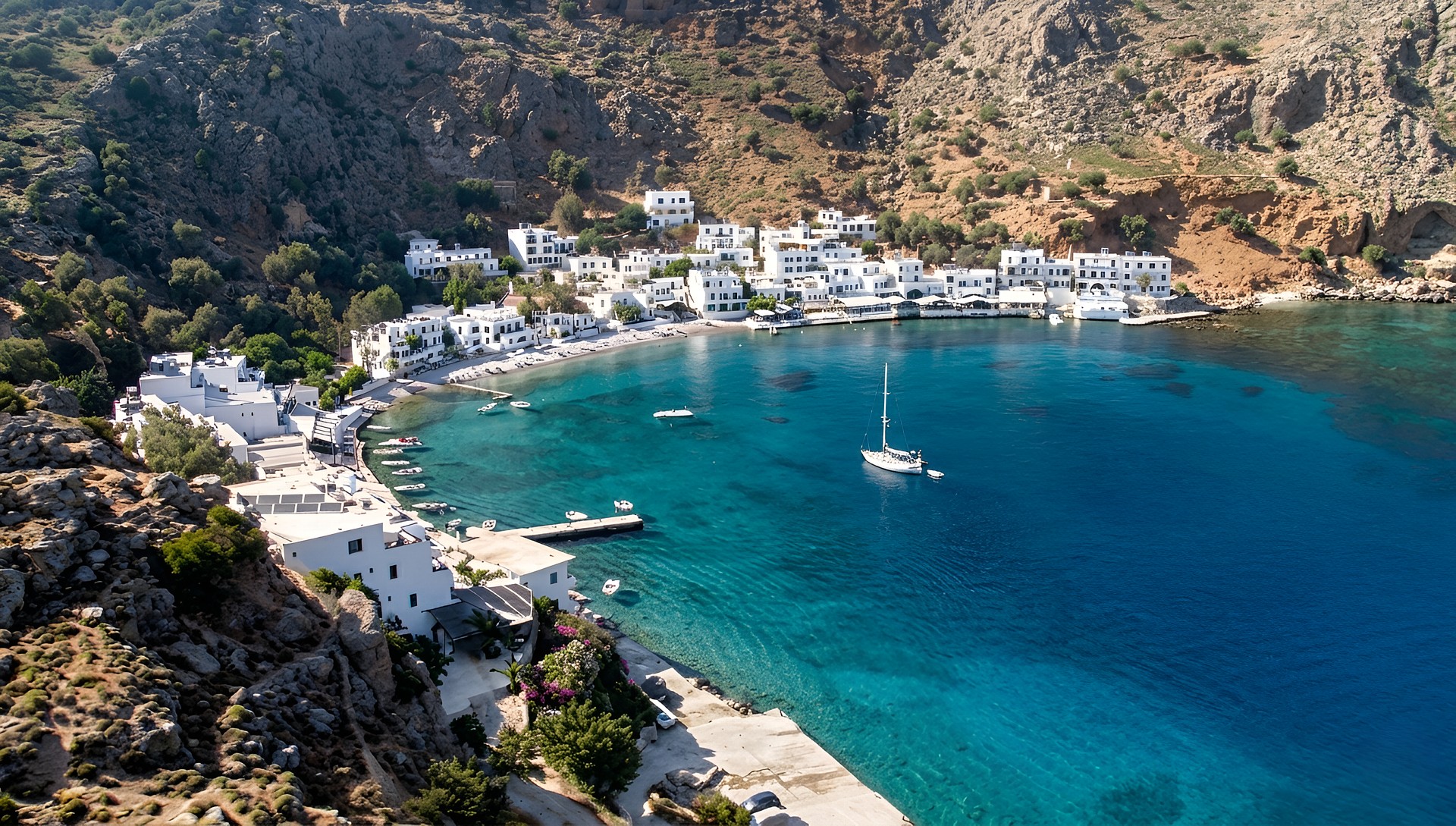
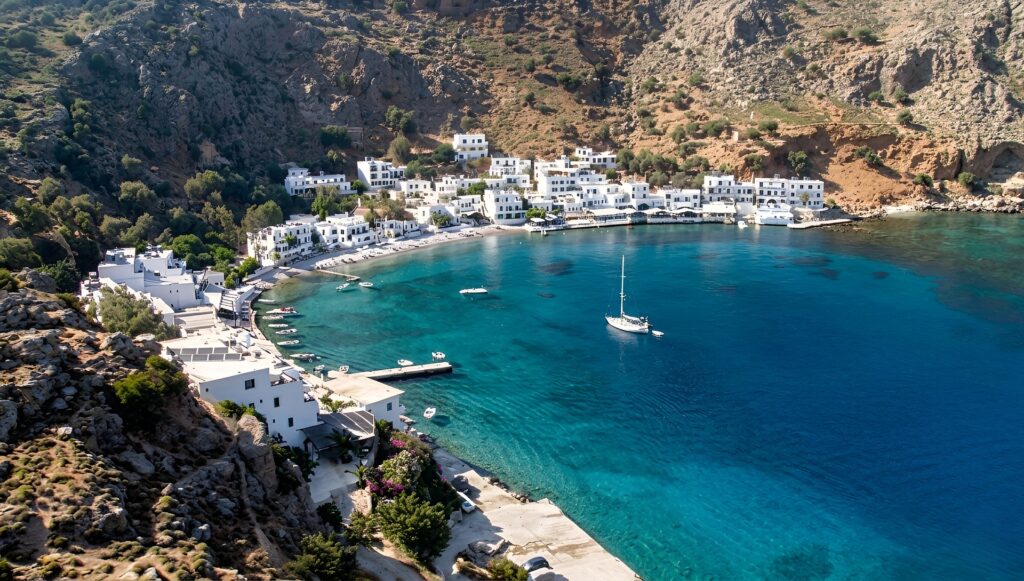
This hamlet in the Sfakia region is accessible only by boat or on foot. No roads reach its white-washed houses. The absence of cars and motorbikes means an unusual peace pervades Loutro. Walk the length of the waterfront in under five minutes. Sit at a table with your feet almost touching the water. The White Mountains rise directly behind the village, so steeply they are almost vertical. The Libyan Sea stretches south. Africa is closer than Athens.
The village is believed to sit on the site of ancient Finikas, which served as the port for the inland town of Anopolis. The name Loutro itself comes from the ancient baths found in the area, used by the people of Anopolis. In the medieval era, it was frequently raided by Saracen pirates who used it as a base. The Venetians managed to drive out the pirates and build a small fortress above Loutro to protect the region. The ruins of this fortress are still visible today.
The buildings are all traditional white-washed houses, and there are no high-rise hotels or commercial development in sight. You can enjoy traditional dishes at the local restaurants. There are also a few cozy cafe bars for morning coffee or an evening drink. That is roughly the full extent of it.
Local tip: Loutro has very limited mobile signal inside the village. That is not a problem. It is part of the point. Tell someone where you are going and enjoy the disconnection.
The Main Beach and the Beaches Beyond It
Loutro Beach is a pebbly shore with very calm waters, preferable for children. It is partially organized, with sunbeds and umbrellas, and can get crowded easily since it is a rather small beach. The water is genuinely exceptional. Calm, clear, and very deep in colour. Good for swimming, good for snorkelling, good for sitting and doing nothing. But the beach itself is small, and in July and August it fills up fast.
The better beaches require a bit of effort. Glyka Nera Beach, known as Sweetwater, is a lovely pebbly shore with deep blue waters accessible by boat or on foot. The hike takes around 60 minutes. Sweetwater Beach is named after the underground freshwater springs found there. The springs bubble up through the pebbles. Cold, fresh water mixing with the sea. It is a genuinely odd and pleasant sensation. The hike there from Loutro follows the E4 coastal trail east, with views of sheer cliff faces dropping straight into the Libyan Sea.
Marmara Beach to the west is a stunning shore partly of pebbles and partly of marble-white rock, with sea caves to explore. There is a taverna and plenty of space to relax. You reach it either by a small boat from the Loutro dock or on foot in roughly an hour along a coastal path heading west.
Local tip: If Loutro’s main beach looks packed when you arrive, take the small local boat to Marmara or Sweetwater instead. Both are far less crowded and have more character. Ask at the waterfront about timings when you arrive.
Walking and Hiking from Loutro
This car-free village on Chania’s southern coast is accessible only by boat from Chora Sfakion or by foot, hiking a portion of the European E4 path along the coast. The E4 passes right through the village. That matters because it means Loutro sits at the centre of several serious hiking options, and even casual walkers can access routes with dramatic scenery.
The hike to Sweetwater Beach (Glyka Nera) follows the E4 east. This section of the E4 starts from Loutro and heads east along the rocky wild slopes that reach down to the sea. The route is not particularly difficult, apart from the heat and the strong sun during summertime. Allow around an hour each way. No shade. Bring water.
The Aradena Gorge hike is for people who want more. The Aradena Gorge is within hiking distance of Loutro and is worth the strenuous climb up, to walk back down between towering walls of red stone. It is one of the most beautiful hikes in the area. The gorge hike ends at Marmara Beach. From Marmara you can then take a small boat back to Loutro rather than hiking the return. That combination works well.
Warning: The coastal trail between Loutro and Sweetwater Beach involves exposed sections and some scrambling. Although the route is short, it is quite challenging. Coastal hiking often conjures images of easy, smooth paths, but this hike is rocky, uneven, and sometimes exposed. It is not recommended for anyone with vertigo. Proper footwear is essential.
The Venetian Fortress
You can climb the ruins of the old Venetian castle above the village. It is a quick hike and if you do not have the endurance for one of the more challenging hikes in the area, this one is a good option. The views from up there are worth having. The whole crescent of the bay, the mountains behind, the sea in front. Ten minutes up. Use it as a warm-up.
Food and Drink in Loutro
Loutro is an excellent place to eat simply but delicious Cretan food and seafood dishes. Locals joke that there is not much to do in Loutro other than swimming, fishing, and eating. There is truth in that. The waterfront has a row of tavernas. Despite its secluded location, Loutro has several restaurants and cafes where visitors can sample local cuisine. Fresh fish is a specialty here, and there are several tavernas that serve grilled seafood and traditional Cretan dishes made with locally sourced ingredients.
The standard is generally good. Choose a taverna displaying fresh fish on ice. You know what you are getting. Grilled octopus, fresh calamari, and whatever local fish came in that morning. Dakos and salad to start. Carafe wine. Eat slowly. There is nowhere to be.
Notos Taverna is consistently mentioned by visitors as one of the better options on the waterfront. The Blue House Restaurant is another reliable choice for lunch.
The Honest Notes
Loutro’s problem is twofold: because of its position, in a small bay at the foot of high mountains, it has expanded to its limit and can’t expand further. And it has become so popular that in season it is hard for it to cope with the number of visitors. So it can feel crowded, and in the most popular restaurants service can sometimes feel rushed.
Warning: The main beach in Loutro is genuinely small. In high summer, sunbeds are packed tightly. Although Loutro maintains a traditional character and a sense of simplicity and calmness, it is also a very popular destination. Every day, multiple boats arrive carrying a large number of visitors, which means that during peak hours the village can feel quite busy. This is something many visitors do not expect when they first see photos of Loutro.
Warning: Parking in Sfakia is limited, so plan to arrive early during peak season. In summer, the small harbour parking lot fills up quickly with day-trippers’ cars. If you are driving, aim to be in Sfakia well before the first morning ferry.
The village works best if you stay overnight. Day-trippers arrive on the midday boats, fill the beach, eat lunch, and leave on the afternoon ferry. If you stay, the evenings are a different thing entirely. No stress, no cars, no mobile phones going off at the next table, since the reception is very poor. Many visitors report that they have never relaxed as much as they did in Loutro, simply because relaxing is pretty much all you can do.
The beach itself is pebble, not sand. Small children can manage, but it is not a sprawl-on-the-sand kind of beach. Families with toddlers sometimes find that harder than expected.
Before You Go
- Water: bring at least 1.5 litres per person if hiking. No water sources on the coastal trails.
- Shoes: trail shoes or hiking boots for any hike. Sandals fine in the village only.
- Sun: almost no shade on coastal paths. Hat and sunscreen essential.
- Cash: bring cash. Card acceptance in this region is unreliable.
- Ferry return: check the last ferry back to Chora Sfakion before you leave. There is no night service.
- Signal: mobile signal is very poor inside Loutro. Tell someone your plans.
- Accommodation: book ahead in July and August. The village is small and fills up.
Getting There
By Car and Ferry (Recommended)
Drive from Chania toward Vrisses on the national road, then south through the mountains to Chora Sfakion. From Vrisses it is a 40-kilometre drive south on a good but very winding and scenic road to Sfakia. The drive takes around 75 to 90 minutes from Chania. The road over the mountains is beautiful and well-paved but takes concentration. Not the place for speed.

Park in Chora Sfakion and take the ferry. The ferry ride from Chora Sfakion to Loutro takes about 15 to 20 minutes and is operated by ANENDYK Seaways, with multiple daily departures during the summer months. Multiple departures run daily in high season, generally morning and afternoon. Schedules are slightly reduced in spring and autumn and very limited in winter. Check the ferry timetable in advance, as times can change. ANENDYK is the main ferry company and their timetables are published at anendyk.gr.
To make the most of the day, buy the boat ticket the day before and get on the first ferry. This way you have more time to explore and avoid the second boat, which is usually more crowded, especially in summer.
By Bus and Ferry
If you are not driving, it is still possible to reach Loutro using public buses. From Chania, daily KTEL buses run to Chora Sfakion, about 2 to 2.5 hours, timed to connect with some ferry departures. Bus frequency is limited. Check the KTEL Chania timetable before planning.
On Foot
It is possible to walk along the coast from Chora Sfakion, about 2 hours, or on a path winding down from the village of Anopolis, just over an hour. The coastal walk from Sfakia passes Sweetwater Beach and is a proper hike, not a stroll. Do not attempt it in flip-flops or in the midday heat of summer.
By Organised Tour
If you prefer not to deal with logistics yourself, organised day trips run from Chania. It is a perfectly good option if you want someone else to handle the timing.
Powered by GetYourGuide
Practical Information
| Ferry operator | ANENDYK Seaways (anendyk.gr) |
|---|---|
| Ferry from | Chora Sfakion (main option) or Agia Roumeli |
| Ferry crossing time | 15 to 20 minutes from Chora Sfakion |
| Ferry season | Regular service May to October. Reduced in winter |
| Where to buy tickets | At the booth on Sfakia waterfront, or online at anendyk.gr |
| Parking in Sfakia | Available near the harbour. Fills early in summer |
| ATMs | None in Loutro. Bring cash |
| Facilities | Tavernas, small minimarkets, guesthouses |
| Toilets | Available in restaurants and some accommodation only |
| Mobile signal | Very limited inside the village |
| Best time to visit | May to June, September to October for fewer crowds |
Combine With
Loutro sits in a part of Crete that rewards a longer visit. If you are going all this way, consider combining it with these:
Chora Sfakion. The jumping-off point for the ferry and worth an hour in itself. A real Sfakian village. Sit at a waterfront table and eat lamb chops while you wait for the boat. No performance, just food.
Sweetwater Beach (Glyka Nera). Named after the underground freshwater springs found there, this beach on the southwest coast is one of the most unusual in Crete. Reach it on foot from Loutro or by small boat. Either way, worth combining with your Loutro visit.
Aradena Gorge. A serious gorge hike that ends at Marmara Beach. This gorge is not as busy as Samaria and in many ways just as interesting. It is best to walk here in spring or autumn and avoid it in summer due to high temperatures. The walk down takes about 3 hours. From Marmara, catch a boat back to Loutro.
Frangokastello. On the drive from Chania, this seaside village is home to a famous Venetian castle right on the beach, and its imposing stone walls against the bright sea are worth a look. Stop here on the way down or back.
Local tip: If you can manage even one night in Loutro, do it. The day-trippers leave on the afternoon ferry and the village becomes something else. The tavernas empty out a little. The light changes over the water. The Libyan Sea goes very still. You eat dinner at a table six feet from the sea with a carafe of local wine, and the mountains above the village turn dark against the sky. That is what people keep coming back for.