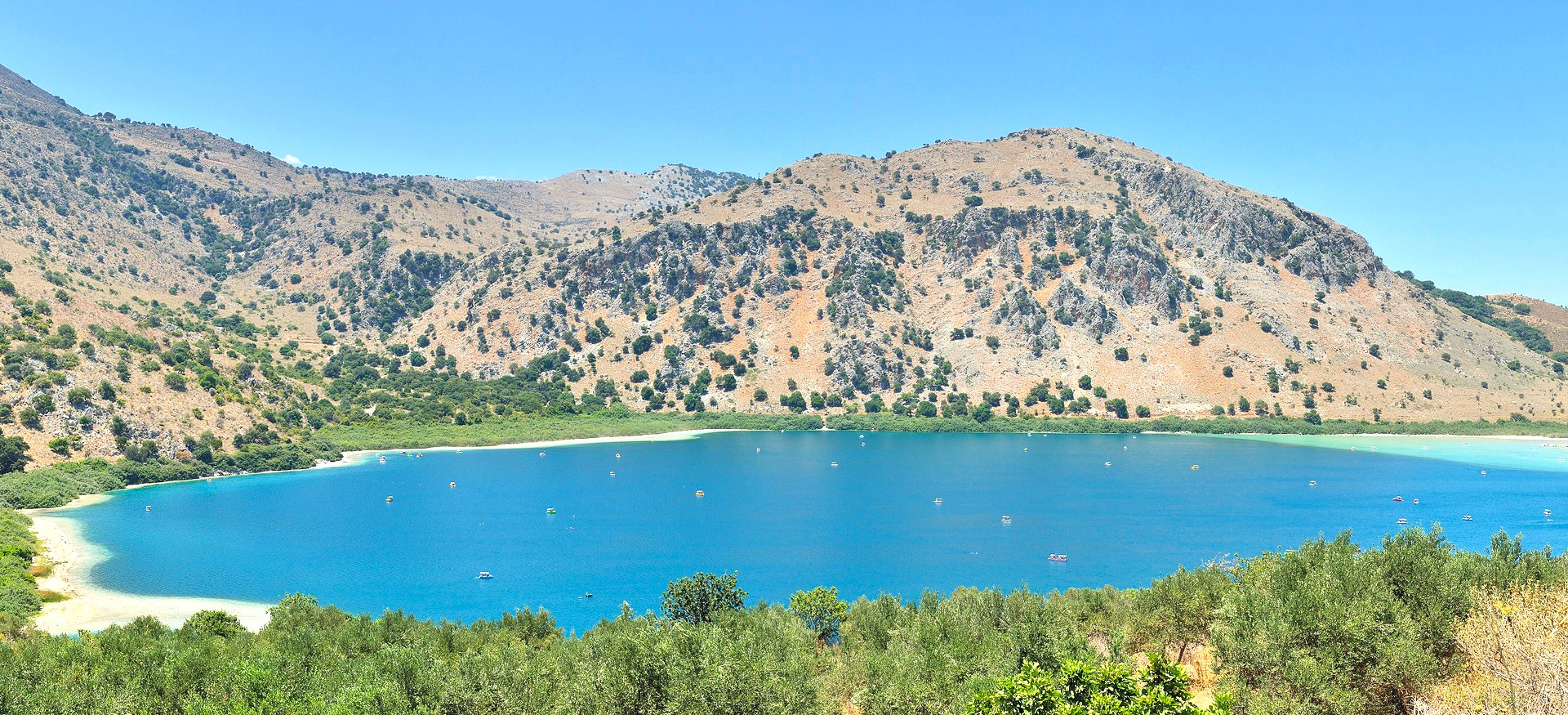
Lake Kournas Chania is one of the most genuinely different half-days you can spend in western Crete. No salt water. No beach crowds. No sunbed rows stretching to the horizon. Just a round freshwater lake sitting quietly in a valley between the White Mountains and the coast, doing something no other lake in Crete does. Because there is no other lake in Crete.
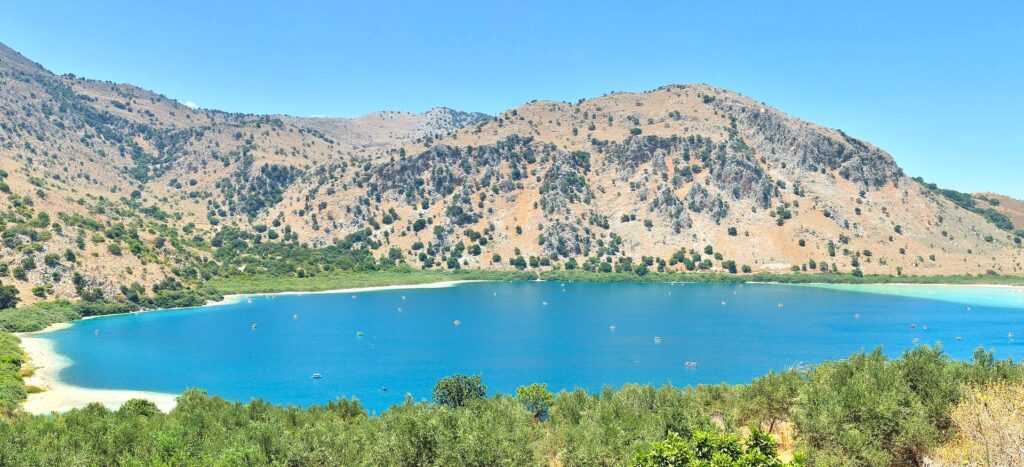
It is the only natural freshwater lake on the entire island. That fact alone draws people in. But what keeps them there is harder to explain. The water shifts colour through the day, from pale green in the morning to something close to turquoise by midday. The shallow clear waters at the shore gradually get darker towards the centre, reaching a maximum depth of 22.5 metres. You can wade in from a sandy shore, pedal out to find turtles, or walk the full circuit. None of it takes very long. But most people stay longer than they planned.
A word of honesty before you go: this is not a hidden spot. Tour buses come here daily. In July and August the main lakefront strip is commercial and noisy by mid-morning. But arrive early, or come in May, June, or September, and the experience is quietly excellent. The mountains ring the horizon, herons move along the shallows, and the water is unlike anything you will swim in on this island. Different enough to be worth the detour.
| Distance from Chania | 43km, about 45 minutes |
|---|---|
| Difficulty | Easy |
| Time needed | 2 to 4 hours |
| Best season | May, June, September, October |
| Parking | Available at the lake, some free spaces near the water |
| Entrance fee | Free to access. Activities and sunbeds paid separately |
| Rental car needed? | Recommended |
| Family friendly? | Yes |
What Makes Lake Kournas Worth Visiting
The short answer: it is completely unlike everywhere else on your Chania itinerary. After a week of sea swimming and coastal driving, the lake feels like a reset. The air is cooler. The sound is different. There are birds rather than jet skis.
The lake is home to freshwater turtles, ducks, coots, herons and various fish species, and is a designated Natura 2000 site, meaning the ecosystem is formally protected. You can also encounter moorhens, cormorants, eels, water snakes and rare species of turtles who are permanent residents of this wetland. The turtles are real. Paddle out to the quieter far end of the lake and you will almost certainly see them.
The lake is relatively small, with a maximum length of 1,087 metres and a width of 880 metres, so it never feels overwhelming. You can walk the full perimeter. A footpath circles the entire lake, covering about 3.5 kilometres, and in the summer heat it takes less than an hour at a relaxed pace. The best section is the far side, away from the tavernas, where the shore is quieter and the views back across the water to the hills are uncluttered.
In summer, the lake’s water level decreases, revealing a sandy strip along the shore. This is where most visitors swim. The sandy areas are small but pleasant, and the freshwater is noticeably softer on skin than the sea. Children take to it immediately.
Local tip: The turtles tend to be most visible on the far eastern side of the lake, away from the main taverna strip. Go by pedal boat rather than on foot. They surface near the reeds. Early morning gives you the best chance before the water traffic picks up.
History and Mythology of Lake Kournas Chania
The name Kournas is believed to come from the Arabic word kurna, meaning “lake” or “bath.” In ancient manuscripts it is referred to as Korissia, and it is believed the area once hosted a sanctuary dedicated to Korissia Athena. Most visitors do not think about any of this while they are floating on a pedal boat. But it is a place with a long memory.
There are several legends associated with the lake’s formation. The most popular tells of a young woman who accompanied her father to the fields here. Overcome, her father tried to seduce her, and the desperate girl wished for the earth to sink and a lake to appear so she could escape. Her wish was granted, and she became a fairy. There is a darker version too, involving gods punishing a whole village by flooding it. The lake sits where the village supposedly once stood.
The lake is fed by springs from the White Mountains. In winter the water level rises significantly. In summer it recedes, exposing sandy beaches that are not there in spring.
Swimming, Pedal Boats and What to Actually Do There
Unlike Crete’s saltwater beaches, Lake Kournas offers a freshwater swimming experience. The water is cool, clean, and refreshing. The lakebed is sandy near the shore but gets deeper quickly, so non-swimmers should stay close to the edges.
Pedal boats are the main activity and genuinely worth doing. Paddling across the calm water gives you a different perspective of the surrounding mountains and lets you discover quieter corners of the lake. Pedal boats with a slide are available and are popular with families. Check prices at the rental stands on the day, as they vary by operator and boat type.
Cafés and tavernas with lake views line the busier side of the lake. The food is standard Cretan taverna fare. Nothing exceptional, but decent enough for lunch. Cash is useful as some tavernas and rental operators do not accept cards, though most pedal boat operators now take both. Carry a mix.
Warning: By 10:30am in summer, the lakefront fills up fast. From 10:30am the place fills up and queues form at the pedal boat stands. If you want a quiet swim and easy parking, arrive before 9am. It is a different place at that hour.
The mountains surrounding the lake trap heat, making it very warm, especially in August. There is almost no shade on the open shore. This is not a beach you can show up to unprepared at midday in the height of summer and have a comfortable time.
The Honest Notes
Lake Kournas is genuinely worth visiting. But it deserves an honest description of what it has become in peak season.
The lake is included in the Natura 2000 protection network, but the surroundings have been degraded by human intervention, including the construction of restaurants and lakeside commercial stores. The main strip facing the lake is functional rather than beautiful. Souvenir shops, ice cream stands, rental boats in rows. It is what it is.
Introduced populations of goldfish have grown in recent years and their increasing numbers have disrupted the closed ecosystem. This is a known problem and worth mentioning. The lake is protected in name, but management of its ecosystem is imperfect.
Warning: Do not feed the fish or turtles. Do not throw food into the water. The lake is a closed freshwater ecosystem under formal protection. What goes in stays in.
None of this means you should skip it. The lake itself is beautiful and the experience of swimming in freshwater in the middle of a Mediterranean island is genuinely unusual. Just go with accurate expectations. It is a popular half-day trip, not a wilderness escape.
Warning: The entry into the water is rocky in places, so water shoes make swimming much more comfortable. On parking: there are some free spaces on site, but signs lead to paid lots. You can usually drive on and find free parking near the lake if you have patience.
Before You Go
- Water shoes: strongly recommended. The lakebed and entry points are rocky in places.
- Cash: bring some. Not every operator or taverna takes cards reliably.
- Sun protection: hat, sunscreen, sunglasses. Very little natural shade on the shore.
- Swimwear: bring a towel too. Changing facilities are basic.
- Snorkelling gear: optional but rewarding if you want to see what is below the surface.
- Timing: aim to arrive before 9am in July and August. Crowds build fast after 10am.
Getting There
By car is the easiest and most practical option. From Chania, take the E75 eastbound towards Rethymno. Head towards Georgioupolis from the National Road and follow the rural road towards Lake Kournas for approximately 4.2 kilometres, watching for the road signs. The lake is not visible from the main road, and it is easy to miss the turn-off if you are not watching. The drive takes around 45 minutes from Chania town. When you reach the lake, you will find several parking areas along the road, often managed by tavernas or pedal boat rental companies, on a “free parking if you buy something” basis.

By bus: KTEL buses run from Chania to Georgioupolis, and from there a taxi takes about 10 minutes to reach the lake. The bus is manageable but adds time and complexity. You will need to arrange a return taxi or catch the bus back from Georgioupolis.
By organised tour: Several operators run day trips combining Lake Kournas with Georgioupolis, Argiroupoli, or Rethymno. This works well if you do not have a car.
Practical Information
| Location | 43km east of Chania, 4km inland from Georgioupolis |
|---|---|
| Entrance fee | Free |
| Activities | Pedal boat hire, swimming, lakeside walk (3.5km circuit) |
| Pedal boats | Available from multiple operators at the lakefront |
| Sunbeds | Available for hire at some operators |
| Tavernas | Several on the main lakefront, open daily in season |
| Toilets | Available at the tavernas |
| Best months | May, June, September, October |
| Worst time to visit | July and August midday |
| Card payments | Widely accepted, but carry some cash |
| Open year round? | Yes, though facilities reduce significantly out of season |
Combine With
Lake Kournas sits almost exactly halfway between Chania and Rethymno, which makes it easy to pair with other stops in the Apokoronas area.
Georgioupolis is the obvious first combination. The beaches of Georgioupolis offer beautiful golden sands and the small town has good tavernas. It is 4km from the lake and takes ten minutes by car. Swim in the freshwater lake in the morning, lunch in Georgioupolis, beach in the afternoon. A solid day.
Argiroupoli is 15 minutes south and completely different in feel. The village sits above ancient springs with clear running water and old plane trees. Tavernas have built their terraces directly over the water. It is cooler than the lake on a hot day and one of the most pleasant lunch stops in western Crete.
Aptera is a large and underrated ancient site about 30 minutes west, back towards Chania. History buffs should explore the ancient city of Aptera and its well-preserved ruins. It has Roman cisterns, a Byzantine monastery, and sweeping views over Souda Bay. Rarely crowded.
Kournas village itself sits on the hill above the lake. Located on a hill overlooking the lake, visitors can explore traditional tavernas, cafés, and souvenir shops. The view down over the water from the village road is worth the five-minute detour before you drive back down to the shore.
Frequently Asked Questions
Is Lake Kournas worth visiting?
Yes, especially if you are spending more than four or five days in western Crete and want variety. The freshwater swimming is genuinely different from the sea, the turtles are real, and the setting is peaceful if you time it right. It is a half-day trip, not a full day. Combine it with Georgioupolis or Argiroupoli and you have a well-rounded day out.
How long do you need at Lake Kournas?
Many visitors spend 2 to 4 hours at the lake, including a pedal boat ride and a swim. Two hours is enough for a swim and a walk around the shore. Three to four hours gives you time for a leisurely lunch at one of the tavernas too.
Can you swim in Lake Kournas?
Yes, swimming is a popular and refreshing activity. The water is warm and this is Crete’s only freshwater lake. The main swimming area is on the northern shore where the sandy beach forms in summer. Water shoes are recommended for the entry, as it is rocky underfoot in places.
Are there really turtles in Lake Kournas?
Yes. From the pedal boat on the far end of the lake you can spot turtles swimming near the shore. They are freshwater terrapins rather than sea turtles. Early morning visits improve your chances significantly. Do not try to touch or feed them.
Is Lake Kournas good for children?
Yes, Lake Kournas is very family-friendly. Kids love the pedal boats and the chance to see turtles. The water is calm, the lake is not tidal, and the pedalos with slides are a genuine hit with younger children. The shallow sandy edge near the main beach is safe for paddling.
Do I need a rental car to visit Lake Kournas?
A car is strongly recommended. It is technically possible by bus to Georgioupolis followed by a taxi, but it adds complication and expense. While the location is accessible by car with ample parking, public transportation options can be limited. If you are already planning to rent a car for your Chania stay, add Lake Kournas to the itinerary on your way east or back.
Local tip: If you are driving back to Chania from Lake Kournas in the late afternoon, take the old road through the Apokoronas villages rather than the E75 motorway. It adds fifteen minutes but takes you through Vamos, a well-preserved stone village with a decent café stop, and the light on the hills at that hour is worth the small detour.