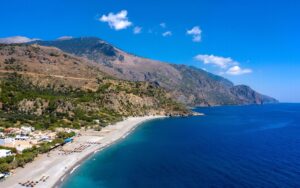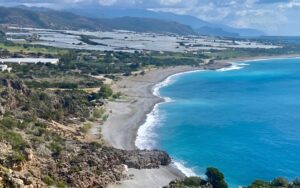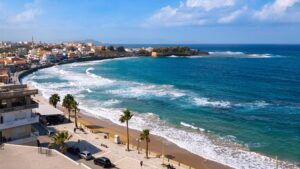
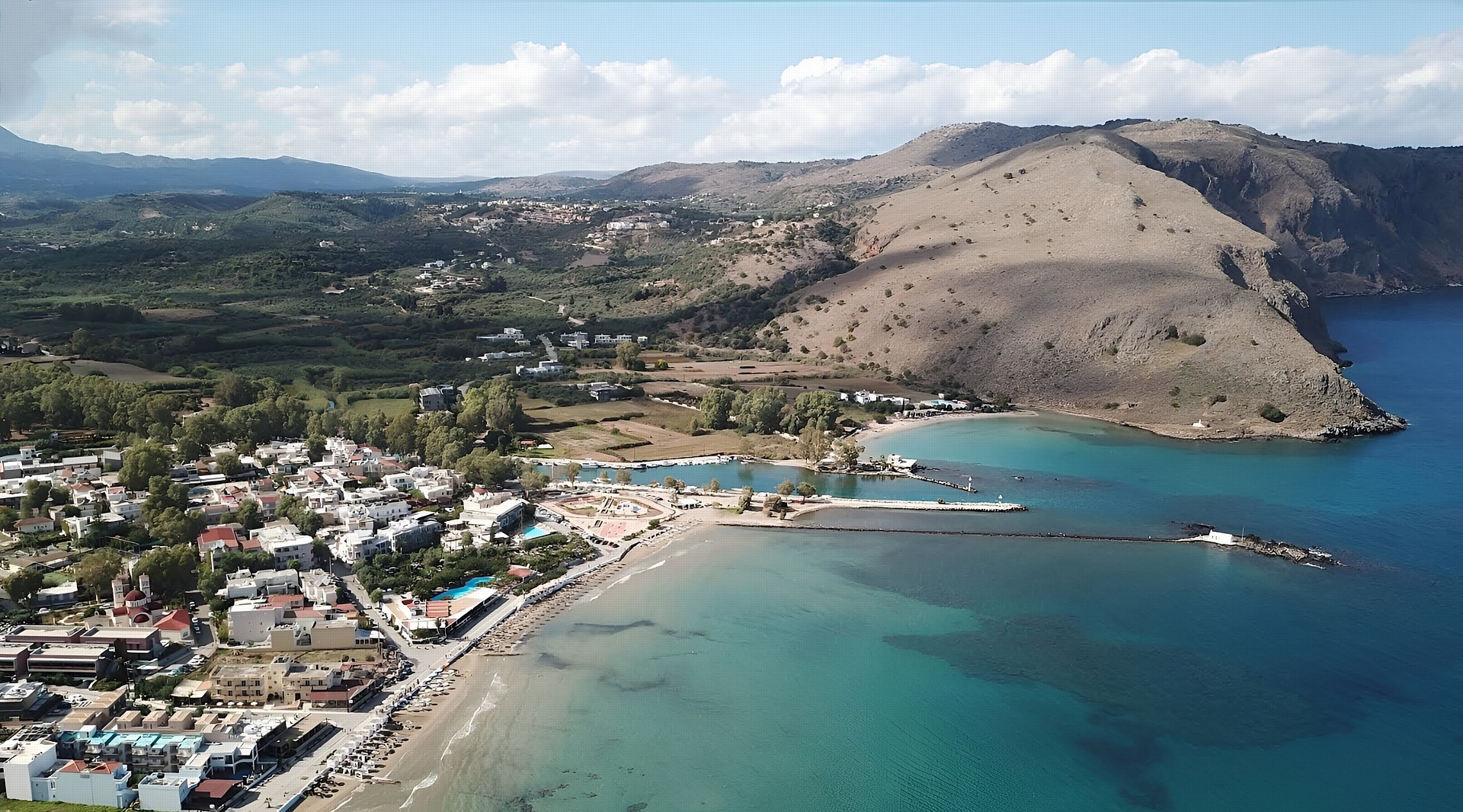
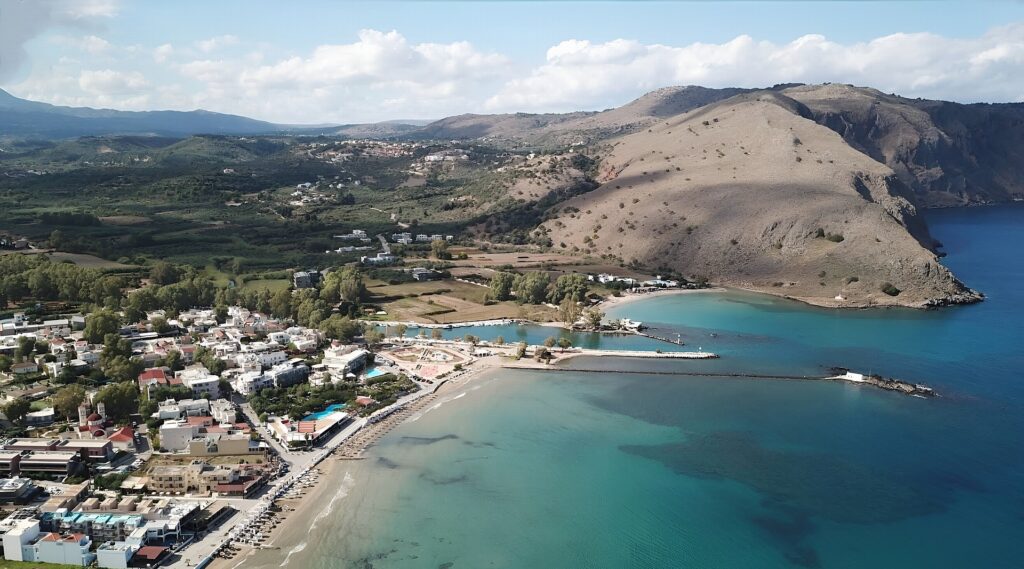
Georgioupolis Chania sits about 38 kilometres east of the city, roughly halfway between Chania and Rethymno, and it is one of the most genuinely relaxed places on the entire island. Not dramatic like Balos. Not remote like Sfakia. Just a proper seaside village with a long sandy beach, a shaded square, a river that meets the sea, and enough to keep most families and couples happy for several days without ever needing to move very far.
The village sits between the estuaries of the Almyros and Perastikos rivers, with the calm waters of the Almyros creating a small lake just outside the village. That geography shapes everything here. The air feels different. Greener, cooler, less harsh than the exposed western beaches. Tall cypress and eucalyptus trees greet visitors as they arrive, leading toward the village square. It is one of the few places in western Crete where you actually feel some shade before you reach the beach.
It is touristy. That much should be said upfront. Formerly a small fishing village, Georgioupolis is very much a tourist town now, with many cafés, tavernas, and small hotels and apartment blocks. But it handles tourism better than most places its size. The beach is long enough that it never really feels crowded. The square still works as a square. And the river mouth, the turtle nesting ground, the chapel on the rocks, these things are real and they are good.
| Distance from Chania | 38km, about 40 minutes by car |
|---|---|
| Best season | May, June, September, October |
| Parking | Free along the beachfront road and in the village |
| Entrance fee | None |
| Rental car needed? | Recommended for day trips, not essential if staying in the village |
| Family friendly? | Yes, especially the western end near the harbour |
| Beach length | Approximately 10km including Kavros extension |
| Blue Flag beach? | Yes |
The Georgioupolis Chania Beach: What to Expect
Georgioupolis Beach is one of the largest sandy beaches in the Chania region, stretching for 10 kilometres. That figure covers the full run from Kalivaki in the west all the way through Kavros toward Episkopi in the east. The beach immediately in front of the village is about 1.5 kilometres before it crosses the Perastikos river and widens into the Kavros stretch.
While often referred to as a single beach, Georgioupolis Beach comprises a long stretch of sandy coastline that includes several connected sections, from the smaller, quieter western side near the harbour to the broader, more organised eastern stretch toward Kavros. Each part has a different character. Worth knowing which section suits you before you arrive.
The Western End (Near the Harbour)
This is the most sheltered part of the bay. This first stretch of beach descends very gradually into the sea and is well protected from stronger ocean currents. Good for young children. The water is calm on most days and the sand is soft. This is where the organised beach bars are most concentrated, the promenade runs along the back, and the chapel jetty is at the end.
The Eastern Stretch (Toward Kavros)
Walk or drive east past the Perastikos river mouth and the beach broadens significantly. More space, fewer organised sunbeds, some deserted spots if you prefer privacy. The tradeoff is that the beach is affected by the northern summer winds called meltemia, and the exposed sections can get choppy in July and August.
Warning: The meltemia winds blow consistently from the north through July and August. On windy days, the exposed eastern stretches of the beach can have significant wave action and surface currents. These currents run along the coast rather than out to sea, but they are strong enough to move inexperienced swimmers. The western end near the harbour remains the calmer option on these days.
The beach is well-organised with lifeguards, sunbeds, umbrellas, and showers available in the main sections. It holds Blue Flag status, recognised for its cleanliness and safety.
Kalivaki Beach
Just west of the harbour, on the far side of the Almyros river mouth, is Kalivaki. The beach is uniquely positioned between two rivers, creating a cooler environment often called the “cold beach”. Its protective positioning relative to the other Georgioupolis beaches makes it an excellent choice for children, especially on windy days. The water temperature surprises people. The freshwater mixing with the sea creates patches of cold that are genuinely cold. Some people love it. Others do not. Worth knowing about before you take a child in.
Local tip: At the organised beach bars along the western promenade, many places offer free sunbeds in exchange for a drinks or food order. This is common practice across Crete and it works well here. Order a coffee and a bottle of water and you have a bed for the morning. No need to pay the hire fee upfront if you are willing to spend a little at the bar.
The Town: What Is Actually There
The main square of Georgioupolis is one of the most attractive in any Cretan tourist village. The restaurants and tavernas have their menus on billboards in the usual tourist way, but the chairs and tables set outside in the summer, in the shade of the eucalyptus trees, invite you to sit in the cool and enjoy your coffee. Even at times when the beaches are packed, people come to the square just for a coffee. It has its own atmosphere.
The town’s most photographed landmark is the chapel of Agios Nikolaos, built at the end of a small pier jutting into the sea. From a distance it looks like it is floating on the water’s surface. It is a short walk from the square down the eucalyptus-lined road to the harbour. The chapel was built about a century ago right on the sea by a sailor. Agios Nikolaos is the patron saint of sailors, and the church was named after him. Worth walking out to, particularly in the late afternoon when the light is on the water.
The estuary of the River Almyros, on which the village stands, is a nesting ground for sea turtles, and you can catch a boat trip upriver to see terrapin colonies. This is not widely advertised but local operators run trips from the harbour. Ask around.
Georgioupolis takes its name from Prince George of Greece, who served as High Commissioner of the autonomous Cretan State. The village was renamed in his honour in 1899. Before that it was known as Almiroupoli, after the Almyros river.
Georgioupolis is built on the ruins of the ancient Minoan city of Amfimalla, which served as the port for the ancient city of Lappa, modern-day Argyroupoli. The history here goes deep, even if it is not visible on the surface.
When to Go
The best time to visit Georgioupolis is between May and October, when the weather is warm and sunny. July and August are the busiest months, while May, June, September and early October offer pleasant temperatures and fewer crowds.
September is the sweet spot. Warm sea, quieter beaches, and lower prices. The water is at its warmest from August through September. The meltemia winds are calming down. The large resorts are thinning out. September in Georgioupolis is noticeably better than August, and anyone with flexibility should consider it.
Avoid peak July and August if you are not a fan of the Meltemi winds, which can make the beach breezy. July and August here are not a disaster, but the wind is real and it does affect the eastern beach sections most days.
Warning: Georgioupolis is well-served by large resort hotels that book out solid in July and August. If you are planning a summer visit, accommodation fills quickly. Book early. The village itself is small enough that staying anywhere within walking distance of the square puts you in a good position.
Things to Do Beyond the Beach
The beach is the main event but Georgioupolis is better positioned than almost anywhere else in western Crete for day trips inland. This is an underused advantage.
Lake Kournas
Lake Kournas lies just 4 kilometres inland from Georgioupolis and is Crete’s only freshwater lake. It is home to many species of birds and aquatic plants. You might see geese and wild ducks, sweet-water turtles, grey herons, green sandpipers, and kingfishers. Pedalos and canoes are available for hire. There are several tavernas on the hillside above. The lake’s water level changes significantly between winter and summer, revealing a temporary sandy beach during the dry months. In summer you can swim in it. A good half-day from Georgioupolis, easy to walk or cycle if you are staying in the village.
Argyroupoli Springs
About 20 kilometres from Georgioupolis, inland toward the White Mountains. The village is mainly known for the natural springs called Agia Dynami. It is a lush place with waters flowing from every point, forming small waterfalls and giving a strong feeling of coolness, particularly during the summer months. The traditional tavernas of Argyroupoli are known for their fresh trout, raised in local springs, as well as roasted lamb. This is one of the best lunch stops in the whole Chania region on a hot summer day. Genuinely cool, green, and quiet.
Horse Riding and Safari Tours
Zoraida’s Horse Riding Centre offers rides at different skill levels, with options to join rides through the neighbouring woods or enjoy a swim in the sea with your horse. You can also combine two Georgioupolis highlights by riding through the olive groves to visit Lake Kournas. Safari off-road tours in Land Rover Defenders are also popular and well-reviewed, covering gorges, mountain villages, and coast in a single day.
Local tip: The small village of Exopolis sits in the hills directly above Georgioupolis. The views from up there, looking back down over the bay and the coast toward Rethymno, are genuinely good. A short drive. Several tavernas operate in the evening. It is one of those spots that most beach visitors in Georgioupolis never bother with, and it is better for it.
The Honest Notes
The beach at Georgioupolis is long and good. But a few things are worth knowing before you commit to the idea of a perfect family swim.
Warning: The currents on the main Georgioupolis beach are real and should be taken seriously, particularly with children. They run along the coast rather than out to sea, which limits the danger of being swept offshore, but strong swimmers have been caught out here. The western end near the harbour breakwater and the Kalivaki bay are the safer options for young children and nervous swimmers.
Georgioupolis is one of the busier and more popular villages in Crete. Although very touristy, many visitors enjoy their stay and in many cases decide to return, due to the laid-back atmosphere and geographical location. That is a fair summary. It has commercialised more than some other villages in the Apokoronas area, but it has not lost its character entirely. The square still has a Greek rhythm to it at seven in the morning before the tourists are up.
The accommodation options here are large and varied. From small family apartments above the square to big resort hotels along the beach road. The village’s location is quiet but central on Crete, ideal for holidaymakers who would also like to explore the island. If you are basing yourself here for a week and using it as a launchpad for Chania, Samaria, Rethymno, Lake Kournas, and Argyroupoli, the position is almost perfect.
Before You Go
- Sun: the beach faces north and catches any summer wind, but the sun is intense. Hat and sunscreen essential.
- Cash: many beach bars and smaller tavernas are cash-preferred. There are ATMs on the village square.
- Parking: free along the beach road and in most village streets. It gets tighter near the square and harbour in peak season. Arrive before 10am.
- Toilets: available at the organised beach sections and at the harbour. None on the quieter eastern stretches.
- Showers: at the main organised beach areas. Not available everywhere along the 10km stretch.
- Water: bring drinking water if you are walking or cycling the beach road east toward Kavros. No shade along that route.
Frequently Asked Questions
Is Georgioupolis beach safe for children?
The answer depends on where you swim. The first stretch of beach near the harbour descends very gradually into the sea and is well protected from stronger ocean currents. That section is good for small children. Further east, toward the open stretches, currents are present and the sea can be rough on windy days. Kalivaki, west of the harbour, is another calm option, though the water is noticeably cold due to river mixing.
How long does the beach stretch?
Georgioupolis Beach is one of the largest sandy beaches in the Chania region, stretching for 10 kilometres including the Kavros extension to the east. The section immediately fronting the village is about 1.5 kilometres. You can walk or drive east for a quieter spot with more space.
Is Georgioupolis worth visiting as a day trip from Chania?
Yes, easily. It is 38 kilometres from Chania, about 40 minutes by car on the old national road. A morning on the beach, lunch in the village square, and a late afternoon drive to Lake Kournas makes a full and unhurried day. The public bus connects Georgioupolis to Chania approximately every hour, so it is also doable without a car if you are staying in the city.
Does Georgioupolis get windy?
The beach is occasionally affected by the strong summer winds called Meltemia. The western end near the harbour is sheltered by its geography and stays calmer. The long open eastern stretches are more exposed. In July and August you should expect some wind on most afternoons.
What is the chapel on the sea at Georgioupolis?
At a rocky causeway near the village harbour is the Church of Saint Nicholas, a white chapel on a rock jetty dedicated to the patron saint of sailors. It is a short walk from the square. It holds a special place in the hearts of locals and visitors for its serene ambiance, especially at sunset.
Can I visit Georgioupolis without a rental car?
A rental car is not essential for a beach holiday here. The village, beach, and restaurants are all walkable, and there is a local bus to Chania and Rethymno. That said, a car opens up Lake Kournas, Argyroupoli, the Apokoronas villages, and the rest of western Crete. If this is your only base for the week, a car for two or three days is worth it.
Getting There
By car: From Chania, take the E75 motorway east toward Rethymno, exit at the Georgioupolis sign, and follow the old national road into the village. Total distance approximately 38 kilometres, journey time 35 to 45 minutes depending on traffic. Parking is no problem anywhere along the beach road unless you are right by the village where space can be tight. In peak season, arrive before 10am if you want a spot close to the harbour end.

By bus: You can travel from Chania to Georgioupolis by local KTEL bus. Buses depart approximately hourly from Chania bus station, with the journey taking about 43 to 45 minutes. The bus stop is on the main road at the edge of the village. The beach and square are a short walk from there.
By taxi: Taxis from Chania to Georgioupolis are available but it is a longer ride at the taxi meter rate. Fine for airport arrivals with luggage. Not practical for a day trip unless you are a group.
Organised tour: Several tours combine Georgioupolis with Lake Kournas and Argyroupoli in a single day. These run from both Chania and Rethymno and are good value if you do not have a car.
Practical Information
| Location | Apokoronas, Chania Prefecture, 38km east of Chania |
|---|---|
| Beach type | Sand, organised and unorganised sections |
| Blue Flag | Yes |
| Facilities | Sunbeds, umbrellas, showers, lifeguards, toilets, beach bars |
| Sunbed hire | Available at beach bars, check current prices on arrival |
| Entrance fee | None |
| Parking | Free, ample along beach road and village streets |
| Bus from Chania | KTEL, approximately hourly, 40-45 minutes |
| ATM | Yes, on the village square |
| Pharmacy | Yes, in the village |
| Best for | Families, couples, beach base holidays, day trips |
| Open season | Year-round, peak June to September |
Combine With
Lake Kournas. Only 4 kilometres inland, it is the obvious pairing. Crete’s only freshwater lake, with pedalos, wildlife, and tavernas on the hillside above. A good afternoon complement to a morning at the beach.
Argyroupoli Springs. About 20 kilometres inland, sitting on the ancient city of Lappa. The idyllic mountain village is at the north-eastern foot of the White Mountains and offers springs with waterfalls, romantic tavernas, small chapels and narrow streets. One of the best lunch stops in the entire Chania region. Cool even in August.
Vamos Village. A small scenic village 10km from Georgioupolis with efforts to restore old buildings, giving it a charming atmosphere. A good detour for an hour if you are driving the Apokoronas area. The village of Gavalochori nearby has a good folklore museum.
Apokoronas Coast. The villages of Almyrida, Kalyves, and Plaka are all within 25 to 35 minutes west toward Chania. Each has its own smaller beach, tavernas by the water, and a slower pace than Georgioupolis in high summer. Worth combining into a coastal loop day.
Local tip: Walk to the Agios Nikolaos chapel jetty about 30 minutes before sunset, when most people have left the beach and the light is coming in low from the west across the bay. The White Mountains are behind you to the south, the sea is ahead, and the chapel catches the last of the orange light. It takes about ten minutes from the square. It is the kind of thing that does not appear in any resort brochure and it is better than anything on the beach itself.