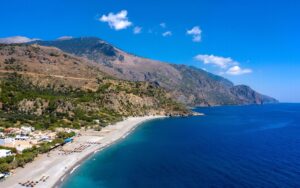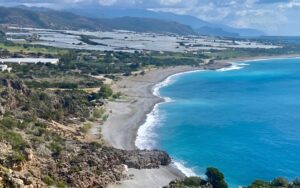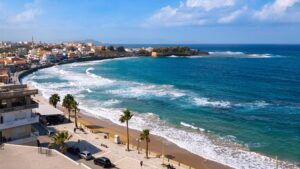
Marathi Beach Chania is one of those places that locals keep quietly returning to, while the tourist crowds chase Elafonisi and Balos. It sits on the southeastern side of the Akrotiri Peninsula, inside Souda Bay, about 17 kilometres from Chania city. The beaches face south, which gives them protection from the wind and a beautiful view across to Drapanos Cape and the White Mountains. The water is calm almost every single day of the summer. That is the main thing to know.
It is not a dramatic beach. There are no towering cliffs, no difficult hike down, no Instagram moment waiting at the bottom. What Marathi has is something more useful: reliable flat water, soft sand, functioning facilities, good seafood, and the ability to actually relax without worrying about whether your child just got swept sideways by a wave. Locals know this. Marathi has a relaxed atmosphere and is a firm favourite among locals. During weekends it is almost impossible to find a free table for lunch in the many tavernas at the beachfront.
That last sentence is the most important one in this article. Come early or book ahead.
| Distance from Chania | 17km, about 25 to 30 minutes |
|---|---|
| Beach type | Sandy, shallow, organised |
| Best season | May, June, September, October |
| Parking | Free, on-site |
| Entrance fee | None |
| Rental car needed? | Recommended |
| Family friendly? | Yes, excellent for young children |
| Water sports? | Yes, kayak, SUP, pedalos, boat hire |
What Marathi Beach Chania Actually Looks Like
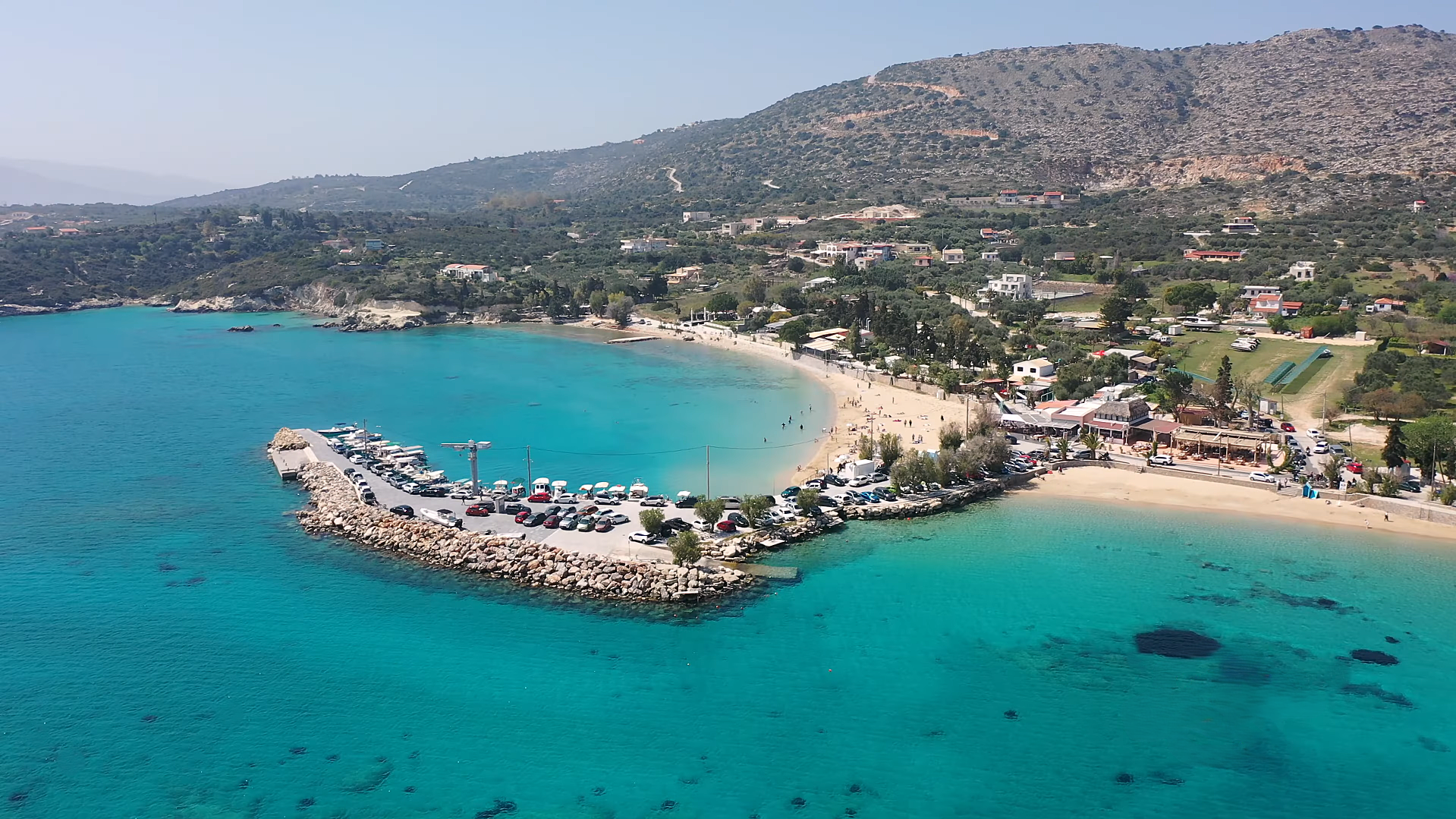
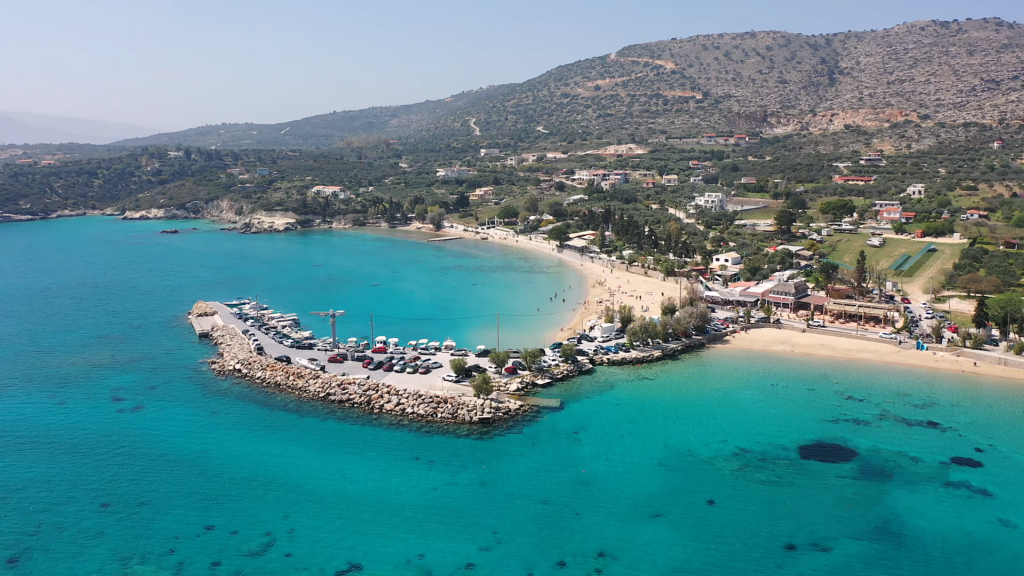
A small pier separates the two beaches, doubling as a harbour for fishing boats and small ferries. On either side of it you have the two coves: both sandy, both shallow, both facing south across the calm water of Souda Bay. The left cove is slightly larger. The right one has more shade from the tamarisk trees that grow behind the beachfront.
Marathi is one of the few southeast-facing beaches around Chania, so it gets great sunlight in the morning. By mid-afternoon the sun is still strong but the light starts to soften over the water. Approximately 500 metres across from Marathi lies the small island of Marathi, also known as Palia Souda, which can be reached by swimming. The island features a small pine forest, while its western coast is steep and popular among scuba divers. Look at it from the beach and you will see why this corner of Souda Bay feels different from anything else on the Akrotiri Peninsula.
On a clear day, you can even spot the castle standing on top of the Archaeological Site of Aptera from Marathi. Most visitors have no idea they are looking at a major ancient site from their sunbed. Worth knowing.
The archaeological site near the beach, sometimes referred to as the Small Palace of Minos, contains remnants of buildings and baths likely linked to an ancient harbour, military facilities, and a mansion. A semicircular wall is still visible on the beach. You will walk past it without realising what it is. Have a look.
Local tip: The tamarisk trees behind the right-hand cove provide natural shade that most Cretan beaches simply do not have. If shade matters to you, arrive by 9am and position yourself on that side. By 11am in July those spots are gone.
The Water: Why Locals Choose Marathi on Windy Days
This is the defining characteristic of Marathi and the reason it gets busy so fast. The beach sits opposite Paleosouda Island and is well sheltered from the Meltemi winds that affect many beaches on Crete’s north coast. This natural positioning is the reason the sea here stays calm even on windy days.
When the Meltemi is blowing hard in late July and August, the north-facing beaches of Akrotiri, including Kalathas and Tersanas, can get choppy and uncomfortable. Marathi stays flat. Specially when weather is windy, Marathi is the only beach which stays calm with no big waves. That is an exaggeration, but not by much. For families in particular, this reliability is worth more than all the dramatic scenery in western Crete.
Parents can feel safe letting their kids swim without the stress of sharp rocks, and they can easily keep an eye on them from sunbeds or beachfront restaurants. The water feels slightly warmer than most of the other beaches on the Akrotiri Peninsula. The shallow, sandy seabed is part of the reason. The warmth stays in the shallows.
Warning: The sea floor in parts of Marathi is not entirely sand. There are sections with stones and submerged rocks, particularly around the pier area. Water shoes are a sensible precaution, especially for children. Check where you are walking before you wade in.
Facilities and What to Expect
Marathi is an organised beach. The beach is well organised, providing sunbeds, umbrellas, showers, changing rooms, and toilets. There is a big parking space as well as a few kiosks to rent boats and pay for your SUP surfing hour. Sunbed hire is available at a small fee per day, check current prices on arrival.
Crete sightseeing cruises and scuba diving tours anchor here, and paddleboards, kayaks, and pedalos are available for hire. Water sports at Marathi include snorkelling, jet skiing, paddleboarding, organised boat trips, and private boat rentals.
Free parking is available along the road and near the tavernas, but it can get crowded on weekends and in high season. Arriving before 10am will secure a good spot close to the beach. The parking is genuinely free and there is enough of it, just not in August at midday.
Marathi has a Seatrac system in place, providing independent sea access for visitors with mobility issues.
The Tavernas: Where to Eat at Marathi Beach Chania
The food at Marathi is the other reason locals come back. Several established seafood tavernas sit directly on or immediately behind the beach. Patrelantonis Fish Taverna, a family-run restaurant in the village of Marathi, has been serving patrons for over 40 years. Try their spaghetti with salmon and their octopus salad with avocado.
Loukoulos is a traditional Cretan taverna in Marathi that has been delighting diners with fresh seafood and Cretan cuisine for over 30 years. Set in a beautiful garden with sea views, the menu offers fresh seafood dishes and traditional Cretan fare including dakos salad and kalitsounia.
These are not tourist traps. They are the places Chania families have been eating at for generations. The prices reflect that. Order the fish of the day grilled simply. Do not overthink it.
Warning: On summer weekends, the tavernas at Marathi fill up fast. If you want to sit down for a proper lunch, arrive before noon or book ahead. Walking in at 1pm on a Saturday in August without a reservation is optimistic.
Local tip: The further-right taverna, accessed by walking past the pier, is slightly less discovered and often has tables available when the main beachfront spots are full. It also has a terrace with a good angle across the bay toward the White Mountains.
When to Go and Who It Is Right For
The best time to visit Marathi Beach is May to October. June to September offers warm water and sunny days, while May and October are ideal if you want fewer crowds. Even on windy days, Marathi Beach stays calm due to its protected bay.
For families with young children, Marathi is probably the single best beach option within easy reach of Chania city. The water is shallow, the seabed gentle, the parking easy, the facilities good, and there is somewhere decent to eat lunch. That combination is rarer in Crete than people expect.
For couples looking for drama and isolation, Marathi is not the answer. Go to Seitan Limania or Falassarna for that. Marathi is a comfortable, well-run local beach, and there is nothing wrong with that. Some days that is exactly what you need.
The two beautiful sandy beaches, clear and quiet sea, and spectacular location have made Marathi very popular with the inhabitants of Chania, which means it can be very busy at weekends and in summer. Weekday visits in June or September are the sweet spot.
Before You Go
- Water shoes: the sea floor has rocky sections in places, especially near the pier. Recommended for children.
- Sunscreen: the beach is south-facing and gets strong sun from morning onward. No getting around it.
- Cash: some beach operators and smaller food stalls still prefer cash. Bring some.
- Towel: there is no free section with shade where you can lie without a sunbed in peak season. Either hire one or arrive early with your own.
- Lunch reservation: if visiting on a weekend or in July/August, call the tavernas ahead. Especially Patrelantonis.
- Arrival time: before 10am in peak season for both parking and sunbeds.
Frequently Asked Questions
Is Marathi Beach good for young children?
Yes. The biggest advantage of Marathi Beach is its calm, shallow water. The seabed slopes gently, making it ideal for swimming, especially for children and less confident swimmers. It is one of the most reliably child-safe beaches on the Akrotiri Peninsula.
How far is Marathi Beach from Chania?
Marathi Beach is located on the southeastern shore of the Akrotiri peninsula, approximately 17 kilometres east of Chania city, overlooking Souda Bay. The drive takes around 25 to 30 minutes by car.
Does Marathi Beach get crowded?
It does. Marathi is a beach preferred by the locals and it is always crowded during weekends. Weekday visits in May, June, or September are considerably more relaxed. In July and August, aim to arrive before 10am even on weekdays.
What water sports are available at Marathi?
Water sports at Marathi include snorkelling, jet skiing, paddleboarding, organised boat trips, and private boat rentals. There are kiosks on site where you can hire equipment or book excursions directly.
Is there parking at Marathi Beach?
Yes. Free parking is available along the road and near the tavernas, but it can get crowded on weekends and in high season. There is also a car park a short walk from the beach with reasonable capacity.
Can I get to Marathi Beach without a car?
It is possible but inconvenient. Buses to Marathi Beach run every day throughout summer. Look for the route Chania to Loutraki to Marathi at the Chania Bus Station. That said, the bus does not run in the off-season and the schedule is limited. A rental car gives you far more flexibility, especially if you want to combine Marathi with other Akrotiri beaches in the same day.
The Honest Notes
Marathi is not Elafonisi. It will not end up as the cover photo of your holiday. It is a proper local beach with real facilities, reliable water conditions, genuinely good food, and an atmosphere that feels more like a Sunday lunch than a curated experience. That is a good thing.
Warning: Some travel guides list Marathi as “uncrowded” or “off the beaten track.” This has not been accurate for years. It is well known among Chania residents and fills up fast on summer weekends. Go in with accurate expectations and you will enjoy it. Go expecting a hidden gem at midday in August and you will be disappointed.
The beach is small. Two coves separated by a pier. On busy days it can feel tight. The sunbeds sit close together. The tavernas get loud at lunch. None of this matters much if you arrive early, eat well, and stay for the afternoon when the crowds thin. But it is worth knowing.
The view across to the small island and the White Mountains beyond is genuinely good. Especially in the morning light.
Getting There
By car: From Chania city, take the road toward Akrotiri and follow signs for Marathi or Loutraki. The road through the peninsula is well paved and clear. The Akrotiri peninsula has a good paved road network, so combining two or three beaches in a single outing by car is straightforward. Drive time is around 25 minutes. Free parking at the beach.

By bus: Buses to Marathi Beach run every day throughout the summer. Look for the route Chania to Loutraki to Marathi at the Chania Bus Station. The bus takes about 45 minutes. Check current timetables at the KTEL Chania bus station before you go. Schedules change seasonally.
By taxi: Chania to Marathi takes under 30 minutes by taxi. There is no Uber or Bolt in Chania. Use the official taxi rank at the port or ask your accommodation to call one. Agree on the price before you get in.
Organised tour: Several guided tours from Chania combine Marathi with other Akrotiri highlights including Seitan Limania and the monasteries. Good option if you do not have a car.
Practical Information
| Location | Akrotiri Peninsula, Souda Bay, Chania |
|---|---|
| Distance from Chania | 17km, 25 to 30 minutes by car |
| Beach type | Two sandy coves, shallow, organised |
| Facilities | Sunbeds, umbrellas, showers, changing rooms, toilets, tavernas |
| Parking | Free, on-site and roadside |
| Entrance fee | None |
| Water sports | Kayak, SUP, pedalos, boat hire, snorkelling tours |
| Accessibility | Seatrac system available |
| Best months | May, June, September, October |
| GPS | 35.4339° N, 23.7381° E |
Combine With
Seitan Limania: About 10 kilometres away on the north side of Akrotiri. Dramatic fjord-style cove, difficult access, the visual opposite of Marathi. Do Seitan Limania in the morning before the crowds, then come down to Marathi for lunch and a proper swim.
Stavros Beach: Around 5 kilometres from Marathi. Another calm, sheltered bay on the northern tip of the peninsula. Famous as the filming location for the final scene of Zorba the Greek. Worth a stop. Good for a swim before or after Marathi.
Gouverneto and Agia Triada Monasteries: Both accessible within the Akrotiri Peninsula on the same road network. Agia Triada is the first monastery you can visit. After that you continue to Gouverneto Monastery where you can also visit and buy local products from the monks. Combine a morning at the monasteries with an afternoon at Marathi.
Aptera Archaeological Site: On a clear day, you can spot the castle standing on top of the Archaeological Site of Aptera from Marathi. The site itself is a short drive away and worth two hours. One of the best-preserved ancient cities in western Crete, and almost always quiet.
Local tip: If you are staying in Chania for a week, save Marathi for a Tuesday or Wednesday in the quieter part of June or September. Drive out early, swim before 10am when the water is still smooth and almost no one else is there, eat a long fish lunch at Patrelantonis or Loukoulos, then take the slow road back through the interior of Akrotiri past the monastery and the olive groves. It is a completely unhurried day, and those are the ones you remember.