A Sfakia day trip is one of the most rewarding things you can do from Chania, and it is also one of the most underestimated. Most tourists hear about Balos or Elafonisi and go there. Sfakia is different. It sits on the south coast, wedged between the White Mountains and the Libyan Sea, and it operates on its own terms. Always has.
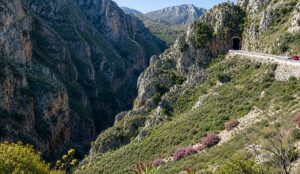
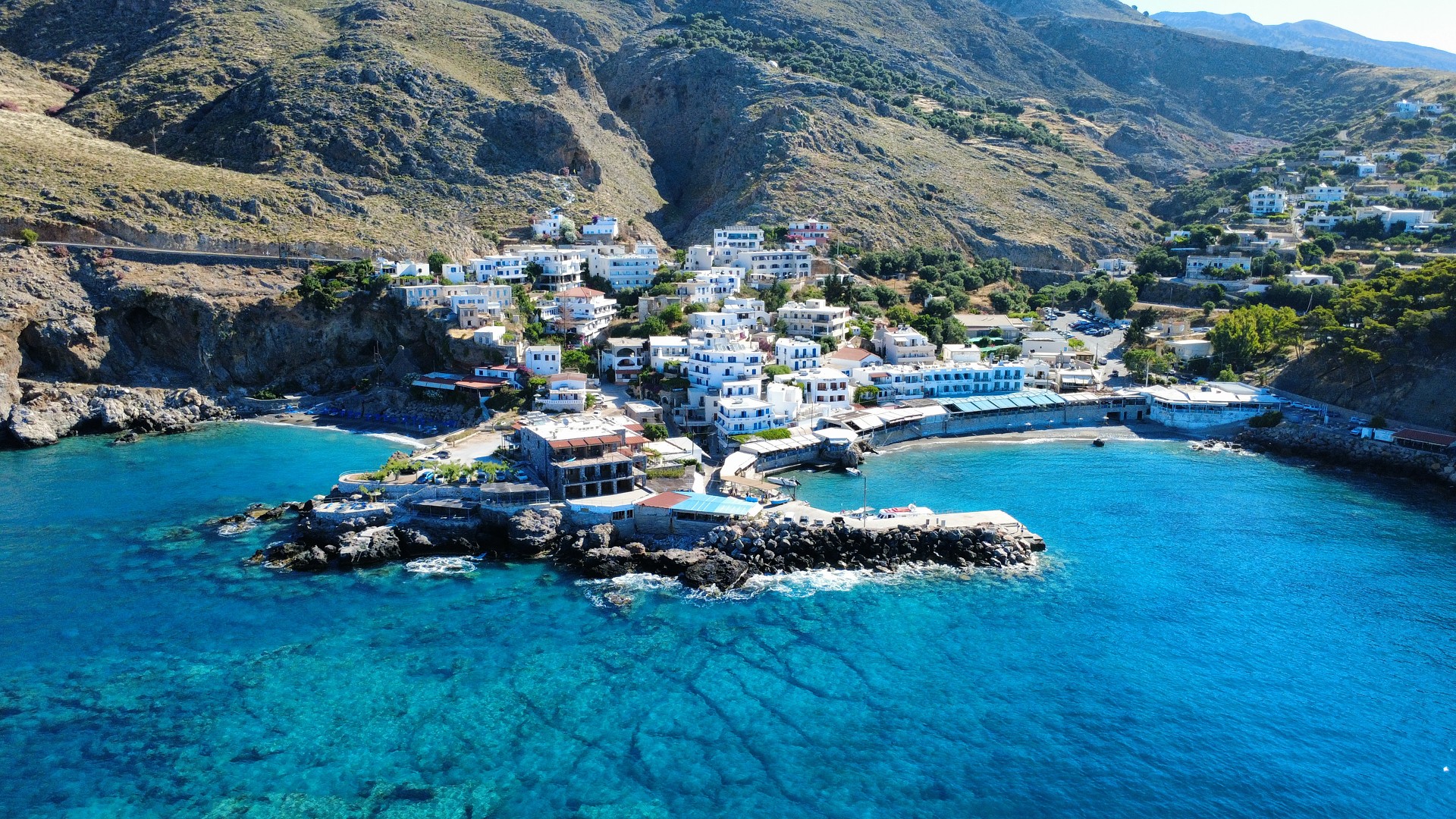
Sfakia is a coastal settlement of around 350 residents, 74km from Chania, and it serves as the capital of the same-named mountainous region. The full name is Chora Sfakion. Locals just say Sfakia. The drive down from the north alone is worth the trip. You leave the E75 motorway at Vryses, turn south, and the road starts climbing into the Lefka Ori, the White Mountains. Tunnels have replaced some of the sharpest bends in recent years, making the descent more manageable, but it is still a road that demands attention. Then the village appears below, small and white, with the deep blue of the Libyan Sea behind it. Nothing prepares you for it.
This region played a leading role in all the Cretan uprisings against the Venetians and Ottomans, and in the Battle of Crete in 1941, around 13,000 Allied soldiers were evacuated from Sfakia to seek shelter in Alexandria, Egypt. Knowing that changes how you look at the harbour wall.
| Distance from Chania | 73km, about 80 minutes |
|---|---|
| Difficulty | Easy (driving day trip) |
| Time needed | Full day, 8 to 9 hours |
| Best season | May, June, September, October |
| Parking | Free at the harbour area |
| Entrance fee | Small fee for Imbros Gorge |
| Rental car needed? | Strongly recommended |
| Family friendly? | Yes, with planning |
What Makes the Sfakia Day Trip Worth It
Most south coast destinations in Crete require some compromise. Elafonisi is stunning but packed in summer. Balos requires a rough track or a boat. Sfakia is different in that it offers several completely different experiences in one day: a dramatic mountain road, a gorge walk, wild beaches, a working harbour, and food that still tastes like it belongs to the place.
In addition to its natural beauty, Chora Sfakion has a proud and rebellious past. It played a crucial role in Crete’s struggles throughout the centuries, resisting the Venetians, the Ottomans, and later the Nazis during World War II. You feel that history walking around the harbour. There are no souvenir shops selling plastic Minotaurs. There is a café, a few tavernas, some old boats, and the mountains right behind.
Visitors can enjoy the peaceful atmosphere of the village by relaxing at the seaside cafes and tavernas. That is genuinely what people do here. It is not performative. The people sitting at those tables have been coming for years, some of them every summer for decades.
Local tip: The drive south from Vryses through the villages of Askifou and Imbros is genuinely one of the best drives in Crete. Roll the windows down. The smell of wild oregano and thyme on a warm morning is something you do not forget. Do not rush it.
Imbros Gorge: The Natural First Stop
Most people doing a Sfakia day trip combine it with Imbros Gorge, and this is the right call. The gorge sits on the road between the north coast and Sfakia. You pass right by it.
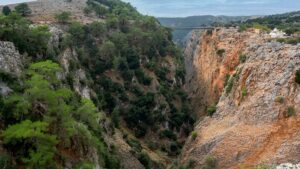
This easy, year-round 6km hike runs from Imbros village to Komitades through narrow cliffs and shaded woodland. It is, without exaggeration, suitable for most people. The path is never steep and not particularly difficult, but as everywhere in Crete it is stony. Because the gorge is fairly narrow, under 2 metres wide at one point, and has plenty of trees, you will have shade most of the time.
The Imbros Gorge also played a role in the island’s history. This very trail was used by British and Australian soldiers during their retreat in 1941, following the fall of Crete to German forces. There is a small plaque along the route. Worth a minute.
The gorge is a one-way trail. You start at Imbros village and end at Komitades. You can walk all the way to Komitades and catch a local taxi back to Imbros. The going rate per person was around 8 euros in 2025 for a shared ride. Alternatively, if you have a car parked at Imbros, you need to organise a return somehow. The simplest option for a day trip is to drive to Komitades first, walk up and back for the best sections, then return to your car.
Starting soon, hiking the Imbros Gorge will cost visitors a small entrance fee. The Municipality of Sfakia has approved the plan and sent it to the Ministry of Environment and Energy for approval, following the example of Aradena Gorge, which recently introduced the same system. Check the current situation at the ticket booth at the gorge entrance before you set off.
Warning: In July and August, tour buses arrive at Imbros Gorge around 10am and the entrance gets crowded fast. Start before 8:30am if you want the gorge to yourself. By the time the buses arrive, you will already be through the best sections.
Imbros Gorge is open all year round. This makes it one of the few hike options in the region during spring and early summer, when Samaria is still closed.
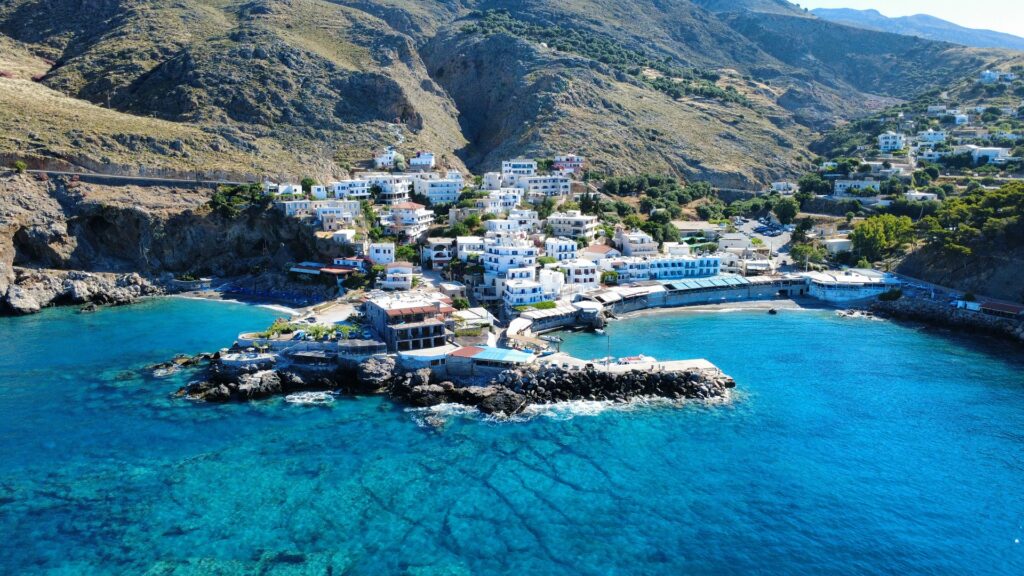
Chora Sfakion: The Harbour and the Village
Once you reach Chora Sfakion, park near the harbour. The village is small. A large choice of tavernas, which because Chora Sfakia is small you really cannot miss, line the harbour front. Find a table and order something before doing anything else.
Tasting a Sfakian pie is a must. It is a thin, pan-cooked pie filled with soft cheese, served warm with honey and cinnamon, and it is the signature dish of Sfakia. Every table in the harbour has them. Order two. The first one is gone before you know it.
The harbour is also the departure point for ferries along the south coast. Boats regularly connect Sfakia with neighbouring villages like Agia Roumeli, Paleohora, Sougia, and Loutro, offering a different perspective of Crete’s southern coast. For a day trip, the most natural option is the short ferry to Loutro.
Loutro: A Short Ferry from Sfakia
Loutro is the only natural harbour on the south coast of Crete. It is peaceful, small and feels like a village even if most of the people there in summer are visitors. The absence of cars and bikes makes it quiet and peaceful.
Loutro is about a 20-minute ferry ride from Sfakia. You step off the boat and there is nowhere to go except the tavernas and the water. No roads in or out. No cars. It is the most complete contrast to every other beach destination in western Crete.
A couple of hours in Loutro, a swim, and a cold drink in the shade is enough. The ferry runs back regularly in season. Check times at the harbour before you leave Sfakia.
Sweetwater Beach (Glyka Nera)
Sweetwater beach is set in a stunning location at the foot of a 600-metre cliff. Fortunately it cannot be accessed by road and that keeps it out of the reach of mass tourism.
The beach is situated between Chora Sfakion and the village of Loutro, 4km west of Chora Sfakion. There are two ways to reach it. The easiest is by taking a ferry from Chora Sfakion or Loutro. These ferries run several times daily and the journey takes about 20 minutes. The other option is walking. The walk from Sfakia is the more interesting route, an easy hike of about 25 to 40 minutes through the E4 trail, but not for the faint-hearted as you will literally be walking at cliff edge.
The deep blue sea water is quite cold here, due to the mountain water springs. Fresh, potable water can actually be found just below the surface of the sand after a little digging. That is where the name comes from. Glyka Nera. Sweet water. Dig in the pebbles near the shore and the spring water wells up. It is genuinely drinkable.
Local tip: The eastern end of Sweetwater Beach has long been naturist-friendly. If that is not what you are looking for, stick to the western side. There is plenty of room for everyone, and the taverna on the rocks serves cold drinks and grilled fish regardless of which end you sit at.
Frangokastello: Worth the Extra Drive
Frangokastello fortress is an important historical monument located 12 kilometres east of Sfakia, built between 1371 and 1374 by the Venetians to protect the area and the noblemen’s properties from pirate and enemy attacks.
The castle sits directly behind a wide, sandy beach. The main beach of Frangokastello is magnificent, with sand and shallow turquoise waters ideal for children. It is well organised and generally crowded. The contrast between the fortress and the beach is remarkable. You eat lunch at a taverna, walk across to the medieval walls, and then go back for a swim.
Frangokastello is famous for its Venetian castle, which is preserved in very good condition, and for the Drosoulites, the ghosts which appear at Frangokastello at dawn each May. This phenomenon is internationally known as a mirage. The castle is famously associated with the legend of the Drosoulites, ghostly shadowy figures said to appear in the mist near the castle walls in the days around May 17th each year. The phenomenon, likely a type of atmospheric mirage, has been reported by hundreds of witnesses and is taken seriously enough that the Greek state runs a scientific observation programme.
Warning: The castle access situation has changed over the years due to ongoing restoration work. Some recent visitors report being able to enter the courtyard; others found it closed. Check the current access status on arrival. Even from the outside, it is worth stopping for.
What to Eat in Sfakia
The tavernas along the Sfakia harbour are not tourist traps. They serve the food people in this region have always eaten. The home-style cooking at the seaside tavernas covers whole-grilled snapper, marinated octopus salad, and mussels, to Cretan salads, giant beans, homemade Sfakian sausages, moussaka, boureki, and Sfakian cheese pies.
Sfakianes Pites come from the region of Sfakia and are the perfect example of delicious simplicity. They are filled with local xynomizithra cheese, pan-fried without oil or butter, and served with a generous drizzle of Cretan honey. Order them as a starter or a dessert. Either works. Local authorities are working to secure UNESCO recognition for this famous Cretan delicacy. The Sfakian pie is considered to symbolise authentic Cretan culture and gastronomy.
The seafood here is local. The fish come off boats from this harbour. That is not marketing copy. You can see the boats.
Try tsigariasto while you are here: slow-sautéed kid or lamb with minimal seasoning. It is the mountain dish of the Sfakia region and rarely appears on menus anywhere else in Crete.
Frequently Asked Questions
How long does the Sfakia day trip from Chania take?
A full day trip to Sfakia takes 8 to 9 hours. Allow 80 minutes each way for driving. The Imbros Gorge walk takes 2 to 2.5 hours. Add time for a swim, lunch in the harbour, and a possible ferry to Loutro or Sweetwater Beach. Leave Chania by 8am to make the most of it.
Is the Sfakia day trip suitable for children?
Yes, with the right plan. The Imbros Gorge walk is manageable for children over 7 or 8 with reasonable fitness. The harbour beach at Sfakia is calm and swimmable. Frangokastello beach is long, wide, and sandy, with very shallow water that extends far from the shore. It is one of the calmest beaches on the south coast, protected from northwest winds by the mountains. Families with young children find it ideal.
Do I need a rental car for Sfakia?
Strongly recommended. The best way is to rent a car and drive yourself. That way, you can access nearby destinations like Ilingas Beach, the ancient mountain town of Anopolis, and the Samaria Gorge with ease. The KTEL bus from Chania to Sfakia runs a limited number of times per day and limits your flexibility. You can also take the bus to Chora Sfakion directly from Chania, every day except Sunday.
Is Sfakia better than Samaria Gorge as a day trip?
They are different. Samaria is a demanding 16km hike. Sfakia is a more relaxed day that combines a shorter gorge walk with a harbour village, beaches, and boat trips. If you have limited fitness or are travelling with children, Sfakia offers more flexibility. If you want the major gorge experience in Crete, Samaria is still the benchmark.
What is the best time of year to visit Sfakia?
May, June, September, and October. The weather is reliable, the sea is warm enough to swim, and the crowds are manageable. July and August are hot and busy. The drive over the White Mountains is spectacular in spring when the hillsides are still green.
Is Imbros Gorge open all year?
The gorge is open all year round. This makes it especially popular in spring when the gorge of Samaria is generally still closed. Be aware that severe weather can affect safety on the trail, so check conditions if visiting in winter.
The Honest Notes
Sfakia is not the place to come if you want a full beach resort experience. There is no beach club in Chora Sfakion. The village beach is small and pebbly. The real swimming is at Sweetwater Beach (which takes effort to reach), at Ilingas just outside the village, or at Frangokastello 12km to the east.
Warning: In peak season (July and August), the ferry to Loutro can get busy, particularly in the afternoons when Samaria Gorge hikers arrive at Sfakia harbour and fill the return ferries. If you plan to take a ferry to Loutro, aim to go in the morning and return by early afternoon to avoid the gorge-hiker rush.
Warning: There is no Uber or Bolt in Crete. If you come by bus, your transport options once at Sfakia are limited to local taxis and ferries. Do not rely on hailing a ride back to Chania in the evening. The last bus departs in the afternoon. Check the current KTEL timetable at e-ktel.com before you travel.
The road to Sfakia is beautiful and the tunnels have made it safer, but it is still a mountain road with steep drops on sections. Drive carefully, do not rush the bends, and pull over if a large vehicle needs to pass.
Before You Go
Before You Go
- Water: bring at least 1.5 litres per person for Imbros Gorge. There are no reliable water sources on the trail.
- Shoes: trail shoes or hiking boots for the gorge. The path is stony. Sandals are not suitable.
- Sun: the harbour and beaches are fully exposed. Hat and sunscreen essential from May onwards.
- Cash: carry some euros. Not all tavernas in Sfakia take card reliably.
- Ferry times: check current KTEL bus schedules and ferry times to Loutro before you go. Schedules change by season.
- Frangokastello: if you plan to include it, build in an extra 45 to 60 minutes each way from Sfakia.
Getting There
By Car
From Chania, take the E75 motorway east towards Rethymno and exit at Vryses. Follow the signs south for Sfakia. The road climbs through the Askifou plateau and then descends steeply through the Imbros area before reaching the coast. The windy mountain road down to the village has in recent years undergone extensive work, with three tunnels replacing the sharp curves, making it much safer and easier to drive on. Total distance is approximately 73km. Allow 80 minutes from central Chania.
Parking at Sfakia is free and easy. There is space along the harbour approach road.

By Bus
There is a direct bus departing from Chania and arriving at Chora Sfakion. Services depart twice daily and operate every day. The journey takes approximately 1 hour and 10 minutes. Note that Sunday services may be reduced. Check the current KTEL timetable at e-ktel.com before travelling. The bus from Chania also stops at Imbros, making it possible to walk the gorge and continue to Sfakia on foot.
By Taxi
A taxi from Chania to Sfakia is a straight transfer at your own schedule but it is expensive. Check current prices with local taxi operators, as rates change seasonally.
By Organised Tour
Several operators run combined Imbros Gorge and Sfakia day trips from Chania with transport, a guide for the gorge walk, and lunch included. This is a good option if you do not want to drive or prefer not to organise logistics yourself.
Practical Information
| Distance from Chania | 73km |
|---|---|
| Driving time | Approx. 80 minutes |
| Bus | KTEL from Chania bus station, twice daily |
| Ferry to Loutro | From Sfakia harbour, approx. 20 minutes |
| Ferry to Sweetwater Beach | From Sfakia harbour, approx. 20 minutes |
| Imbros Gorge walk | 8km, 2 to 2.5 hours, small entrance fee |
| Frangokastello | 12km east of Sfakia |
| ATM | Available in Sfakia village |
| Best months | May, June, September, October |
| Parking | Free at Sfakia harbour |
Combine With
Imbros Gorge is directly on the route between Chania and Sfakia. Walking it first and then driving the final stretch to the harbour makes for a natural half-and-half day.
Frangokastello is 12km east of Sfakia along the coast road. Frangokastello is the location of a castle and scattered settlement on the south coast of Crete, about 12km east of Chora Sfakion. It has an extensive, sheltered and gently shelving sandy beach, which has provided the basis for a low-key tourist industry. The area’s relative remoteness has discouraged major development. Worth adding if you have a full day.
Loutro is best reached by ferry from Sfakia harbour. A couple of hours there, a swim, and a walk around the whitewashed lanes is the right amount before catching the return ferry.
Aradena Gorge sits above Sfakia, accessible from the mountain village of Aradena above Anopolis. The Aradena Gorge hike leads you down to beautiful Marmara Beach. To embark on this hike, drive from Sfakia to Aradena, about 25 minutes, and follow the trail, which is considered challenging. Add this only if you have a second day in the area.
Local tip: The drive back to Chania in the late afternoon, once you climb out of the Imbros section and hit the Askifou plateau, the light turns golden and the White Mountains glow. Stop the car near Askifou and look north toward the sea. You can see all the way to the coast. It is one of those views that does not look real. Most people miss it because they are driving too fast to get back. Do not be those people.