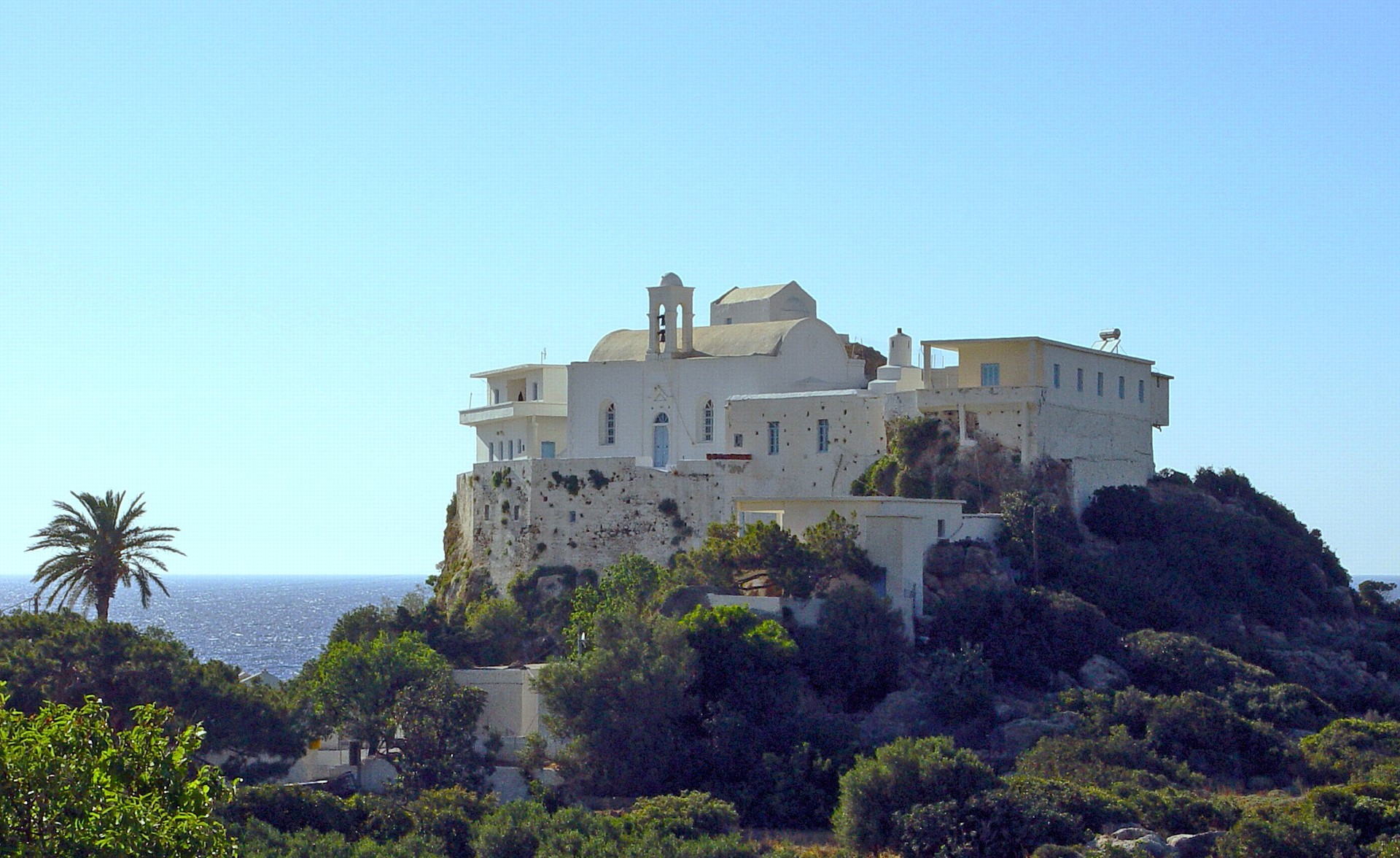
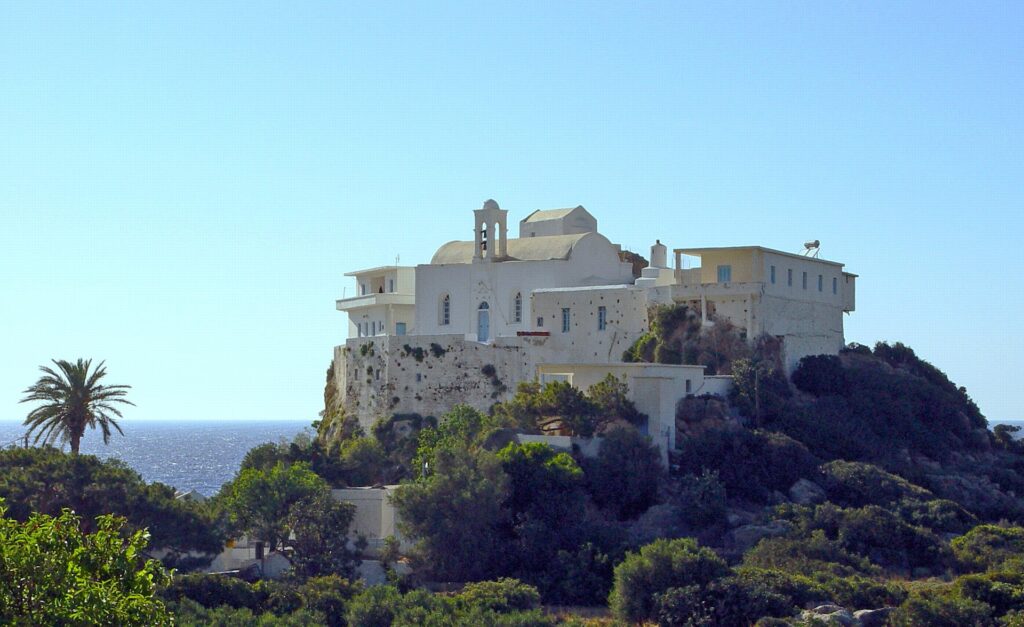
Chrissoskalitissa Monastery Chania sits on the far southwestern edge of Crete, perched on a rock face 35 metres above the Libyan Sea. Most visitors only notice it because it sits on the road to Elafonisi beach. That is a shame, and a mistake. This place has been standing here, in one form or another, for centuries. It has survived Ottoman raids, German occupation, and the relentless Cretan wind. It deserves more than a five-minute stop on the way to the sand.
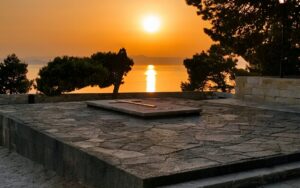
The Chrysoskalitissa Monastery is a Greek Orthodox monastery on the southwest coast of Crete, about 72 kilometres from Chania, built up on rocks 35 metres above sea level. The white walls of the complex rise from the cliff like a small fortress. From the top, the sea runs south to Africa. There is nothing between you and the horizon. On a clear day, it is one of the more memorable views in western Crete.
The monastery is just 5 km from the famous beach of Elafonisi. Most organised tours combine the two, stopping here on the way out or the return journey. That works well. Plan at least 45 minutes here. Rushing it means missing the point entirely.
| Distance from Chania | ~72km, about 90 minutes by car |
|---|---|
| Difficulty | Easy, though 98 steps to climb |
| Time needed | 45 minutes to 1 hour |
| Best season | April to October (open year-round) |
| Parking | Free dirt parking area at the entrance |
| Entrance fee | Small fee (check on arrival, waivers/donations welcome) |
| Rental car needed? | Strongly recommended |
| Family friendly? | Yes, with a note on the steps |
The Name: What Does Chrissoskalitissa Mean?
The name Chrissoskalitissa translates to “of the golden step,” as tradition has it that one of the 98 steps leading to the monastery is golden, but only the devout can see it. That is the short version. The longer version has two competing stories, and they tell you something about Cretan history in general.
The first version says the golden step was the last of the ninety-eight steps leading up to the monastery, and it was said to be made of gold. It was given to the Turks among other items of the monastery as payment for taxes imposed by the sultan. Practical and sad. The second version, preferred by the more romantically inclined, is that the last of the 98 steps leading to the monastery is said to have been made of gold, and only true believers can still see the golden step.
You can decide which version you prefer when you make the climb. Count your steps. See what you find at the top.
Local tip: Most tourists walk up counting steps and arrive at some number close to 98, then feel slightly deflated when they don’t see anything obviously golden. That is entirely normal. The legend is not meant to be literally tested. The interest is in the history behind it.
History of Chrissoskalitissa Monastery Chania
The monastery’s origins are murky in the way that most very old places are. The monastery is believed to have been founded when a farmer discovered an icon of the Virgin Mary hidden in a rock crevice during the Iconoclast period (726–842 AD). During that Byzantine era, religious icons were being suppressed and destroyed across the empire. Hiding them in remote rock faces on the edge of the known world was one way to preserve them.
First mentioned in the Venetian census of 1637 as “Panagia Gounoskalitissa,” the monastery endured great hardships during the Turkish occupation. The original building was carved into the rock but was replaced by the modern temple in 1894. What you see today is that 19th-century structure, solid and whitewashed, sitting on the same rock where monks have lived for hundreds of years.
The Ottoman period brought repeated pressure. During the first years of Ottoman rule, the Patriarch was forced to sell the estates of the monastery as well as the golden step, to pay the heavy taxes imposed by the sultan, resulting in the devastation of the monastery. Then came Easter Sunday 1824, one of the darkest moments in western Cretan history. Not far from the monastery, Elafonisi witnessed a dark chapter in 1824, when more than 600 locals lost their lives during a brutal massacre. The monastery itself came within a hair’s breadth of destruction. The monastery stood in danger of being destroyed. As Turkish forces advanced toward it, a swarm of bees emerged and drove them back, halting the attack. This remarkable turn of events is honored today with an icon at the monastery’s lower entrance.
The 20th century brought a different kind of occupation. During the German occupation, the monastery was used as a military outpost. During the German occupation in 1943, a machine gun blast struck the icon of Saint Basil, leaving a hole in the wood. The bullet stopped abruptly near the saint’s figure, a moment considered by many to be divine intervention. You can still see that icon inside the church. The hole is real. Whatever you believe about what caused the bullet to stop, it is a physical trace of the war that reaches you across time.
Though its exact origins are unclear, the monastery is believed to have been founded in the late Venetian period. For centuries it served as a nunnery until 2012, when a monk was appointed following the death of the last nun a few years earlier.
Archaeologists have found remains of late Neolithic and Early Minoan settlements in the coves below the monastery. This place was occupied long before Christianity reached Crete.
What to See Inside
The monastery is known for its fortress-like architecture and its katholikon, or main church, dedicated to the Holy Trinity and the Dormition of the Virgin Mary. The church is not large. Two aisles, heavy with icons, the air thick with incense. Your eyes adjust slowly after the glare outside.
Inside the church, several relics carry the weight of miraculous events. The icon of the Assumption of the Virgin Mary, dating from the 17th century, stands out for its unusual depiction: the Virgin’s head is placed on the right side of the image, unlike the traditional left. A marble mark on the icon remains unexplained. It is not a spectacular church by Byzantine standards. There are grander monasteries on Crete. But the combination of setting, history, and specific objects inside makes it worth the climb.
The monastery remains inhabited by a small, dedicated community of nuns and monks who live according to Orthodox traditions. The monks and nuns host religious services, grow crops, produce handicrafts and provide tours to maintain the legacy of faith and culture. There is a small shop near the entrance where you can buy honey and other products made by the community.
There is also a small shop where you can buy items related to Orthodox spirituality and products made in the monastery. Worth supporting.
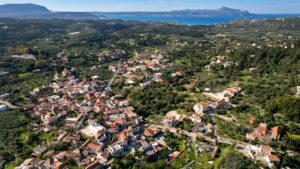
Local tip: The village of Chrissoskalitissa, which surrounds the monastery, has a handful of small tavernas and a couple of mini-markets. If you are making a full day of it combining the monastery with Elafonisi beach, stop here for lunch on the way back. It is quieter and significantly cheaper than eating at the beach.
The 15th August Feast
On the 15th of August there is a great feast with traditional food and live Cretan music. This is the feast of the Assumption of the Virgin Mary, the biggest religious celebration in the Orthodox calendar after Easter. If you happen to be in western Crete around that date, this is worth going out of your way for. The monastery fills with pilgrims from across the region. It is crowded, loud, and entirely genuine. Nothing like the regular tourist visit.
The icon of the Virgin located in the monastery is claimed to be over a thousand years old and celebrates August 15th. On that day, the icon is the centre of the ceremony.
Warning: If you visit on 15th August, parking will be extremely limited and the road from Kissamos will be slow. Leave Chania by 7am at the latest. And combine it with an early arrival at Elafonisi if you want to beat the crowds there too. August is peak season across western Crete. Nothing about this day will be relaxed.
The Honest Notes
Chrissoskalitissa is worth visiting. It is not a world-class monument. The church interior is modest by Greek standards, and the museum element is small. The visit to the monastery consists of two rooms in which there are some icons and objects from the past and a church. Manage your expectations accordingly.
What the monastery does have is location, legend, and authentic history. The setting above the Libyan Sea is genuinely arresting. The stories about the bees, the bullet hole, the golden step are engaging rather than merely decorative. And it is a real, functioning monastery. This is not a heritage site run by a tourism board. People live and worship here.
Warning: The pathway up the 98 steps can be slippery when wet and is uneven throughout. If you have mobility difficulties or are travelling with very young children in a carrier, take extra care. The steps have no handrail for the full length. Wear closed shoes, not sandals.
Warning: In July and August, organised tour coaches arrive at the monastery between 10am and noon, and again on return from Elafonisi around 3–4pm. If you want to experience the place quietly, arrive before 9am or after 5pm.
Before You Go
Before You Go
- Dress code: Knees and shoulders must be covered for both men and women. Knees and shoulders must be covered. Sarongs are sometimes available at the entrance, but bring your own to be safe.
- Shoes: Closed shoes strongly recommended. The steps are uneven stone.
- Photography: Photography inside the church is generally not permitted. Ask before pointing your camera anywhere.
- Cash: Bring cash for the entrance fee and the small shop. Card facilities are not guaranteed this far out.
- Water: The village has cafes, but it is sensible to carry water, especially in summer heat.
- Timing: Allow 45 minutes minimum. One hour if you want to browse the shop and sit with the view.
Getting There
By Car
A rental car is by far the best option. Starting from Chania, head to the E65 national road heading west toward Kissamos. Reaching Kissamos village, turn south following signs to Chrissoskalitissa, then follow the road via Kaloudiana. From there the road winds south through the mountains, passing through the Topolia Gorge area and the villages of Elos and Vathi. The drive is around 90 minutes from central Chania. Use GPS. The signs are adequate but not comprehensive on every junction.
Parking is free in a dirt area at the monastery entrance. In peak season, this fills up. Arrive early or be prepared to park on the road verge and walk a short distance.

By Bus
During the summer, a KTEL bus makes its final stop at Elafonisi, and this bus journey has a stop at Chrissoskalitissa village. During the tourist season, a daily bus operated by KTEL runs from Chania’s main bus station to Elafonisi. It takes around 2 hours. It leaves at 9:00am. The return bus from Elafonisi departs around 4pm. Check the current timetable on the KTEL website (e-ktel.com) before you travel, as schedules change each season.
The bus stops in the village of Chrissoskalitissa, which is a short walk from the monastery itself. Be aware that with a 9am departure and a 4pm return, you will have several hours in the area. Combine with time at Elafonisi beach to make the day worthwhile.
By Organised Tour
Several operators run full-day tours from Chania that include the monastery and Elafonisi. This is a reasonable option if you do not want to drive the mountain roads yourself. The route cuts deep into the mountainous spine of western Crete, with professional drivers handling the sharp turns and narrow passes through Topolia Gorge.
Practical Information
| Address | Chrissoskalitissa, Kissamos, Chania |
|---|---|
| Distance from Chania | ~72km southwest |
| Opening hours | Generally 8am–8pm in summer. Verify locally as hours vary by season. |
| Entrance fee | Small fee on arrival. Check current amount on site. |
| Dress code | Knees and shoulders covered, both genders |
| Photography | Not permitted inside the church |
| Parking | Free dirt parking at entrance |
| Facilities | Small shop, nearby village tavernas |
| Feast day | 15th August (Assumption of the Virgin) |
Combine With
Chrissoskalitissa sits in the southwest corner of Crete, an area worth spending a full day exploring. These are the obvious companions.
Elafonisi Beach
Elafonisi is just 5 km from the monastery. The lagoon beach with its pale pink sand is one of the most photographed spots on Crete. It gets crowded fast in summer. The combination of monastery in the morning and beach for the afternoon is the standard approach, and it works well.
Agia Sofia Cave Church
Located on the return road toward Kissamos, this cave church is carved into a limestone cliff above the village of Topolia. Worth stopping for 30 minutes. The cave itself is impressive regardless of any religious interest.
Topolia Gorge
The road back toward Kissamos and Chania passes through the Topolia Gorge. It is not a hiking destination in the same way as Samaria, but the drive through the gorge at dusk is one of the quieter pleasures of western Crete.
Falassarna Beach
About 40 minutes north of the monastery along the west coast, Falassarna is one of Crete’s best beaches. Wide, windswept, and less crowded than Elafonisi. A good second stop if you are spending a full day in this corner of the island.
Local tip: The drive back from Chrissoskalitissa through the Topolia Gorge in the late afternoon, with the light dropping behind the cliff walls and the air cooling after a day in the heat, is one of those moments that makes the long drive feel completely worthwhile. Pull over at the lookout above the gorge. Do not rush it.