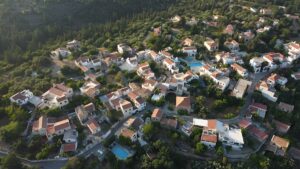
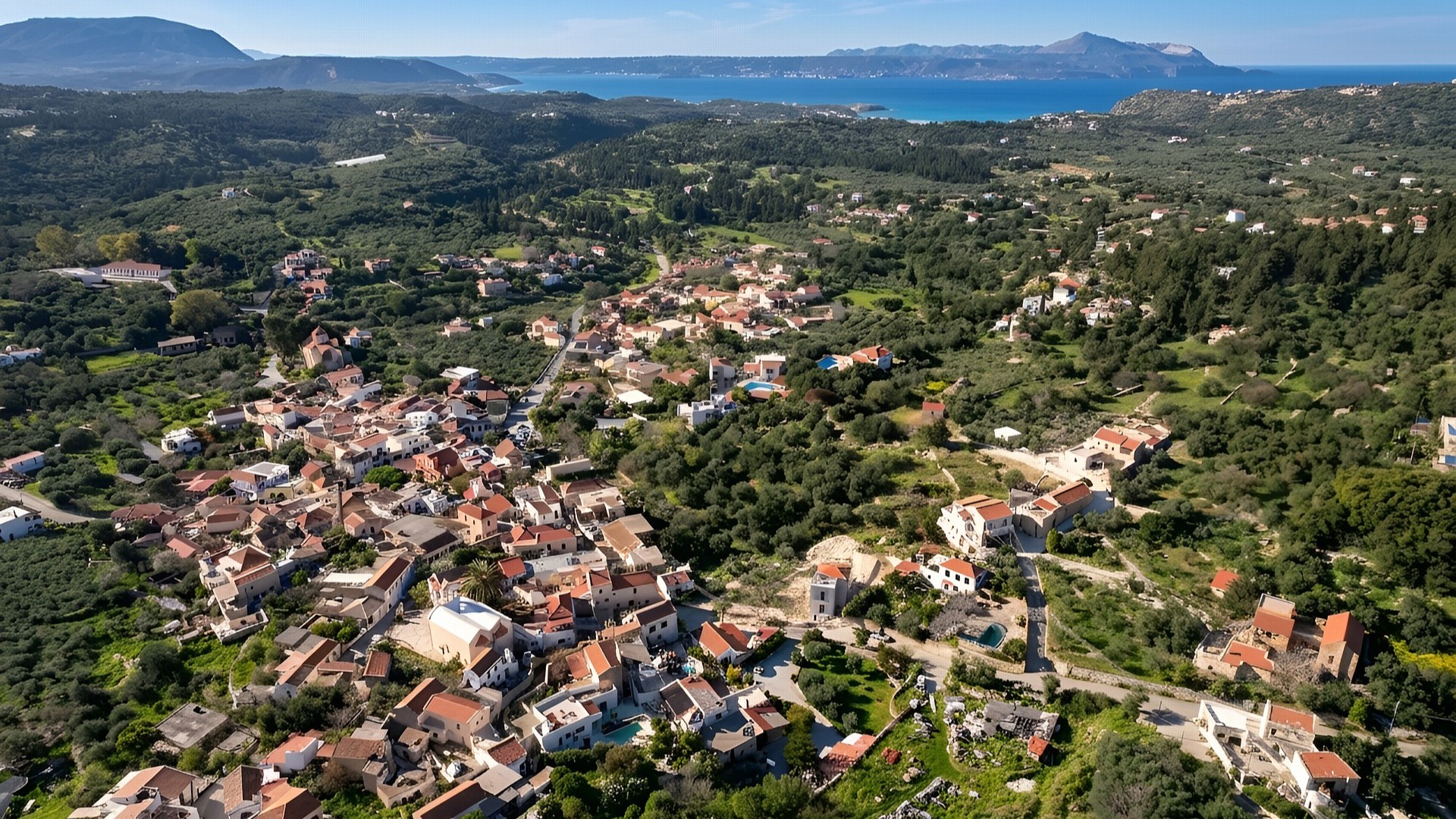
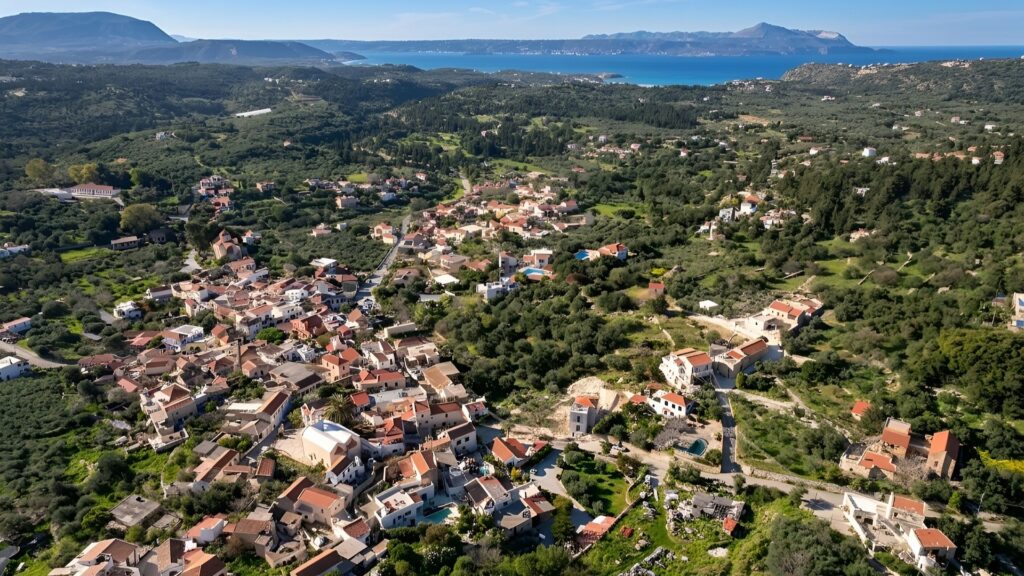
Gavalochori Chania sits about 26 kilometres east of the city in the green hills of the Apokoronas region, and it is one of the few places in Crete that has genuinely resisted the pull of tourism. Not out of stubbornness. Out of self-confidence. The village knows what it is: a working settlement with a thousand years of history, twelve churches, a handful of tavernas, and a tradition of handmade lace that goes back further than most European holiday resorts have existed.
Gavalochori has been designated by the Ministry of Culture as a historically preserved place with a landscape of particular natural beauty, as well as a site of popular architecture without significant modern alterations. That designation means something real here. Many of the houses are 300 or even 500 years old and have been built out of stone, mud, and wood. Walk the lanes on a Tuesday morning and the village is going about its business. Somebody is baking. An old man sits at the kafeneio. Two women are working kopaneli lace at a table in the square. This is not a performance for visitors. It just happens to be what the village does.
Most tourists who make the drive out here come specifically for the Folklore Museum, which is the right reason to come. But the village itself is the real thing to see. Give it the time it deserves.
| Distance from Chania | 26 km, about 30 to 35 minutes by car |
|---|---|
| Difficulty | Easy. Flat village streets. |
| Time needed | 2 to 3 hours minimum, half day recommended |
| Best season | Year-round. Spring and autumn are ideal. Summer is fine but hot. |
| Parking | Free parking at and near the village square |
| Entrance fee | Small fee at the Folklore Museum. Check current prices at the door. |
| Rental car needed? | Recommended, but not essential (bus available) |
| Family friendly? | Yes |
A Village With Gavalochori Chania Written Into Its Stones
The origin story most often told about the village is that it was established when the Byzantine emperor Alexios Komnenos sent twelve nobles to Crete at the turn of the 12th century. The nobles divided Crete into twelve areas, each ruling one and often naming it after himself. One of these nobles was Filippos Gavalas, so the name Gavalochori means “village of Gavalas.” Most historians now treat this origin story sceptically, but the Gavalas name stuck regardless.
A number of double-bitted axes, pieces of pottery, coins and other objects found in the area indicate that it has been inhabited since Minoan times. The foundations of Mycenaean residences and water tanks have also been excavated, as have some Roman tombs. During the Venetian era, Gavalochori became a notable socioeconomic centre, and architectural samples of that period have survived to this day.
The village was hit with devastating plagues in 1770, 1797, and 1810. A destructive rain fell on Gavalochori in 1862, and torrents of water rushed through the village, destroying houses and other property and drowning a number of residents. The early 20th century was another particularly difficult time. Unemployment led many men in the village to migrate to America to work in the coal mines. In 1906 alone, 200 men from Gavalochori left, depriving the village of much of its workforce. At that time the village had a population of 1,200 to 1,500. Today it numbers around 500 permanent residents.
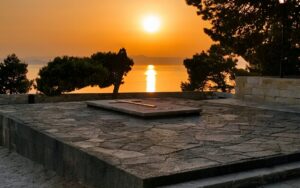
The village carries many memories of hard times, both under Turkish rule and under German occupation. Many brave men from Gavalochori paid with their lives, and a war memorial and a plaque in the village are evidence of this.
The Historical and Folklore Museum
The Folklore Museum was started in 1965 by a president of Gavalochori, Vasileios Fronimakis, who encouraged residents of the village to donate the archaeological, historic, and folkloric heirlooms that are now exhibited in the museum. Initially located in a building off the main square that also housed a store, a library, and the village administrative office, the museum was moved in 1993 to its current location, a house built in the traditional Gavalochori style.
The initial section of the building dates back to the Venetian occupation, while the mezzanine floor was added during the Turkish occupation. This dwelling was inhabited until the close of the previous century and was generously bequeathed to the Gavalochori community by the heirs of its final residents, George and Maria Stilianakis. It is a small museum by any standard. That is part of what makes it good.
The museum is divided into seven rooms, covering the following themes: the Arched House, Silk, Pottery, Lace-making, Masonry and Stone carving, Church and Woodcarving.
The first room represents the most typical traditional house of Crete, known as the kamarospito. This type of rural house was initially single-spaced and had an arched opening which more or less divided it. Don’t miss the bed that also functioned as a wine press for the stomping of grapes on the main floor. You can see the cover of the wooden trough in the floor next to the bed where the wine would have been collected after the grapes were pressed. That single object tells you more about how people lived here than any caption could.
The iconostasis on the top floor was made at the beginning of the 19th century out of cypress wood, with the carving done with chisel and drill. Mary and Jesus are depicted at the top left, and Saint George slaying the dragon is at the bottom right. It probably came from the Church of Saints Sergius and Bacchus that is a few steps from the museum, and was likely removed from the church to save it from the Turks.
In the historical section, weapons and swords from the long-term struggle of the Cretans for freedom are exhibited, along with a small part of the paintings and historical lithographs depicting the most important events of Greek and Cretan history. On display are Roman, Byzantine, Venetian, and Turkish coins, along with coins from the Cretan civilisation and those from Syracuse dating from 405 to 345 BC.
Local tip: The museum receives very few visitors at a time, which means you often have the rooms to yourself. One reviewer visited at 6:30pm on a weekday and was the only person there. Go later in the afternoon if you want peace and quiet. The museum is also funded entirely by the village and entrance fees, so the small admission charge matters more here than at a state institution.
The information plaques in English are useful, though some take a while to locate and figure out what they relate to. If something confuses you, ask the person at the desk. They are usually happy to explain.
When using Google Maps to find the museum, be aware that it lists two locations. One of them is up a rough dirt track. Look out for the “Folklore Museum of Gavalochori” listing specifically. Use the address on the Old Square.
Kopaneli: The Lace That Made the Village Famous
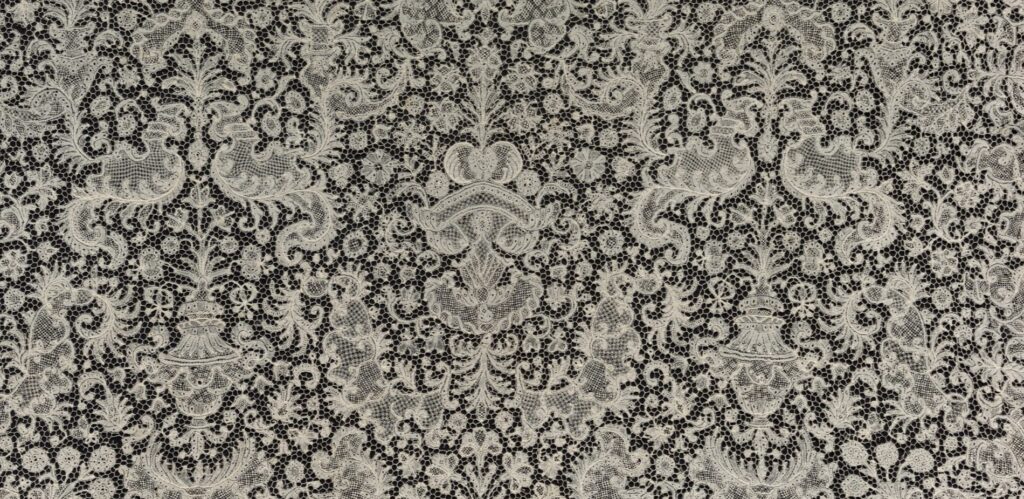
Until the end of the 19th century and even as late as 1950 on Crete, silk was produced at home by women who fed the leaves of local mulberry trees to silkworms. Along with the making of silk, the women of Gavalochori participated in the making of bobbin lace known as kopaneli, in which lace is made from silk thread on a bolster pillow with bobbins.
The art of bobbin lace appeared on Crete between 1906 and 1908 when a nun from Gavalochori, Minodora Athanasaki, learned bobbin lace making when she attended school in Athens and then taught it to the rest of the nuns in her convent of Holy Prodromou in Chania. Because there were many nuns in that convent from Gavalochori, the art spread quickly through the village.
Women would gather together in their free time to make lace together, and women and girls went shopping in the village or from street traders using as payment the lace they had produced. It functioned as a kind of currency in the village economy.
Silk production died out in Gavalochori and on Crete because of a disease among the silkworms and because of the import of cheap and readymade silk from the East and Europe. The kopaneli survived. The art of bobbin lace continues to be practised by a few women in Gavalochori, and they occasionally gather in one of the village’s public buildings or squares to work together on their lace projects.
Local tip: The women’s cooperative on the main square sells kopaneli lace made in the village. These are genuine handmade pieces, not imported souvenirs. If you are going to buy one thing in the Apokoronas region, buy it here. Prices reflect the labour involved.
Beyond the Museum: What Else to See
The Venetian Wells
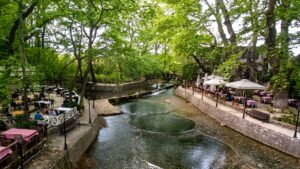
Around one kilometre from the village, you can find a series of 24 Venetian wells, which used to play an important role in the community’s daily life and were still in use a few decades ago. There, you will also see two impressive plane trees, whose branches intertwine in a unique embrace. The Roman cemetery is not far from the wells.
Parking at the site is a bit restricted and it is not clearly marked by signs to ease locating it. There are around 24 wells shrouded by plane trees. Most are in slight disrepair but you can imagine how the water was accessed. The wells are deep, so be careful when standing close and viewing them. It is a short and easy walk from the village square.
The Pre-Industrial Olive Mill
The village features an old olive oil press from the 18th century, alongside temples and various residences that reflect its rich past. It sits close to the church of the Panagia, a few minutes’ walk from the museum. Simple to find, worth a look.
The Village Churches
Strolling around the village you will see beautifully paved streets, stone arches, flowered gardens and twelve lovely churches, the oldest of which was constructed in 1200 AD. Two of the most well-known are the church of the Virgin Mary and that of Agios Sergios.
The church of Saint Charalampos was added to the Panagia church during the late 1700s, when the plague struck Gavalochori and many villagers died. According to local tradition, when the villagers prayed to Saint Charalampos asking for his protection, the plague ended. The church was never turned into a mosque during the Ottoman occupation. That last fact matters here. The village kept it as a place of worship throughout.
Warning: Most of the smaller churches in Gavalochori are kept locked. You can admire the exteriors freely, but do not expect to enter all twelve. If a church is important to you, ask at the taverna or the kafeneio for the keyholder. Locals are generally helpful about this.
Eating and Drinking
A few traditional kafenia in the village are places where local men gather for a glass of tsikoudia, while local women spend hours working at the rhythm and sound of kopaneli. Several family-run tavernas offer the visitor tasty dishes of Cretan cuisine. In addition, the village has many shops, two cafes, a pastry shop with a cafe bar, a bakery, three grocery stores, and a handicrafts shop.
Taverna Arismari is the name that comes up consistently from visitors to the museum area. Visitors to the museum regularly combine it with a visit to the nearby restaurant Arismari. It sits in a small courtyard setting just around the corner.
Sources: Information and images used with reference to gavalochorigreece.org
Frequently Asked Questions
Is Gavalochori worth visiting?
Yes, if you are interested in what Crete actually looked like before mass tourism. Gavalochori is near tourist centres, but it is not a tourist village. There is not one shop in the village that sells beach towels and inflatable water floats. The Folklore Museum is small but genuine. The village streets are the attraction as much as anything inside a building.
How long does a visit to Gavalochori take?
The museum alone takes 45 minutes to an hour at a comfortable pace. Add time to walk the village lanes, visit the Venetian wells, and have lunch. A full half day is the right amount of time. Two hours is the minimum if you want to take the museum seriously.
Is the Folklore Museum suitable for children?
Reasonably so, for older children and teenagers. Young children may find it slow. The building itself is interesting to explore, and exhibits like the lace-making and the old weapons tend to catch children’s attention. Toddlers are less likely to enjoy it.
Can I visit Gavalochori without a car?
The best way to get from Chania to Gavalochori without a car is by bus, which takes around 31 minutes. KTEL Chanion-Rethymnou operates a bus service from Chania to Kalyves hourly. You would need to check current schedules at the Chania KTEL bus station. The bus deposits you near the village. However, without a car you cannot easily combine Gavalochori with the other Apokoronas villages or the coast at Almyrida on the same day.
What is kopaneli?
The origin of kopaneli in Crete traces back to the Byzantine era. Kopaneli refers to the intricate technique of interweaving numerous threads in a vertical arrangement, wrapped around 14 slender and elongated wooden sticks known as kopanelia. The finished pieces range from small decorative items to full wedding dresses. The museum has a good display of both the tools and finished examples.
Is parking easy in Gavalochori?
Yes. The village is small and there is free parking on and around the main square. This is not a place where parking is ever a problem, even in summer.
The Honest Notes
Gavalochori is a genuine village, not a heritage attraction. That is its greatest strength and also the thing most likely to disappoint visitors expecting something polished.
Warning: The Folklore Museum is small. Seven rooms. If you are expecting something on the scale of a regional museum in a city, you will be underwhelmed. If you approach it as a well-curated domestic space from another era, it is genuinely interesting. Manage expectations and it rewards you.
The information plaques in English are useful, though some take a while to locate and figure out what they relate to. This is not a criticism of the museum exactly, more a reflection of the fact that it is run by the village rather than a professional curatorial team. The gaps in labelling can be filled by asking the person on the desk.
Warning: The Venetian wells are not well signposted and the parking area near the site is limited. Some visitors using Google Maps have ended up on rough tracks. Walk up from the village on foot from the square rather than trying to drive directly to the wells. It takes less than fifteen minutes.
The museum has no dedicated café and no gift shop in the usual sense. The museum is run entirely by the village and funded by the village, with all items collected and donated by residents. The cooperative on the square is the place to buy kopaneli work.
Although tourism provides some economic support for villagers today, many people in the village continue to engage in the age-old agricultural practices of raising grapes, olives, and animals. The village is not performing for you. Adjust accordingly.
Before You Go
- Cash: bring some. The museum charges a small entrance fee and may not take cards. Same applies at the cooperative.
- Shoes: comfortable flat shoes are fine. Village streets are paved but sometimes uneven.
- Sun: the village square has shade but the walk to the Venetian wells is exposed. Hat useful in summer.
- Toilets: available in the village at the main square area. None at the Venetian wells site.
- Museum hours: check locally before you go. Hours can vary by season and the museum has been known to close for the afternoon in low season.
- Photography: generally permitted inside the museum, but confirm with the staff at the entrance.
Getting There
By car: From Chania city centre, take the E75 east toward Rethymno. After approximately 18 kilometres, take the exit for Almyrida and Kalyves. Follow signs inland toward Gavalochori. The drive from Chania takes approximately 28 minutes. Free parking is available at the village square. This is the most flexible option by far, as it lets you combine the village with nearby Almyrida beach, Vamos, or the archaeological site of Aptera on the same day.

By bus: KTEL Chanion-Rethymnou operates a bus from Chania toward Kalyves hourly. The Gavalochori stop is a short walk from the village centre. Check current timetables at the KTEL bus station in Chania (on Kydonias Street near the covered market) or on the KTEL Chanion website. Return buses are less frequent in the afternoon, so check your return time before you go.
By taxi: Taxis from Chania are available. The journey by taxi from Chania takes around 28 minutes. There is no Uber or Bolt on Crete. Call a Chania taxi or arrange pickup through your accommodation.
By organised tour: A good option for those without a car is to get off the bus at Gavalochori first, explore the village and have lunch, then follow a well-signposted hiking trail to Vamos and take a taxi back to Chania from there. Several full-day Apokoronas tours from Chania also include Gavalochori as a stop.
Practical Information
| Address | Old Square (Plateia), Gavalochori, Apokoronas, 730 07 |
|---|---|
| Museum opening hours | Check locally. Generally open most days. Hours vary by season. |
| Sources | Information and images used with reference to gavalochorigreece.org |
| Google Maps | Search “Folklore Museum of Gavalochori” (not “Historical Folklore Museum”) |
| Nearest beach | Almyrida, 4 km |
| Nearest town | Vamos, 3 km; Kalyves, 7 km |
| Bus | KTEL Chania-Kalyves line, ask for Gavalochori stop |
| Parking | Free at village square |
Combine With
Almyrida Beach. Gavalochori is just four kilometres from the coast at Almyrida. This is a sheltered bay with calm water, good for families. Easy to add a few hours at the beach after the village.
Vamos. Three kilometres further up the road, Vamos is the main village of the Apokoronas municipality. Well-restored stone houses, a good square, and reliable tavernas. There is a well-signposted hiking trail between Gavalochori and Vamos if you want to connect the two on foot.
Archaeological Site of Aptera. About 15 kilometres west toward Chania, the ancient Minoan city of Aptera has excavated ruins, a Turkish fort, and views across the Souda Bay. Combines well with an Apokoronas day trip.
Lake Kournas. Crete’s only natural freshwater lake is about 15 kilometres east of Gavalochori. Worth a stop if you are making a day of the Apokoronas and Georgioupolis area.
Local tip: If you are in the Apokoronas area on the 8th of September, do not miss the celebration at the Panagia church in Gavalochori. The feast of the Nativity of Mary has been marked here every year for centuries. The village fills up, the tavernas cook in volume, and you will see something that has nothing to do with tourism and everything to do with how Crete actually works.