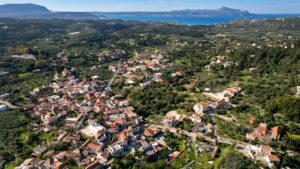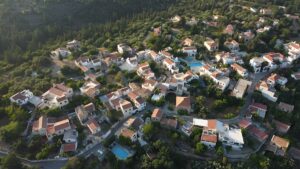
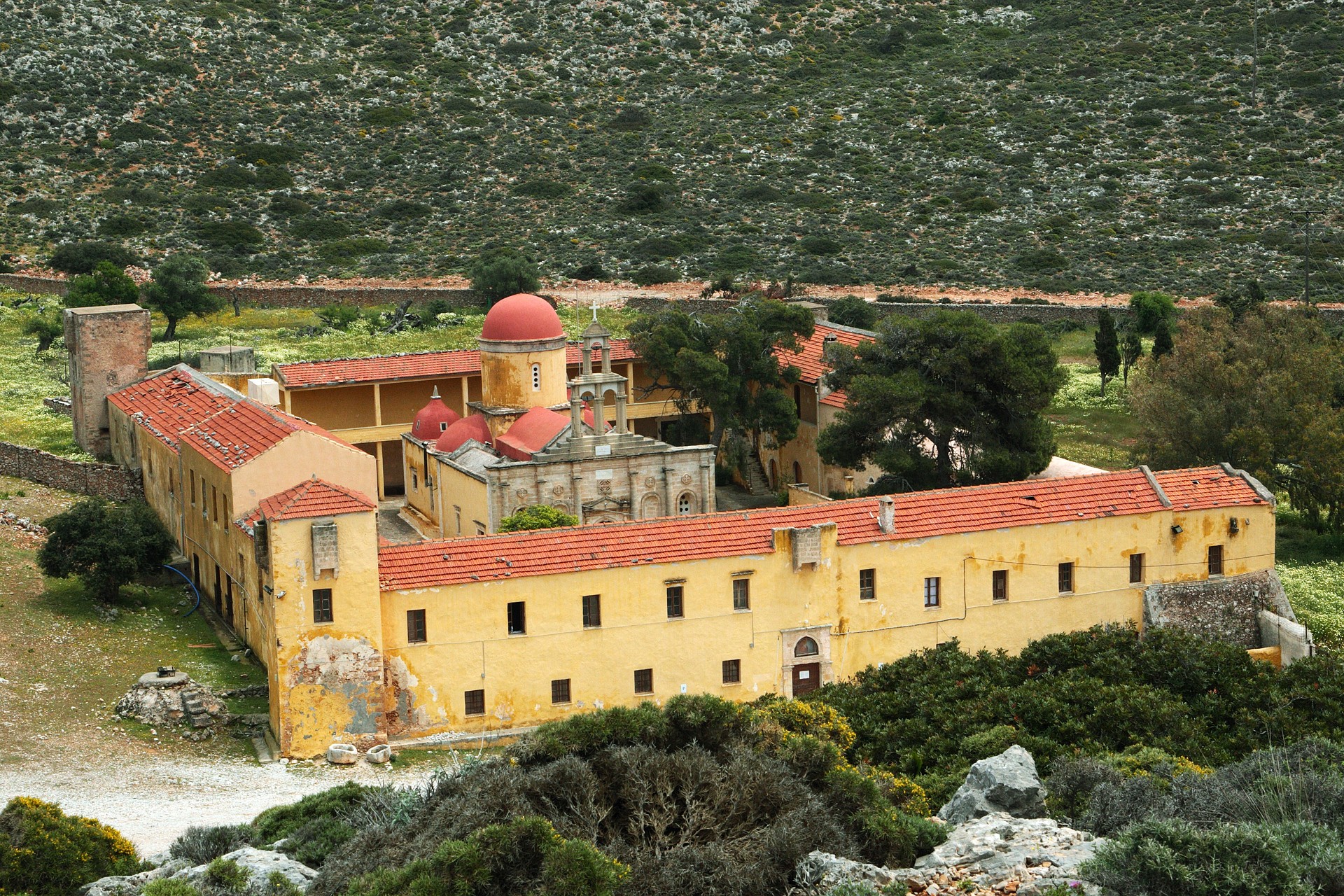
Gouverneto Monastery and Katholiko are two of the most historically significant sites on the Akrotiri Peninsula, just 20 kilometres from Chania. Most visitors to the area drive straight to Stavros beach or Kalathas and miss this entirely. That is their loss. This corner of Akrotiri holds nearly a thousand years of Cretan history, a gorge walk that costs nothing, a bear-shaped cave, the ruins of one of the oldest monasteries in all of Crete, and a tiny fjord at the end of it all. The experience is genuinely different from anything else you will find in western Crete.
This is not a beach day. It is a half day of walking, history, and quiet. Bring water, proper shoes, and cover your legs. Do not arrive on a Wednesday or Friday. Follow those three rules and you will have one of the better days of your trip.
| Distance from Chania | 19 to 20 km, about 30 to 35 minutes |
|---|---|
| Difficulty | Moderate (descent easy, return climb is tiring) |
| Time needed | 3 to 4 hours for monastery plus full gorge walk to the sea |
| Best season | April, May, June, September, October |
| Parking | Free at the monastery |
| Entrance fee | Small donation requested at the monastery |
| Rental car needed? | Yes |
| Family friendly? | Monastery yes. Full hike to the sea: with older children only |
What Is Gouverneto Monastery & Katholiko?
Gouverneto Monastery, also known as Our Lady of the Angels, is a Greek Orthodox monastery on the Akrotiri Peninsula of the Chania region of Crete. Completed in 1537, it is reputed to be one of the oldest monasteries in Crete. It is still active. Monks live here. That distinction matters because it shapes every aspect of your visit, from how you dress to the rules about photography to which days you can enter.
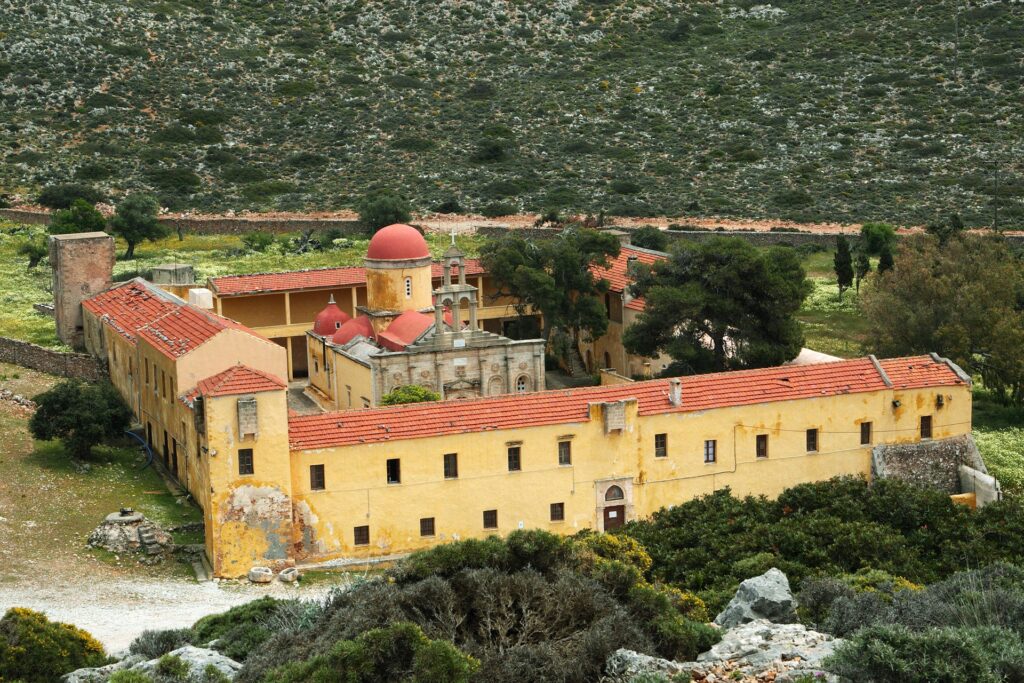
The monastery sits on a rocky site at an altitude of 260 metres, near the entrance of the gorge Avlaki, and is built with fortress architecture. Four towers with bastions protect its corners. From the outside it looks more like a medieval fortification than a place of worship, and that was entirely intentional. It is believed that the monastery was founded by hermits and monks of the seaside Katholiko Monastery, who may have built the new monastery over a pre-existing ancient temple so as to protect themselves from pirate raids.
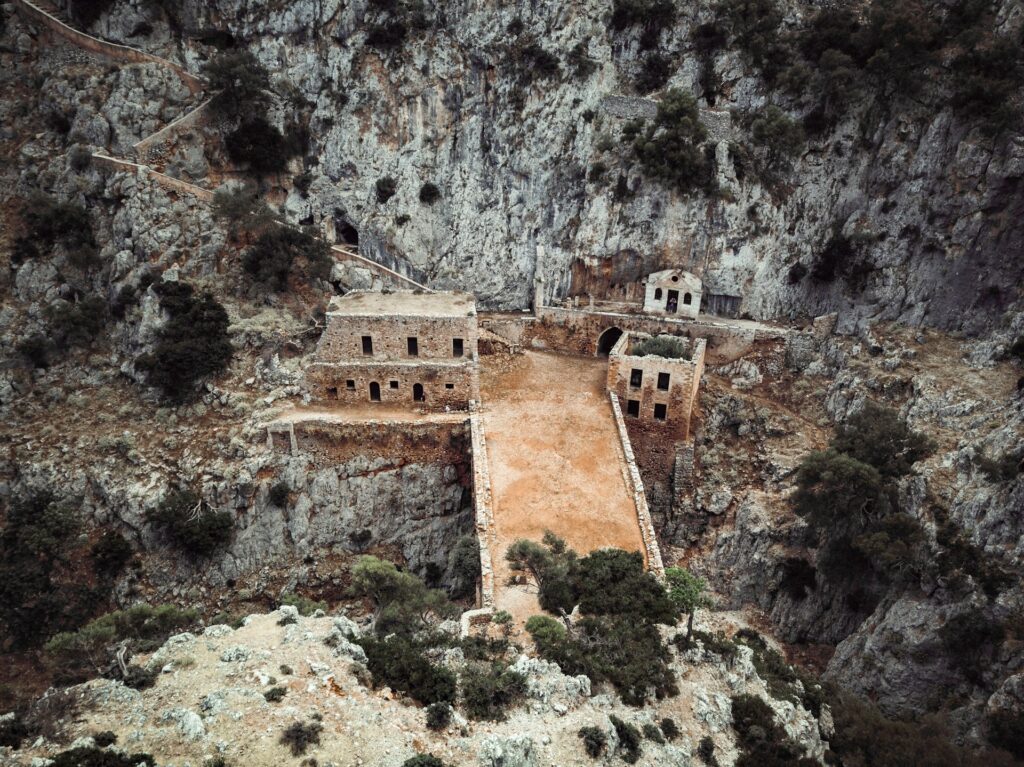
Katholiko is the other half of the story. The Katholiko monastery is the most ancient monastery in Crete, dating back to the 11th century. It became a place of formal worship in the thirteenth century. About three hundred years ago, the monks abandoned the monastery because of persistent pirate raids. It has been a ruin ever since. You reach it on foot through the gorge below Gouverneto, and that walk is the whole point.
Gouverneto Monastery
The Architecture of Gouverneto
The monastery is a Venetian-style fortress with towers at each end, and some Baroque Revival influences added later. Walk through the main gate and the courtyard opens up. It is quieter than you expect. Flowers in pots. Cats sleeping. A smell of incense from somewhere inside.
The monastery church is dedicated to the Virgin, which is why Gouverneto Monastery is also known as Our Lady of the Angels. The church is cruciform, without domes, and its narthex is set at right angles to the central aisle. The most interesting and impressive features are the monsters carved in relief on the front of the church. The style is quite unusual, influenced by the Venetian Renaissance and Baroque.
Around the main church there are other buildings of the complex, including 50 monk cells on two floors, a dining room, and a small museum. Next to the church there are two chapels dedicated to the Saints Ten and Saint John the Hermit.
Inside the monastery is a tiny museum of ecclesiastical works and other precious relics. It is small but worth a few minutes. The monks who are around are, by most accounts, genuinely welcoming. Fresh water and Turkish delights are offered upon arrival, and there is a small shop. The monks produce and sell local products such as olive oil, honey, and spices. Cash only. The monastery accepts cash payments for entry fees, donations, and souvenirs. Visitors are advised to bring sufficient cash, as the monastery does not currently accept credit cards or mobile payments.
Warning: The monastery is closed on Wednesdays and Fridays. No exceptions. Many visitors drive all the way up only to find the gates locked. Check the day before you go. Opening hours on other days are split: morning and late afternoon only.
The Gorge Walk: Gouverneto to Katholiko and the Sea
This is what most people come for, and rightly so. A paved footpath leads north of Gouverneto Monastery and into the Avlaki Gorge, which runs down to the sea. The path starts through a gate at the back of the monastery complex.
About 20 minutes’ walk from the monastery, you come to the Arkoudospilios, the Bear Cave, with the bear that was turned to stone and became a great rock inside the cave. It is an ancient cave with a clear religious and mythological significance to the area. Worth stopping for.
The Katholiko monastery is built into the sides of a ravine. It contains a church dedicated to Saint John the Hermit, the founder of the monastery, who lived and died in the nearby cave that bears his name. The church itself is carved into the rock of the mountainside, and its facade lines up with the slope of the mountain. The bridge across the ravine, and some buildings of the old monastery are still preserved.
Stand on that bridge for a moment. The gorge walls close in on both sides. The ruins are completely silent. There are no sunbed operators, no tavernas, no coaches. Just stone and shadow and the sound of whatever wind finds its way in.
Ten minutes’ walk further on is a tiny cove which was once used as a harbour. The gorge ends in a narrow rocky fjord with crystal-clear green waters. It is beautiful. And here is where things get complicated.
Warning: Swimming at the cove is prohibited by the monks. This is their land. The rule is posted and the monks take it seriously. Some visitors swim anyway — do not be one of them. Respect the monastery’s wishes. There are plenty of other beaches in Crete.
The descent is easy, but coming back is tiring if you are not used to walking, especially on a hot summer’s day. Several recent visitors note that people underestimate the return. The walk back up from the waterfront and Katholiko Monastery is steep and very hard in the heat. Plan accordingly.
The hike takes approximately 3 hours 30 minutes return. That is the realistic figure, including time at the monastery and stops along the way. In July and August, start before 9am or wait until late afternoon. It is best to walk through the gorge either early in the morning or late in the afternoon.
Local tip: The afternoon light in the gorge, particularly between 5pm and 7pm in summer, is extraordinary. The limestone walls glow. If you time your visit to walk down in the afternoon, you get the monastery at opening time (from 17:00), the cooler gorge air, and that light on the way down. The return climb in the evening is still tough, but at least you are not doing it under a midday sun.
History: From Hermits to German Guardhouse
The story here runs deep. Saint John the Hermit, known as Xenos, lived in a cave in the Avlaki Gorge in the 10th century and is considered the founder of the nearby Katholiko monastery. After his death, many hermits came to live in Katholiko Monastery. Over the following centuries, the community grew, then fled the coastline because of piracy, and eventually built Gouverneto further inland and at altitude.
A census held in 1637, recorded shortly before the Turkish invasion, revealed that at the time there were 60 monks living there, making it one of the largest monasteries in Crete at the time. During Ottoman rule, the monastery endured. In 1821, seven of the monastery’s monks were killed by Ottoman forces as they looted the area’s churches.
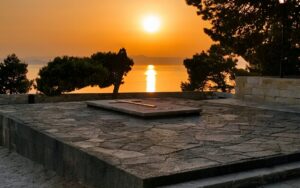
During World War II, the Germans established a guardhouse in the monastery to control the area. Along the path you may encounter a memorial to Akrotiri people executed during WWII. Worth a pause.
Since 2005 the monastery has undergone restoration work by the monks. The fabric of the place is being carefully maintained by the small brotherhood that still lives here.
Local tip: The monks at Gouverneto are known for being genuinely kind to respectful visitors. If you arrive correctly dressed, turn your phone camera off inside the walls, and show basic courtesy, you may find them surprisingly willing to share the history of the place. That conversation is worth more than any guidebook entry.
The Walk to Katholiko
Dress Code and Photography Rules
This is a working monastery with strict rules. They are not suggestions.
Entrance is prohibited to people inappropriately dressed in shorts, swimwear, or sleeveless blouses. Smoking is forbidden inside the monastery, and so is using cameras or video cameras. Both men and women should cover their shoulders and knees.
Several visitors report that the dress code enforcement is stricter than at some other monasteries in Crete, and that the rules can apply to the hiking path gate as well as the monastery entrance itself. Come prepared. There are no loaners guaranteed. If you turn up in shorts and a vest top, you will not get in.
Photography inside the monastery is not permitted. No photos of the interior, the monks, or the courtyard. Outside and in the gorge is fine.
Frequently Asked Questions
How difficult is the hike from Gouverneto to Katholiko?
The descent through Avlaki Gorge to Katholiko and the cove takes around 45 minutes. It is mostly paved stone path, not technical terrain. The challenge is the return. The walk back up from the waterfront and Katholiko Monastery is steep and very hard in the heat. Fit adults in good shoes will manage without difficulty. Expect to be warm.
Can children visit Gouverneto Monastery and Katholiko?
The monastery itself is suitable for all ages, provided they are dressed appropriately. The final descent to the sea may not be suitable for small children. For the full gorge walk, older children who are comfortable on uneven ground and steep paths will be fine. Pushchairs or strollers are not practical anywhere on this route.
Is Gouverneto worth visiting if the monastery is closed?
Yes. Even when the monastery itself is closed, visitors can still access the path leading to the sea and other attractions. The gorge walk, the Bear Cave, and the Katholiko ruins are all accessible regardless of the monastery’s opening hours.
What is the entrance fee for Gouverneto Monastery?
A small entrance fee of around €2.50 for adults is charged to help with upkeep. Check the official information before you go, as this may change. Greek citizens enter free. The hike beyond the monastery is free.
Is photography allowed at Gouverneto?
No photos or videos are allowed inside the monastery. Outside in the gorge and at Katholiko you can photograph freely.
How long does the full visit take?
Allow a minimum of 3 to 3.5 hours if you plan to walk to Katholiko and back. Add another 30 to 45 minutes if you spend time in the monastery itself. The hike takes approximately 3 hours 30 minutes return. A rushed visit to the monastery only takes about 45 minutes.
The Honest Notes
This is one of the better half-day experiences near Chania. It is not dramatic in the way Balos or Elafonisi are dramatic. It is quieter, older, less visited, and more interesting for anyone with a curiosity about what Crete was before the tourist industry arrived.
Warning: In July and August, start this walk early. The gorge has almost no shade and the stone path reflects heat. Going down at 11am in August is a mistake. Either arrive at the monastery for the 9am opening and walk down straight after, or wait for the afternoon session from 17:00.
Warning: GPS navigation to Gouverneto Monastery can be unreliable. Some visitors suggest using Agia Triada Monastery as a GPS destination, as Gouverneto Monastery is a short distance past it. Follow the road past Agia Triada for another 4 kilometres and Gouverneto is at the end. The road is well-signed once you are on Akrotiri.
The one genuine frustration here is the swimming rule at the cove. After a tough climb back through the gorge on a hot day, the emerald water at the bottom is a genuine torment. Accept it. The monks have maintained this place for five centuries. Their rules are their rules.
Before You Go
- Water: bring at least 1.5 litres per person. No water sources on the gorge route. The monastery may offer water on arrival but do not rely on it.
- Shoes: trail shoes or firm-soled walking shoes. The path is paved stone but uneven in places. No sandals or flip-flops.
- Dress code: cover shoulders and knees for the monastery. Long trousers or a skirt. No shorts, sleeveless tops, or swimwear.
- Cash: bring small notes. No card payments accepted at the monastery.
- Camera: leave it in your bag inside the monastery walls. No photography inside.
- Opening days: closed Wednesday and Friday. No exceptions.
- Sun: carry sunscreen and a hat. The gorge has limited shade, especially in the lower section.
Getting There
By car is the only practical option for most visitors. Gouverneto Monastery is located on the Akrotiri Peninsula, about a 35-minute drive from Chania. From Chania, follow the signs toward the airport at Kounoupidiana. Once you arrive at the airport area, follow signs to Agia Triada Monastery. From Agia Triada, continue the same road for another 4 kilometres to Gouverneto. When you arrive at the monastery, you will find a parking area where you can safely leave your car. Parking is free.

By bus: There is no direct bus to Gouverneto Monastery. You can take a KTEL bus from Chania toward Agia Triada Monastery, but from there you face a 4-kilometre walk with no pavement. Not recommended in summer.
By taxi: A taxi from Chania works. Ask the driver to wait or arrange a return pick-up time. There is nothing up here to hail a cab from once you arrive.
By organised tour: Another option is to join a guided tour covering Agia Triada Monastery, Gouverneto, and Katholiko. This takes away all the logistics and gives you context for what you are seeing.
Practical Information
| Address | Akrotiri Peninsula, Chania, Crete |
|---|---|
| Distance from Chania | 19 to 20 km |
| Drive time | 30 to 35 minutes |
| Open days | Monday, Tuesday, Thursday, Saturday, Sunday |
| Closed | Wednesday and Friday |
| Morning hours | 09:00 to 12:00 |
| Afternoon hours | 17:00 to 19:00 (Mon/Tue/Thu), 17:00 to 20:00 (Sat/Sun) |
| Entrance | Small donation (cash only, no cards) |
| Photography | Not permitted inside the monastery |
| Dress code | Shoulders and knees covered, both men and women |
| Parking | Free at the monastery |
| Toilets | At the monastery. None on the gorge route. |
| Phone | +30 28210 63319 |
Combine With
Agia Triada Monastery is 4 kilometres back down the same road. The Agia Triada monastery is located in the northwest part of the Akrotiri Peninsula, 16 km from Chania. It is larger, more accessible, and has different opening hours. Do both on the same morning.
Stavros Beach is on the northern tip of Akrotiri, about 15 minutes from Gouverneto by car. The circular lagoon-like cove here is calm, shallow, and family-friendly. A good place to swim after the gorge walk, since swimming at the monastery cove itself is not permitted.
Kalathas Beach is a small bay on the western side of Akrotiri, around 20 minutes from Gouverneto. It is one of the better-organised local beaches on the peninsula, with a taverna and some facilities.
Seitan Limania is the dramatic fjord beach on Akrotiri’s north coast. About 20 minutes by car. Worth seeing, though it is steep to access and gets very crowded in high summer.
Local tip: If you drive back to Chania via the Akrotiri coast road rather than the main airport road, the late afternoon light over the bay toward the White Mountains is one of those quiet views that Crete keeps producing without ceremony. Take the longer route. You are on holiday.