The Byzantine Collection Chania is one of those places that almost nobody plans to visit, and almost everyone is glad they did. It sits on Theotokopoulou Street in the Old Town, tucked against the city’s Venetian walls. Small sign. Easy to miss. Inside, a collection that spans over a thousand years of Cretan history, housed in a building that has itself been a Franciscan monastery, a mosque, and now a museum. The layers here are literal.
Most visitors come to Chania for the harbour, the beaches, and the food. That is fair. But if you have any interest in the history underneath the postcard version of this city, this is the place to spend an hour. The entrance fee is small. The crowds are minimal. And the building alone is worth the detour.
| Location | 78 Theotokopoulou Street, Old Town, Chania |
|---|---|
| Distance from harbour | 5-minute walk |
| Time needed | 45 minutes to 1.5 hours |
| Best season | Year-round. Quieter October to May. |
| Entrance fee | Small fee. Check official website for current prices. |
| Closed | Tuesdays (and some public holidays) |
| Rental car needed? | No. Walking distance from anywhere in the Old Town. |
| Family friendly? | Yes, with older children |
What the Byzantine Collection Chania Actually Is
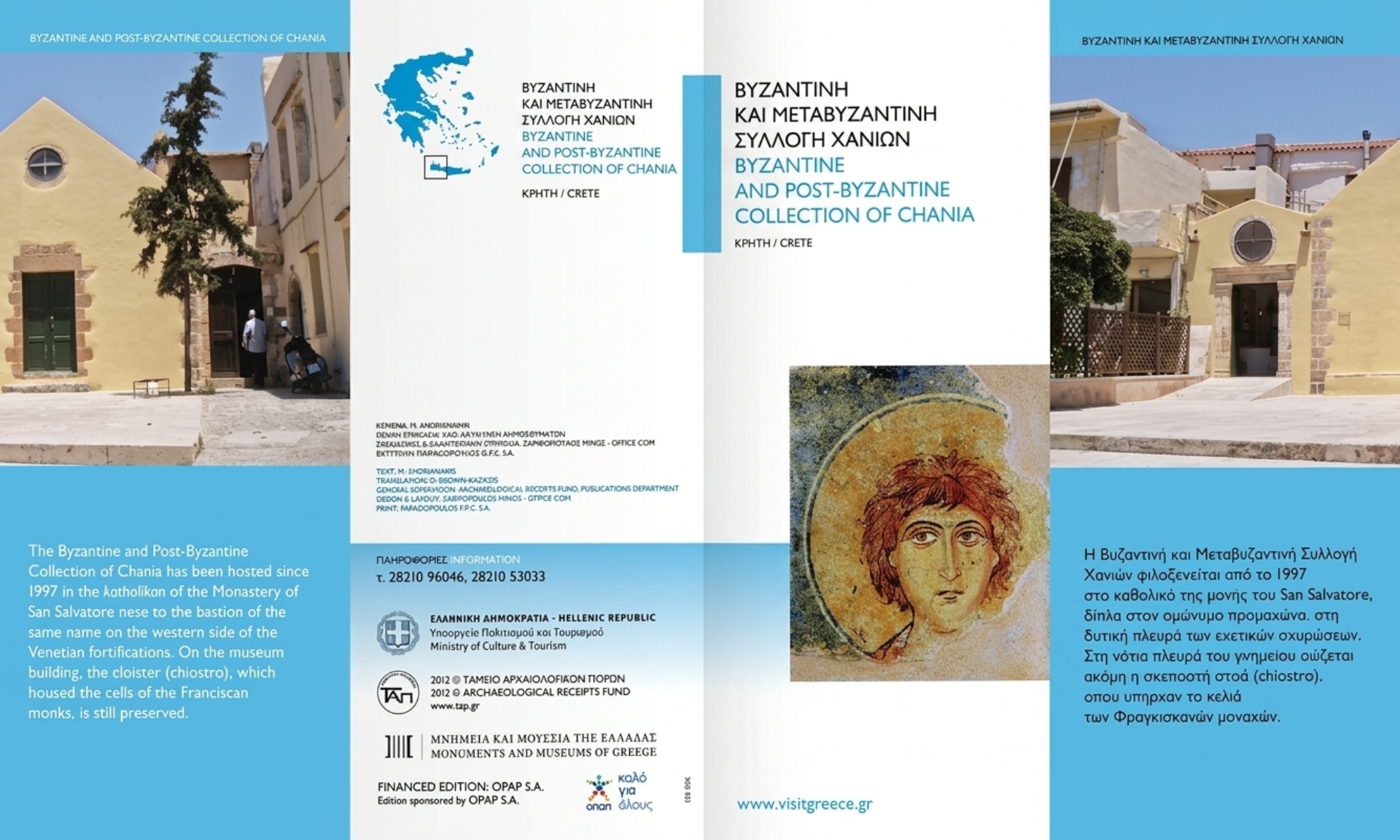
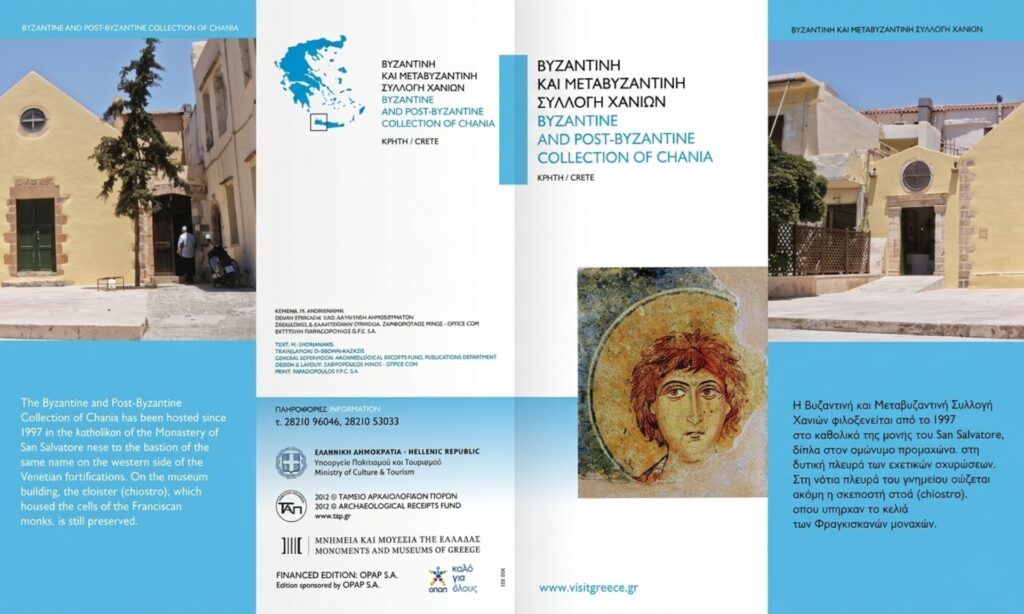
The Byzantine and Post-Byzantine Collection of Chania is housed in the catholicon of the monastery of San Salvatore, a monument of the 15th century. The order of Friars Minor moved to the monastery of San Salvatore in 1453. In the 16th century, the San Salvatore bastion was built in this northwestern part of the old town of Chania, providing the monastery with a protective wall.
The church did not stay a church for long. During the Ottoman era the church was converted into a hospital and later into a mosque, the mosque of Topu Aga Khan. The building’s own biography is a compressed version of Cretan history. Christian, then Franciscan, then Ottoman, then restored and repurposed. The Byzantine and Post-Byzantine Collection of Chania has been located in the catholicon of the Monastery of San Salvatore since 1997.
The extensive restoration of the church made it possible to identify more clearly the various building phases of the monument, unify the space, and display its austere, uncluttered architectural features to good effect. Walk in on a summer morning and the light comes through at angles that make the stone walls glow. It is a quiet space. Genuinely quiet. You will not find that in many places in the Old Town in July.
The rich archaeological material yielded by excavations conducted over many years by the 13th Ephorate of Byzantine Antiquities in the county of Chania, as well as by retrieval of material and donations, forms a collection that records the history of the westernmost county in Crete from the Early Christian times to the period of Turkish rule.
What You Will See Inside
The exhibits have been separated into units according to their category, including mosaics, signs, murals, ceramics, sculptures, and coins, and are displayed in chronological order. Visitors can learn about the provenance of the items on display as well as the historical context of their time period from maps and explanatory panels. The English language labelling is good. You will not be left guessing.
Some of the standout pieces:
Part of a mosaic floor of an Early Christian basilica with a depiction of a deer and a vine. 6th century. It does not sound like much on paper. In person, the idea that someone laid these tiles in a church here in the 6th century, and that you are standing over it now, lands differently.
Some of the exhibits include frescoes from churches (such as Saint Varvara in Latziana) and icons, with an excellent example being the icon of Saint George on horseback painted by Emmanuel Jane (1660-1680), the dedicatory inscription of 1623 with Venetian coats of arms, deformed masks, wall parts and other important findings.
The collection includes frescoes primarily done in the Cretan school style, coins dating back to Justinian, Constans II, and Constantine the Great, as well as historical items like pottery shards, metallic objects, wall paintings from churches, and a mosaic floor spanning over a thousand years of local history.
Several reviewers specifically mention the icon paintings, particularly those of St. George, noting the influence of Venetian art on the Cretan style. The Cretan school of iconography is distinct from the more rigid Byzantine tradition. The faces are more expressive. The compositions are more dynamic. Once you know what to look for, you see it everywhere on the island.
Each object reflects one or more aspects of everyday life (daily ware pottery, metal lamps), burial customs (items of minor arts, chiefly jewelry that served as funerary offerings and funerary inscriptions), the economy (coins and coin hoards), secular and church architecture (column capitals, closure panels, part of a mosaic, wood sculptures), and Byzantine and post-Byzantine art including frescoes and icons.
Local tip: The building itself rewards attention. Look at how the space changes as you move from the original 15th-century domed section at the east end toward the later Venetian extensions to the north. You can feel the different building phases in the proportions of the rooms. Most people walk past this without noticing it.
The Building: A Short History
Most museums in Chania are themselves monuments. This one is no different.
The original church, which probably dates to the 15th century, was the small domed section on the east side. This was extended to the west in the following century, following the same type of vaulted hall with strainer arches. In the mid-17th century the church was extended to the north by the addition of two rectangular rooms with an entrance on the west side. These rooms, in which a limited use of Late Gothic motifs can be observed, were roofed by cross-vaults and communicated with the central nave via large archways.
During the period of Ottoman rule the church was converted into a mosque. At the south side you can still see a covered portico, or chiostro, that once housed the cells of the Franciscan monks. Several centuries of competing religions and occupying powers, all written in stone. The museum’s contents and its container tell the same story.
The collection has been open to the public since 1997. The building is more than 500 years old. Most tourists walk past it on the way to the harbour.
Byzantine Collection Chania: What Visitors Actually Say
The Byzantine and Post-Byzantine Collection of Chania is a small but worthwhile museum housed in the former Venetian church of San Salvatore. Many reviewers describe the museum as small, often consisting of a single room, but many find the collection interesting and well-presented.
The museum is rather small, but it is actually very interesting, good for explaining the history of Crete and Chania. The items on display were very interesting and the paintings were in surprisingly good condition.
The icons and frescoes of religious subjects are completely at home here, and are intermingled with finds such as coins, pottery and inscriptions that give a clue to the area’s busy past. Items from the collections of private citizens are included with finds from official excavations. The building itself is also of interest, being cosy rather than overwhelming.
The complaints that appear in reviews consistently are worth knowing. The museum can be difficult to find. It is located in a small building behind the fortress and requires careful attention to signage. The museum does not have air conditioning. This could be uncomfortable during hot weather.
Both of these are fair. In August, the interior gets warm. Plan for a morning visit.
Warning: The museum is closed on Tuesdays. This catches people out regularly, especially those planning a full day of museum visits. Check the official website or the Ministry of Culture page before you go, as hours can also change on public holidays.
Photography
Photography, even without flash, is not allowed inside the museum, according to the official collection page. However, other sources and recent visitor reviews indicate that photography is permitted without flash in practice, and the museum’s own management has communicated different policies at different times. The safest approach: ask at the ticket desk when you arrive. Do not use flash regardless of what you are told. The frescoes and icons are light-sensitive and the damage from flash photography is cumulative and irreversible.
Warning: Photography rules at Greek state museums can change and vary between staff members. If in doubt, put the camera away and just look. The collection is small enough that you will remember what you saw.
Is a Combined Ticket Worth It?
A combined ticket also gives you entry to the archaeological museums of Chania and Kissamos. Some visitors suggest purchasing a combined ticket with the Archaeological Museum to save money. If you are planning to visit more than one museum during your stay in Chania, this is worth doing. The Archaeological Museum in Chalepa covers the prehistory and Minoan periods. The Byzantine Collection covers the Christian and post-Roman centuries. Together they give you a continuous picture of the western Crete across roughly 5,000 years. Check current combined ticket options at the ticket desk or at the Ministry of Culture website before your visit, as pricing changes.
Local tip: Visit the Byzantine Collection first, in the morning. Then walk up Theotokopoulou Street toward the harbour for coffee. The street is one of the more intact Venetian lanes in Chania and the morning light on the stone facades is worth slowing down for.
Frequently Asked Questions
How long does a visit to the Byzantine Collection Chania take?
The museum is relatively small but packed with information. Most visitors spend between 1 to 1.5 hours exploring the collection at a comfortable pace. If you read everything, allow 90 minutes. If you are doing a quick walk-through, 30 to 40 minutes is realistic. You can see everything in there in 15 minutes, but it is worth the effort if you are in the area. The right pace is somewhere between those two extremes.
Is the Byzantine Collection Chania worth visiting?
Yes, if you have any interest in the history of Crete or Christian art. It is not a large museum. It does not need to be. Visitors find the Byzantine and Post-Byzantine Collection Chania to be a fascinating and worthwhile stop, praising its well-preserved artifacts like frescoes and coins. While small, its historical depth and affordability are consistently highlighted as major positives.
Is the museum suitable for children?
Younger children might find it less engaging than larger, more interactive museums. However, it can be a valuable educational experience for older children interested in history. There are no interactive displays. Children under eight will likely be bored. Older children with any interest in ancient coins or religious art will find things to hold their attention.
Is there air conditioning?
The museum does not have air conditioning. In July and August, the interior can be uncomfortably warm in the afternoon. Visit in the morning.
Do I need to book tickets in advance?
Given its size and nature, advance ticket purchase is typically not required. Tickets can usually be bought directly at the museum entrance. This is not a museum that sells out. Walk-in is fine.
Is the museum accessible for visitors with disabilities?
The museum is accessible to visitors with disabilities and offers educational programs, a museum shop, and a printed guide. Contact the museum directly if you have specific requirements.
The Honest Notes
Most travel articles about this museum describe it as a hidden gem and move on. A few things they do not tell you:
Warning: The signage on the street is poor. The entrance is set slightly back from Theotokopoulou Street and easy to walk past, especially if you are looking at your phone. Look for the Venetian wall and the entrance to the old monastery courtyard. The ticket desk is just inside.
The museum is small. It is quite small, consisting of a single room or a few rooms. Some people feel they did not get enough for the entrance fee. Those people are usually not particularly interested in history to begin with. If you are, the density of objects in a small space is a strength, not a weakness.
The lack of air conditioning is a real issue in high summer. A visit at 9am in July is a different experience to one at 2pm. Plan accordingly.
Archaeological guides and books are sold at the museum’s ticket office near the entrance. If you want to go deeper on what you see inside, this is worth knowing. The publications are good quality and reasonably priced.
Before You Go
- Dress: No strict dress code, but the space retains a sense of its religious past. Modest dress is appropriate.
- Cash or card: Bring cash as a backup. Some smaller Greek state museums still prefer it.
- Photography: Ask at the desk. No flash under any circumstances.
- Timing: Avoid Tuesday (closed). Avoid August afternoons (hot). Morning visits are best year-round.
- Combined ticket: Ask at the desk about the combined ticket covering the Archaeological Museum of Chania and the Archaeological Museum of Kissamos.
- Facilities: No café inside. The nearest coffee is a two-minute walk on Theotokopoulou Street or toward the harbour.
Getting There
The museum is in the Topanas neighbourhood of the Old Town, on Theotokopoulou Street. The address is 78 Theotokopoulou Street, Old City of Chania. The location is convenient, situated near the Venetian Harbour, making it an easy stop during a stroll.
On foot: From the Venetian harbour, walk west along the waterfront past Firkas Fortress and turn right into the Topanas neighbourhood. Theotokopoulou is the main street running parallel to the walls. The museum is on the left, set into the fortifications. Five minutes from the harbour at a slow walk.
By car: There is no parking directly at the museum. Park in the public car park near the outer walls of the Old Town, or on the road above the Topanas neighbourhood. Do not attempt to drive into the Old Town itself. The streets are too narrow and the driving restrictions are strictly enforced.

By taxi: Any taxi driver in Chania knows Theotokopoulou Street. It is a short fare from most parts of the city. There is no Uber or Bolt in Chania.
By bus: City buses stop near the Old Town. From the main bus station on Kydonias Street, the museum is a 10-minute walk. For bus routes and current schedules, check the Chania municipal bus service (KTEL Chanion).
On a tour: Several walking tours of the Chania Old Town include the Byzantine Collection as a stop. Its central location in Chania’s Old Town means you can easily combine a visit with exploring the streets and harbour.
Practical Information
| Address | 78 Theotokopoulou Street, Old Town, Chania 73131 |
|---|---|
| Phone | +30 28210 96046 |
| Closed | Tuesdays and some public holidays |
| Summer hours (April to October) | Wednesday to Sunday, extended hours. Check official website. |
| Winter hours (November to March) | Wednesday to Sunday, 08:30 to 15:30 |
| Last admission | 20 minutes before closing |
| Entrance fee | Small fee. Check current prices at the official site or Ministry of Culture. |
| Combined ticket | Available for multiple Chania and Kissamos museums. Ask at desk. |
| Photography | Ask at the desk. No flash. |
| Accessibility | Accessible for visitors with disabilities. |
| Museum shop | Yes. Guides and publications available. |
| Official information | archaeologicalmuseums.gr or culture.gov.gr |
Combine With
Firkas Fortress and the Naval Museum. Immediately at the western entrance of the Venetian harbour, a five-minute walk from the Byzantine Collection. The Naval Museum inside covers Cretan maritime history from antiquity. The fortress walls themselves are worth climbing for the views over the harbour entrance.
The Venetian Harbour. No introduction needed. After a morning in the museum, the harbour is the natural place to sit with a coffee and watch the boats. The walk from the museum takes three minutes.
The Archaeological Museum of Chania. Now located in the Chalepa suburb, about two kilometres east of the Old Town. The Archaeological Museum of Chania is in Chalepa, a historic suburb, housed in an iconic building constituting a landmark for the whole city. It covers the prehistoric through Roman periods. Together with the Byzantine Collection, you have the full sweep of western Crete’s history in a single day. A combined ticket covers both.
The Etz Hayyim Synagogue. A short walk south from the Byzantine Collection, in the Jewish quarter of the Old Town. One of the oldest functioning synagogues in Greece, restored in 1999. A small, striking place with a complicated history. Worth the detour.
Local tip: The walk along Theotokopoulou Street at around 8:30am, before the tourist traffic builds, is one of the better experiences in the Old Town. The street is narrow and the stone buildings on both sides still hold the cool of the night. The museum opens early. If you are staying nearby, this is the best time to go. You will likely have the collection almost to yourself, and the walk back to breakfast along the harbour walls in the morning sun is a good way to start a day in Chania.