
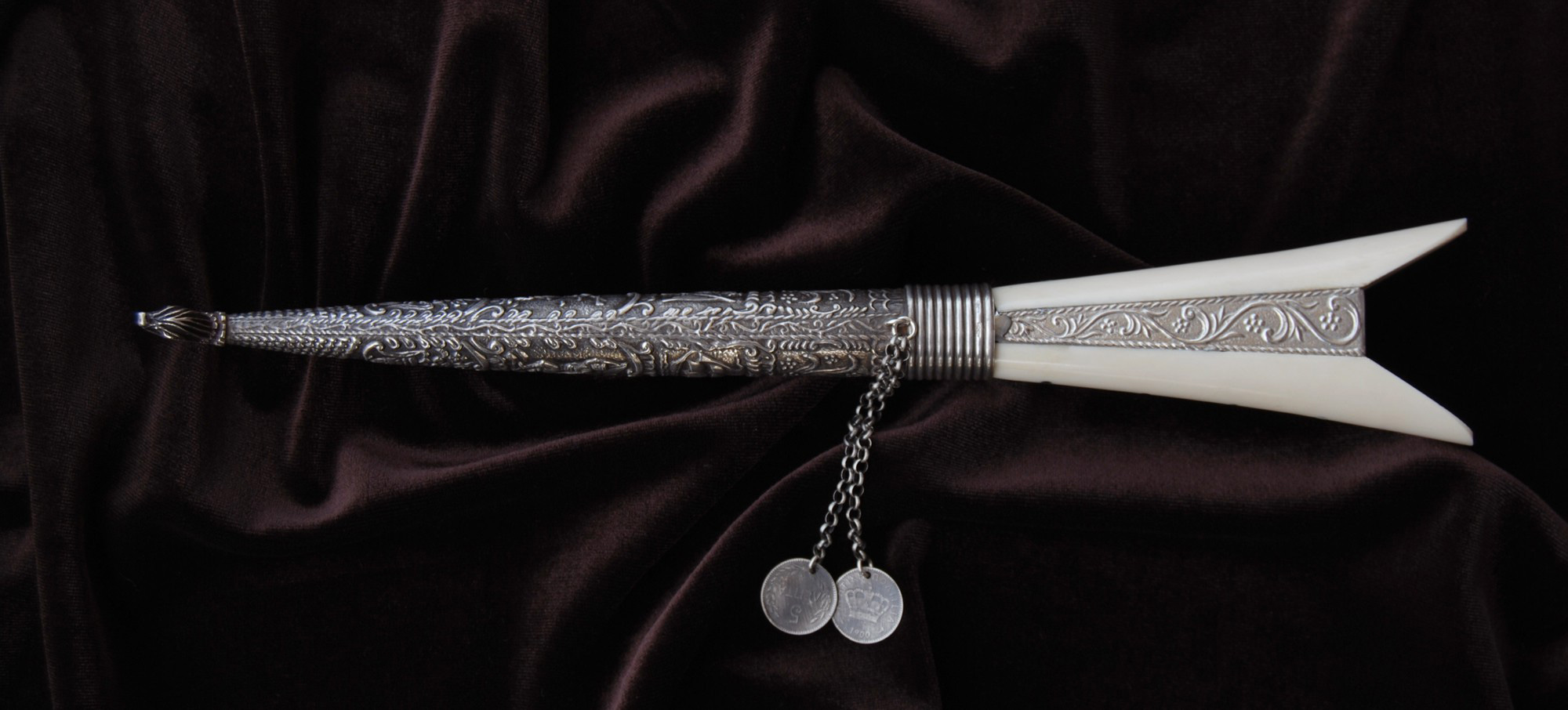
Traditional Cretan knives are one of the most authentic souvenirs you can bring home from Chania, and one of the most misunderstood. Walk through the old town market and you will see them everywhere. Rows of blades hanging in shop windows, stacked on display racks, sold alongside ceramic plates and honey jars. Most of what you see there is mass-produced. Some of it is not worth your money. But behind that tourist layer, there is a genuine craft tradition that goes back centuries, and if you know what to look for, Chania is one of the best places in Greece to find a real one.
This guide is about helping you find the real thing. What makes a genuine Cretan knife, where to buy one in Chania, how much you should expect to pay in general terms, and what to watch out for. If you are serious about it, you will leave with something that will last a lifetime.
| Location | Chania old town and surrounding workshops |
|---|---|
| Best area | Leather Lane (Skridlof St) and the covered market |
| Time needed | 1 to 2 hours for browsing and buying |
| Best season | Year-round, though August is very crowded |
| Rental car needed? | No, walkable from the old town |
| Family friendly? | Yes, with supervision around children |
What Makes a Traditional Cretan Knife
The Cretan knife, known locally as a makhairi or sometimes just as the Cretan dagger, is not a kitchen knife. It is a working blade with a specific shape that has changed very little over hundreds of years. The blade is single-edged, slightly curved, and tapers to a fine point. It is designed for general outdoor use, for cutting rope, food, or whatever else a shepherd or farmer needed in the mountains. The form follows that function precisely.
What distinguishes a handmade Cretan knife from the imported tourist versions is the construction at every stage. The blade on a genuine piece is hand-forged from high-carbon or stainless steel, ground by hand, and finished by the maker. The handle, which is where you will see the most variation, is traditionally made from ram or goat horn, olive wood, or a combination of the two. Some handles incorporate bone. The best makers inlay the handle with brass or silver wire in geometric patterns, a technique called tarsia that takes real skill and time.
The sheath is another indicator of quality. A proper Cretan knife comes in a leather sheath, usually stitched by hand and sometimes decorated with metal fittings. The cheap versions come in thin machine-stitched sheaths that fall apart within a year. Hold both side by side and the difference is obvious.
Local tip: Tap the blade lightly with your fingernail. A well-tempered blade will ring faintly, almost like a tuning fork. A cheap stamped blade sounds dull and flat. This is not a guarantee of quality on its own, but it is a quick first filter.
The size of the blade varies. Small everyday knives have blades of around 10 to 12 centimetres. The larger decorative versions, often mounted and sold as display pieces, can be considerably longer. For practical use, the smaller sizes are more versatile.
Where to Buy Traditional Cretan Knives in Chania
The Covered Market
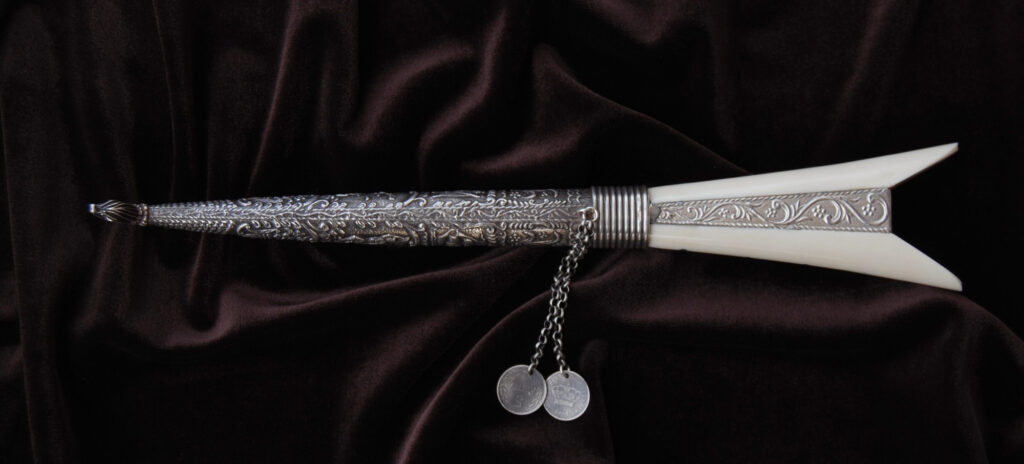
The Municipal Market of Chania on Gianari Street is the first place most visitors encounter Cretan knives. Some of the stalls here do sell genuine handmade pieces alongside the mass-produced ones. The key is to ask directly whether the knife was made locally and by whom. A seller who can name the maker and tell you something about how it was made is a different conversation from one who cannot. Prices in the market vary widely and it is worth comparing before you commit.
Leather Lane
Skridlof Street, which runs parallel to the harbour and is known informally as Leather Lane, is lined with shops selling leather goods, bags, and knives. Again, quality ranges considerably. Some shops here have been selling handmade Cretan knives for decades and stock pieces from specific craftsmen in the Chania region and from villages further into the White Mountains. Look for shops that display fewer pieces and know the stock in detail.
Specialist Knife Shops and Workshops
For the best quality, look for shops that describe themselves specifically as dealing in handmade Cretan knives rather than general souvenir stores that happen to sell them. There are a small number of these in and around the old town. Some are connected directly to the maker. If you can buy from the craftsman himself, or from someone who can take you there, you will pay a fair price and know exactly what you are getting.
The village of Vryses, about 45 minutes east of Chania, and various villages in the White Mountain foothills have knife-making traditions. If you have a rental car and a particular interest in the craft, it is worth asking locally about current makers who still work from home workshops. This is becoming rarer but the tradition is not dead.
Warning: Many knives sold in Chania souvenir shops are imported from Pakistan or China and dressed to look Cretan. The giveaways are very low prices, handles that feel hollow or lightweight, and sheaths with machine-stitched edges that are perfectly uniform. If the price seems too good to be true for a handmade piece, it almost certainly is not handmade.
What to Look for When Buying
The handle material is the first thing to examine. Horn handles should feel dense and slightly cool to the touch. They will have natural variation in colour and pattern. No two horn handles are identical. If the handles in a display all look exactly the same, they are synthetic.
The blade should show some evidence of hand-grinding. Machine-ground blades are perfectly uniform in finish. A hand-ground blade has very subtle variations in the grind angle that you can see when you tilt it in the light. This is not a flaw. It is the mark of a human making it.
The fit between blade and handle should be tight with no play at all. Hold the handle firmly and try to move the blade. There should be zero movement. On a cheap knife the blade will wobble slightly at the joint. This is both a quality indicator and a safety issue.
Check the edge. A blade sold sharp is a blade the maker is confident in. Blades sold deliberately dull are sometimes hiding poor tempering.
Local tip: Ask if the knife can be sharpened and what steel it is made from. A maker who knows his work will answer this without hesitation. High-carbon steel holds a better edge but requires more care. Stainless steel is more practical for everyday use. Neither is wrong, but knowing which you have matters for long-term care.

Prices and What to Expect
Handmade Cretan knives are not cheap. A genuine piece with a horn handle, hand-forged blade, and proper leather sheath will cost considerably more than the mass-produced versions displayed at the front of tourist shops. Think of it as the difference between a factory product and something a skilled person spent several hours making by hand.
The decorative versions with silver wire inlay on the handle, brass fittings on the sheath, and elaborate work throughout are the most expensive and are primarily collector or display pieces. The simpler working versions are more affordable and in many ways more interesting as objects because they are genuinely made to be used.
Do not try to bargain aggressively on handmade pieces. The price on a genuine knife reflects real labour. You can ask if there is any flexibility, and sometimes there is, but grinding someone down on something they made themselves is not a good look and rarely ends with both parties happy.
Handmade Cretan knives are protected as a traditional craft product in Greece. Look for this designation when buying, as it provides some assurance of local origin and production standards.
Taking Knives Home: What You Need to Know
You cannot carry a knife in hand luggage on a flight. This is obvious but worth stating clearly. Pack the knife in your checked luggage. Wrap it well, ideally in the original sheath plus additional padding, and declare it if the country you are travelling to requires declaration of blades. Most EU countries and the UK have specific rules around blade length for items carried in public. A knife in your checked bag going home is generally not a problem, but check the rules for your destination country before you buy.
Warning: Airport security at Chania International Airport (Ioannis Daskalogiannis) will confiscate any knife found in hand luggage without exception. Wrap your knife carefully and put it in your checked bag only. If you are travelling with only carry-on luggage, arrange to send the knife home another way or buy a display piece that qualifies as a decorative item under customs rules in your country.
Most good shops will wrap knives properly for travel and some will arrange shipping if you prefer not to take the risk with checked luggage at all.
The Craft Tradition Behind the Knife
Cretan knives have been made in the White Mountain villages for as long as anyone can document. The reasons are partly practical. Crete has a long history of conflict and occupation, and a blade was a constant companion for men working in the mountains. The island’s shepherding culture, which still exists today in the upland areas around Sfakia and the Omalos plateau, meant a good knife was a working tool as much as anything else.
The craft passed from father to son in specific villages, and some families in the Chania region have been making knives for four or five generations. The number of full-time knife makers has declined, as it has with most traditional crafts across Greece, but the knowledge has not disappeared. There are still men in their forties and fifties who trained under their fathers and continue to produce pieces by hand.
Buying one of these knives, if you buy it right, is not just buying a souvenir. It is supporting a craft that is genuinely at risk of being replaced entirely by imported products dressed up to look local.
Frequently Asked Questions
Are traditional Cretan knives actually handmade?
Some are and some are not. The ones sold in the bulk souvenir shops are almost always imported and machine-made. Genuine handmade Cretan knives come from craftsmen in Chania and the surrounding villages and cost more. Ask the seller directly about the maker and origin. A credible answer will include specific details.
Can I take a Cretan knife home on the plane?
Yes, but only in checked luggage. Knives are not permitted in hand luggage under any circumstances. Wrap the knife well in the original sheath and additional padding. Check the rules for your destination country regarding blade imports before buying.
How do I tell the difference between a real and a fake Cretan knife?
Look at the handle material. Horn should feel dense, cool, and unique in pattern. Check the blade for subtle hand-grinding marks. Test the fit between handle and blade for any movement. A cheap knife will have a uniform, plastic-feeling handle, a machine-ground blade, and slight wobble at the joint.
Are Cretan knives good as gifts?
They make excellent gifts for the right person. Practical, durable, and genuinely connected to the place they come from. A handmade version with a horn handle is the kind of object someone keeps for decades. Avoid buying the cheapest version available and calling it a gift.
Is there a best size to buy?
For practical everyday use, a blade length of around 10 to 12 centimetres is the most versatile. Larger display pieces with elaborate decoration are impressive but are less suited to actual use.
Where are the best knife makers in the Chania area?
The old town has several reputable specialist shops. The villages in the White Mountain foothills, including areas around the Apokoronas and Sfakia regions, have traditional makers. Ask in any credible old-town knife shop about workshops they work with directly.
The Honest Notes
Warning: The tourist market in Chania has been flooded with imported knives for years. The volume of fake or low-quality pieces dramatically outnumbers the genuine ones. Do not assume that because you are buying in Greece, or even in Chania specifically, that the knife is Cretan-made. Ask. If the seller cannot tell you where the blade was forged and who made it, you are probably looking at an import.
Warning: If you are buying a knife as a decorative display piece only, the standards above matter less. But if you want something genuinely local and genuinely made by hand, take the time to find the right shop and ask the right questions. It takes an extra hour but the difference in what you end up with is significant.
Getting There
The old town of Chania is walkable from most accommodation in the city centre. The covered market is a five-minute walk from the Venetian harbour. Leather Lane runs parallel to the harbour between Halidon Street and the market. The specialist knife shops are scattered through the old town, primarily in the streets behind the harbour and around the market area.
No rental car is needed to browse knives in Chania. If you want to visit village workshops outside the city, you will need your own transport.
Practical Information
| Best area for quality knives | Old town streets behind the harbour, covered market |
|---|---|
| Opening hours | Most shops open daily in summer, some close Sunday or midday |
| Payment | Cash preferred in smaller workshops, cards accepted in larger shops |
| Shipping | Some specialist shops will ship internationally |
| Airport rules | Checked luggage only, no hand luggage |
| Best time to browse | Morning before the cruise ship crowds arrive |
Combine With
A trip to buy knives in the old town combines naturally with the rest of what Chania’s historic centre offers. The Venetian harbour is a five-minute walk and worth at least an hour on its own. The covered market is the obvious starting or ending point for the knife search and also sells local food products including herbs, honey, olive oil, and cheese. Worth spending time there regardless.
If you have a rental car and want to extend the day, the drive south toward the White Mountains passes through villages where the knife-making tradition is strongest. The road toward Omalos and the Samaria Gorge trailhead takes you through exactly this landscape, and a stop in one of the mountain villages for coffee gives you a sense of where these knives actually came from.
Local tip: The knife makers who still work in Chania are not advertising on Instagram. The best way to find them is to ask in a reputable old-town shop and follow the conversation. One good shop will often mention another, or point you toward someone they buy from directly. That kind of chain of recommendation leads to better pieces than any online search will.