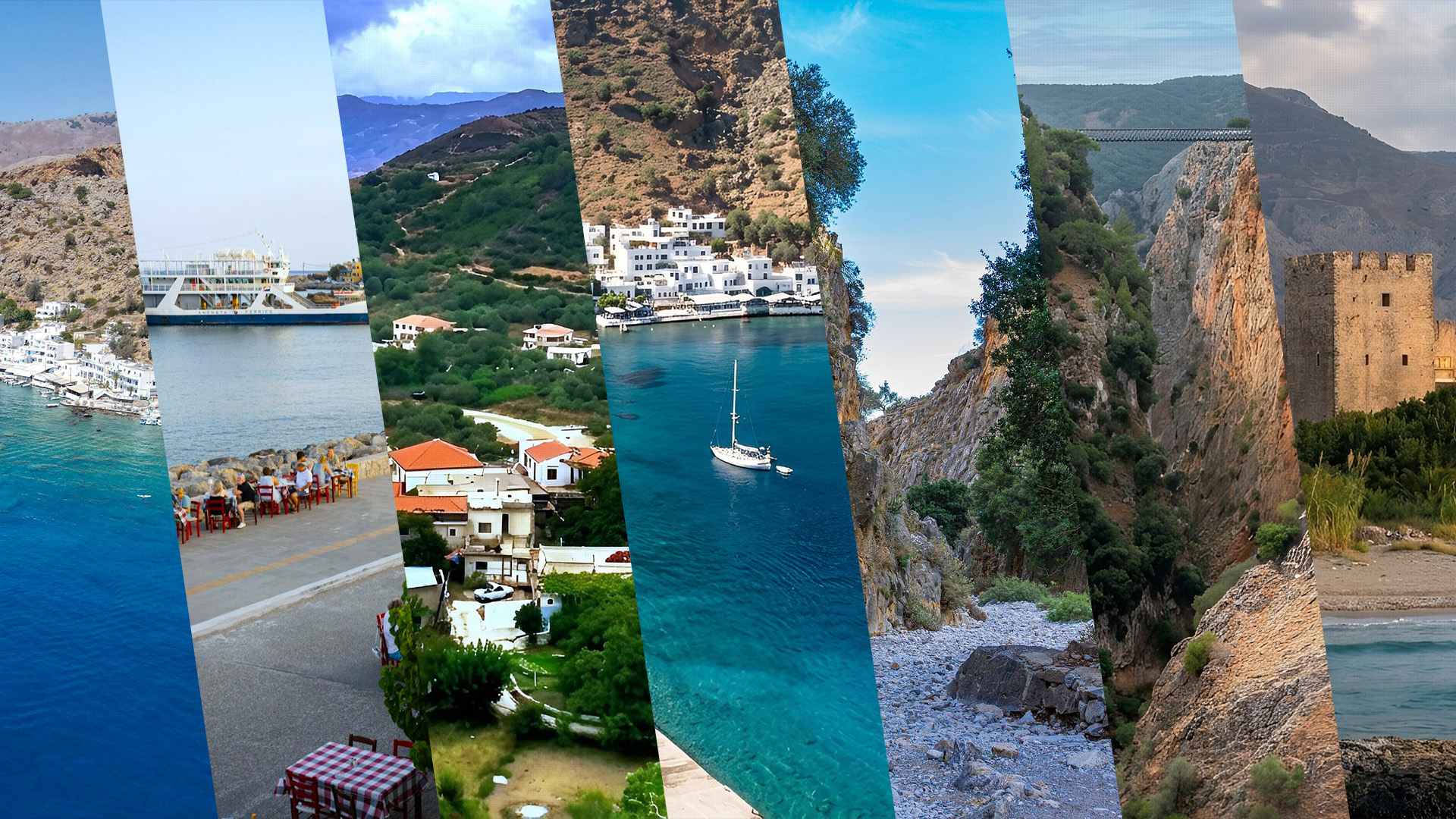
This south Chania guide covers the region that most tourists never find. They land in Chania, drive west to Elafonisi, maybe east to Balos, and go home thinking they have seen Crete. They have not. South of the White Mountains sits a completely different island. Wilder. Quieter. Much harder to reach. And in many ways, far more rewarding.
The south coast of Chania runs from Paleochora in the southwest to Frangokastello in the east. Between them lie places with no road access at all, gorges that served as escape routes for soldiers in wartime, beaches that require a boat or a serious hike to reach, and hill villages where the air smells of resin and the kafenion has not changed since the seventies. This is not a guide for people who want a beach bar and cocktails before noon. It is a guide for people who want to understand what Crete actually is.
The distances from Chania are real. Plan for long drives on mountain roads. Take a rental car if you intend to explore properly. And give yourself more than a day.
| Distance from Chania | 60 to 90 km depending on destination |
|---|---|
| Drive time | 70 to 120 minutes |
| Best season | May, June, September, October |
| Rental car needed? | Yes, strongly recommended |
| Ferry access | Paleochora, Sougia, Agia Roumeli, Loutro, Hora Sfakion (April to October) |
| Family friendly? | Varies by location |
| Difficulty | Easy to Challenging depending on activity |
Understanding the South Chania Region
The White Mountains divide Chania into two separate worlds. The north coast is the one most tourists see: resort towns, wide beaches, organised sunbeds, cocktail bars. Cross the mountains and the landscape changes completely. The roads narrow, the villages shrink, and the Libyan Sea stretches south toward Africa with nothing in between.
Hidden behind the massive White Mountain range, the southwest of Crete is wild and sometimes harsh, yet at the same time untouched and beautiful. The mountains drop directly into the sea in many places. That is why several villages along this coast are accessible only by boat. There are no roads. Not because no one has built them, but because the gorges and cliffs make it physically impossible.
Between April and October, a ferryboat connects five coastal villages of South-West Crete: Paleochora, Sougia, Agia Roumeli, Hora Sfakion, and the island of Gavdos. This ferry line is operated by ANENDYK Seaways. Ferry timetables can vary based on the season, so it is essential to check the latest schedules on the ANENDYK website or at the local ticket offices.
Warning: The ANENDYK ferry runs once daily on most routes and is subject to weather cancellations. On the south coast, wind can pick up suddenly and services may be suspended with little notice. Always have a backup plan. Do not rely on the ferry as your only way out of a place like Loutro if you have a flight the next morning.
Paleochora: The Most Complete Town on the South Coast
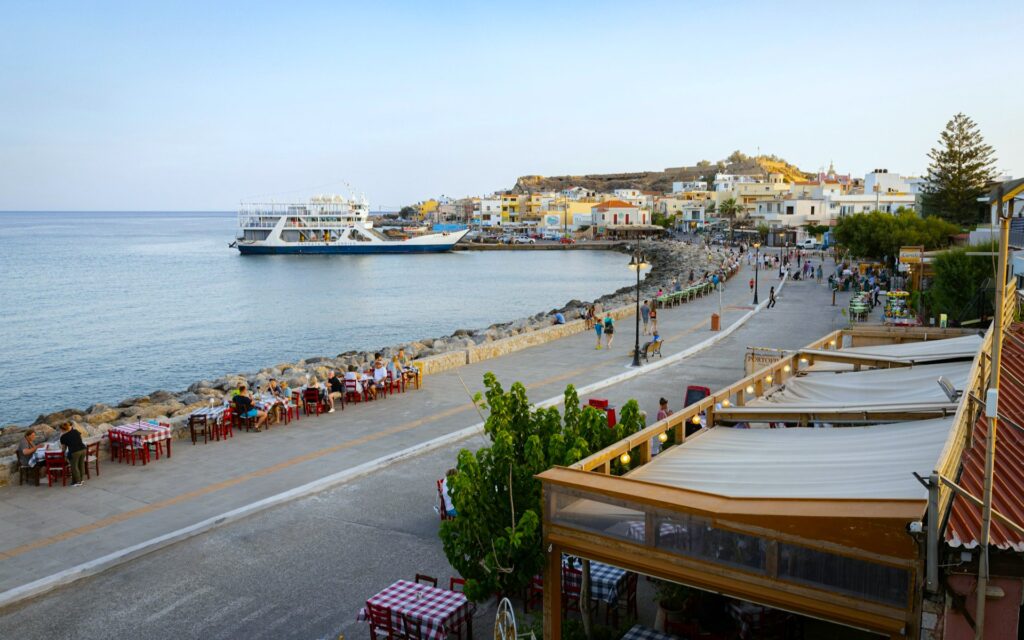
Paleochora is the only proper town on the south coast of Chania. It is the beginning of the south coast ferry line, which goes to Sougia, Agia Roumeli, Loutro, and Hora Sfakion, then returns to Paleochora, stopping at the same places on the way back.
The town sits on a small peninsula, which means it has a different beach on each side. The eastern side faces the open Libyan Sea and has sandy, sometimes windy conditions. The western side is more sheltered and calmer. Every evening in Paleochora, they close all the central area to traffic and the tavernas take over the whole area. This happens year round, not just in summer. It is a genuinely local ritual. Families, dogs, old men with coffee, children on bicycles. If you want to see Cretan town life at its most relaxed, come here on a Tuesday evening in June.
Paleochora is roughly 77 kilometres from Chania, taking around 90 minutes by car. The public bus from Chania to Paleochora is operated by KTEL Chanion-Rethymnou. There are several departures per day in summer, fewer in winter. The bus journey takes around two hours.
Local tip: Most visitors stop in Paleochora for the beach and move on. The better reason to linger is the walk west of town toward the lighthouse. The path is rough but the cliffs give you one of the most dramatic sea views on the south coast, and almost nobody goes there.
Sougia: Where People Who Have Found It Keep Coming Back
Sougia is like the Greece of the 1970s. Totally relaxed, with a good selection of Greek food from beachside, family-owned bars and tavernas. Experienced visitors to Crete often rate it above anywhere else on the island.
The beach of Sougia is 1.2 km long and is the longest beach in the south-west of Crete. It is also quite wide, up to 70 metres in places. Although it is a pebble beach, the pebbles vary a lot in size and there are plenty of places where they are very small. Nudism is tolerated in a large part of the beach, there are only a few beach chairs and umbrellas in a limited area, and the beach never feels crowded because it is so long and wide.
The local tavernas are mediocre compared to other parts of Crete. This place is not for everyone, especially if you are looking for warm, shallow water and sandy beaches. But if peace and quiet are what you are after, it is one of the best spots around. That is a fair assessment. Come for the atmosphere, not the gastronomy.
Sougia is also a starting point for serious hikers. The village offers excellent walks on the E4 national path to the ancient site of Lissos and elsewhere. Sougia is a main point for many treks. It is possible to walk to the ancient site of Lissos, an easy and beautiful walk of 4 km one way. Lissos is an ancient Greco-Roman settlement with a mosaic floor, a necropolis, and a small Asklepion temple. Almost nobody visits it. That will change. Go now.
Elos: The Chestnut Village on the Road South
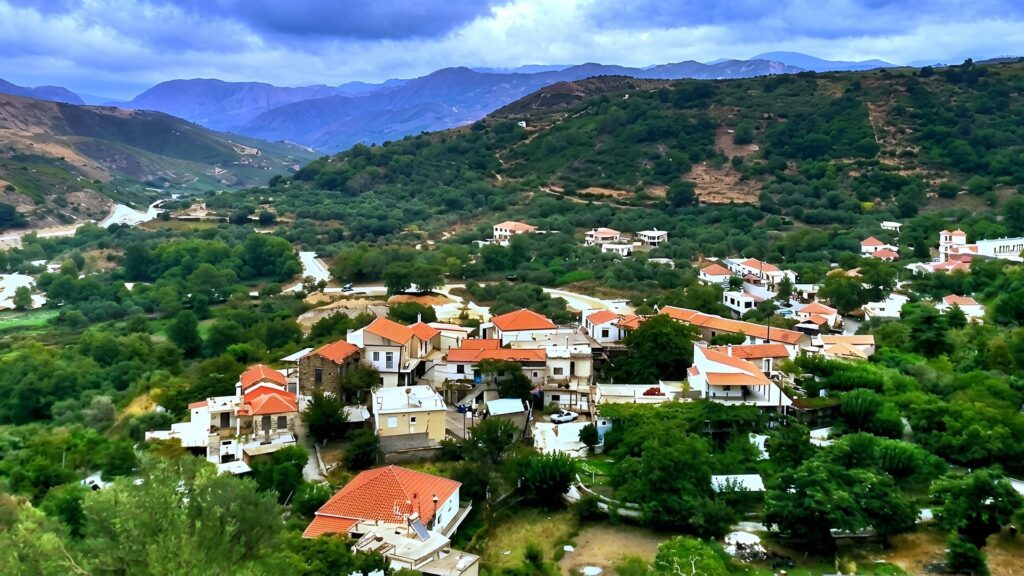
The traditional village of Elos is located 60 km southwest of Chania Town, on the way to the Monastery of Chrissoskalitissa and the beach of Elafonisi. Most tourists drive straight through it on the way to Elafonisi. That is a mistake.
Built at an altitude of 560 metres above sea level, this tranquil village is full of running waters and lush plane and chestnut trees that provide ample shade even on the hottest summer days. In midsummer, when the coast is 38 degrees and airless, Elos is 10 degrees cooler and completely shaded. The running water from the numerous springs everywhere in Elos and the shade of the tall trees cool visitors even in the middle of summer.
Elos is best known for its extensive chestnut forests, which flourish in the fertile soil of the surrounding hills. These trees have become synonymous with the village’s identity. Particularly in autumn, Elos transforms as the leaves turn amber and chestnuts fall from the trees, ready to be harvested. The annual chestnut festival is usually held on the third Sunday of October.
It is the perfect place to stop and enjoy an authentic Cretan meal. You can also visit the old aqueduct behind the village square, and near the aqueduct you will find the 14th-century church of Agios Ioannis, which has some fine frescoes.
Elos sits at 560 metres altitude. Even in August it is noticeably cooler than the coast. If you are driving to Elafonisi, stop here for lunch. It takes 20 minutes and the difference in temperature alone is worth it.
Hora Sfakion: The Gateway to the Serious South
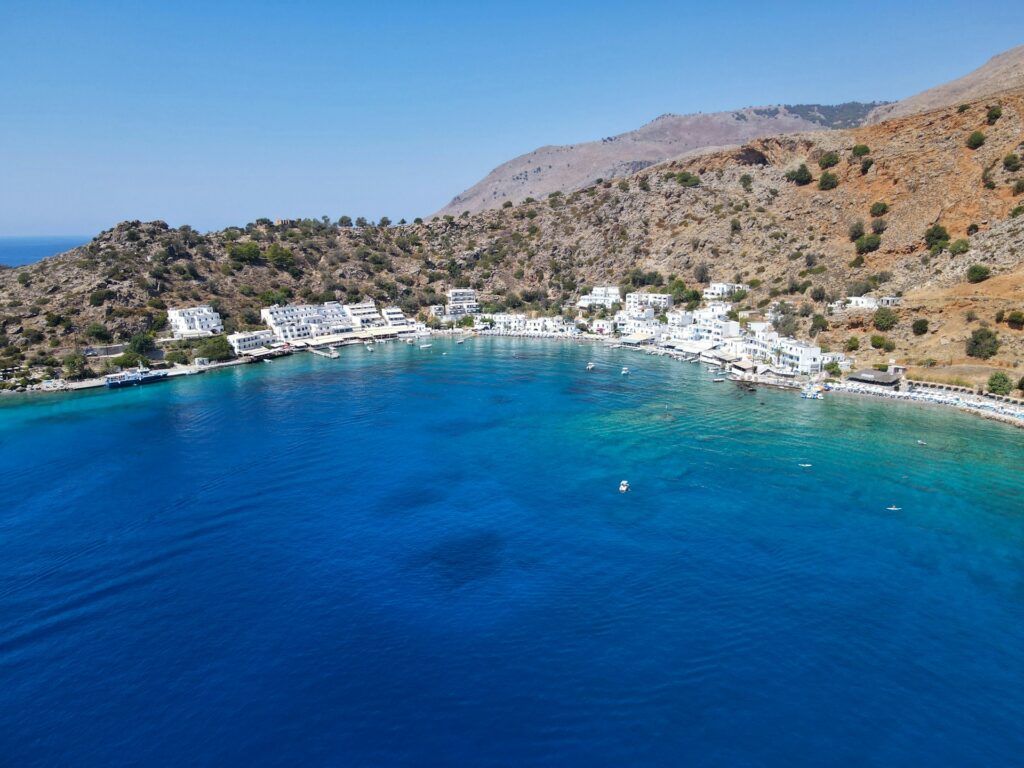
Most people first see Hora Sfakion (also called Sfakia or Chora Sfakion) from the window of a crowded bus after walking the Samaria Gorge. They are exhausted. They queue for the ferry back to Chania and never return.
That is a shame. The village is very traditional and a great place to holiday off the beaten track. There are some good restaurants along the seafront and a range of shops to serve everyday needs. Do not expect nightclubs and designer shops. Hora Sfakion is traditional and perfect for travelers who are looking for something more than just sun, sand, and shopping, although you can certainly do the first three if you choose.
Hora Sfakion is the ferry hub for the eastern end of the south coast. Boats run from here to Sweetwater Beach, Loutro, and Agia Roumeli. It is also the end point for the Imbros Gorge walk. It is worth at least one night, ideally two.
Sweetwater Beach (Glyka Nera): No Car Can Get You Here
Sweetwater Beach is located 4 km west of Hora Sfakion and 75 km south of Chania. The beach is not accessible by car. That is precisely why it is worth visiting.
The name Glyka Nera derives from the freshwater springs that flow beneath the beach, providing drinkable water even in summer. The seawater at Glyka Nera is notably colder than other Cretan beaches due to the freshwater springs, even during peak summer months. The water is startlingly cold even in August. It is one of the few places on the island where you actually gasp when you go in. The clarity is exceptional.
There are two main ways to reach this beach: by boat or on foot. The easiest and most popular route is by boat from Hora Sfakion. Regular water taxis and small ferries operate during the summer months, with the journey taking about 10 to 15 minutes. For more adventurous visitors, there is a path from Chora Sfakion taking about 30 minutes, and another tougher path from Loutro taking about 60 minutes. Both are safe, as they are part of the European E4 footpath.
Glyka Nera is an unorganised beach, so expect no sunbeds, umbrellas, or large amenities. However, you will find a small taverna built on the rocks where you can enjoy food and drinks. The eastern part of the beach is for naturists.
Warning: Some recent visitors have noted that parts of the cliff path above Sweetwater Beach have been fenced off for safety reasons due to falling rocks. Check locally before hiking the route from Hora Sfakion. The boat option is always the safest and easiest access.
Loutro: The Village With No Road
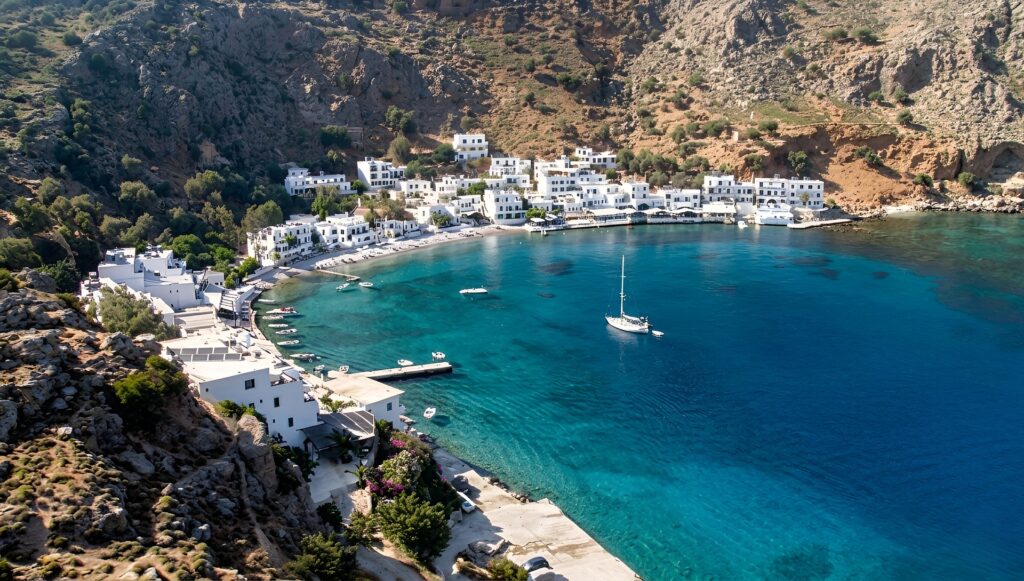
Loutro is accessible only by water. No roads. Loutro is a beautiful fishing village set in a small cove on the south coast of Crete. The ancient settlement of whitewashed buildings sits at the foot of towering mountains which tumble into a semi-circular bay lapped by the pristine waters of the Libyan Sea.
This inaccessibility is the entire point. The boats arrive, the boats leave. Between those times, there is very little to do except eat, swim, and sit in the shade. Some people find that frustrating. Most find it transformative. Loutro has some great walks and good restaurants. Three nights here is ideal to soak it in.
From Hora Sfakion, the village can be reached in a short time by ferry from ANENDYK. Various taxi boats also offer trips to the small fishing village of Loutro several times a day.
A practical note: some hotels in Loutro will not take bookings for fewer than three nights. If you want to stay overnight, check minimum stay requirements before you plan your itinerary. Accommodation books up early in summer.
Local tip: The coastal walk from Hora Sfakion to Loutro passes through Sweetwater Beach and takes about three hours at a comfortable pace. Walk it one way, take the boat back. Do it early morning before the heat builds. It is one of the genuinely great walks in western Crete.
Imbros Gorge: The Gorge That Is Always Open
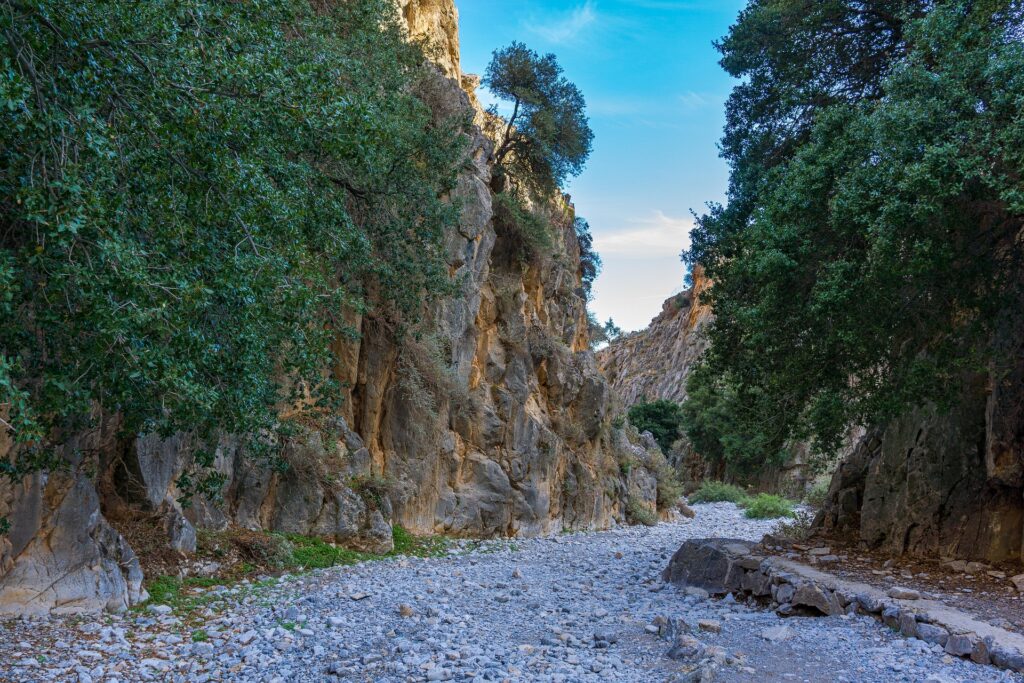
The gorge of Imbros is the second most popular gorge for walkers in Crete after the gorge of Samaria. It is open all year. That matters. Samaria is closed from November to April. Imbros is never closed, which makes it the default choice for spring and autumn visitors.
The main reason for its popularity: it is much easier to walk than Samaria. Walking distance is 8 km, total descent is around 600 metres, and the average walking time is about 2.5 hours. The path is generally easier underfoot. This is the sort of walk you could do with children, and it does not need to take a whole day.
One of the most unique features of Imbros Gorge is its narrow passages. At its tightest point, the gorge is just two metres wide, with towering rock walls blocking out much of the sky.
The gorge has a small entrance fee. Check the official website or local sources for the current amount as it was in the process of changing at the time of writing. If you want to get back to your car at the end and do not feel like walking uphill, you can take a collective taxi at the exit of the gorge.
This gorge once served as a route for Allied soldiers to escape to Egypt during the Second World War. There is a small memorial along the route. Worth a stop.
Warning: In spring, particularly April, Imbros fills with organised tour groups because Samaria is still closed. April is one of the busiest times of the year for Imbros, as many tour operators who cannot offer a tour to Samaria come here instead. You could be sharing your walk with a number of coachloads of tourists. Go early in the morning or choose May onwards when Samaria opens and the crowds thin out.
Aradena Gorge: Harder, Wilder, Worth It
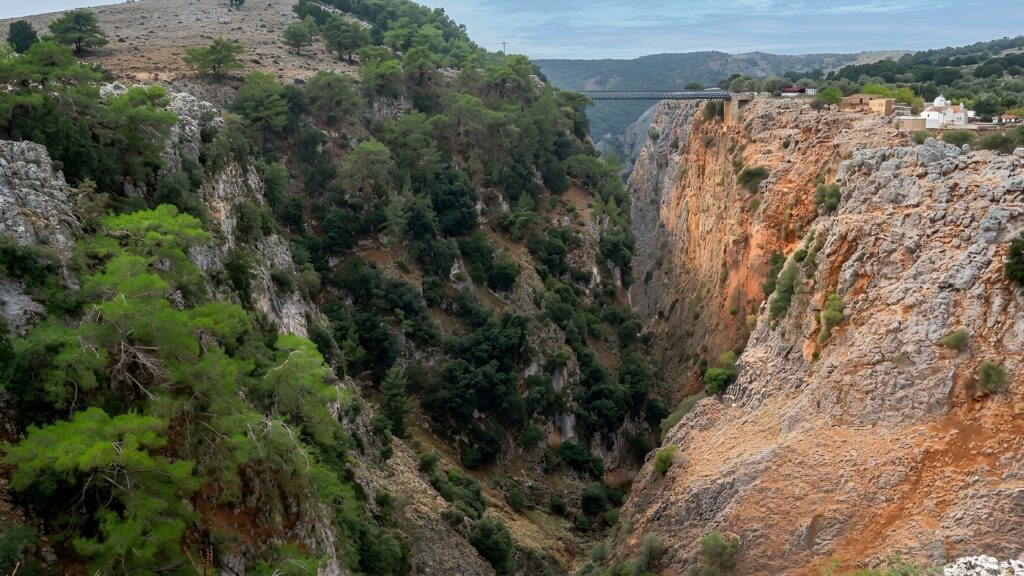
Aradena is not for families with young children. It is a proper gorge hike for people who want a more demanding day than Imbros provides.
The Aradena Gorge is now officially open and accessible to the public, following essential maintenance work on its access path. It is a unique route of outstanding natural beauty, blending the rugged scenery of the White Mountains with the history and traditional architecture of Aradena village.
The hike is of moderate difficulty and takes approximately 2.5 to 3 hours. A small conservation fee was introduced for Aradena Gorge in July 2025. Check current rates locally before you go.
Access from the north is possible via the old trail running along both sides of the gorge, or through the Livaniana settlement. From the south, access is from the well-known Marmara beach. From Marmara beach at the bottom, you can then continue by boat to Loutro or Hora Sfakion.
One additional feature worth mentioning: the Aradena bridge, which carries the road over the gorge near the abandoned village of Aradena, offers bungee jumping. It is the longest bridge in Greece used for the purpose. Whether that appeals to you or not, the view down into the gorge from the bridge is worth the stop.
Frangokastello: The Venetian Castle on the Sand
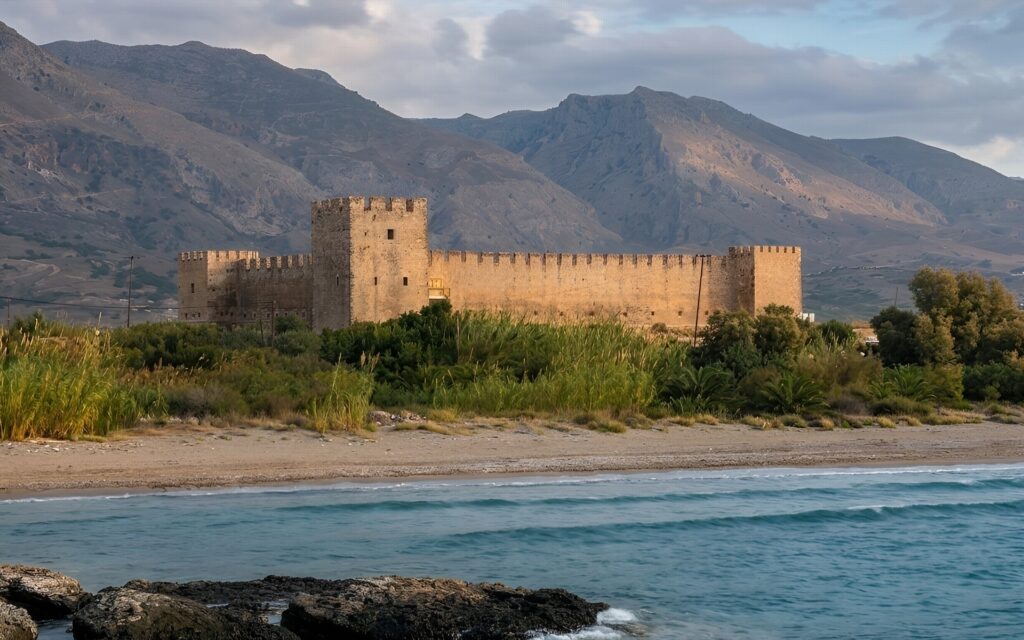
Frangokastello is a Venetian fortress built in 1371, located on a magnificent white sandy beach. It sits about 70 to 80 km southeast of Chania, roughly 90 minutes by car.
The castle was built by the Venetians in 1371 to 1374 as a garrison to impose order on the rebellious Sfakia region, to deter pirates, and to protect Venetian nobles and their properties. The Venetians named it the Castle of St. Nikitas after the nearby church.
The beach itself is long, wide, and sandy, with very shallow water that extends far from the shore. It is one of the calmest beaches on the south coast of Crete, protected from the dominant northwest winds by the mountains of the Sfakia massif behind it. Families with young children find it ideal. This is one of the few genuinely family-friendly sand beaches on the south coast.
The castle carries a remarkable legend. The castle is famously associated with the legend of the Drosoulites, ghostly shadowy figures said to appear in the mist near the castle walls in the days around May 17th each year, the anniversary of a battle in 1828 in which Greek fighters were massacred by Ottoman forces. The phenomenon, likely a type of atmospheric mirage, has been reported by hundreds of witnesses over the years and is taken seriously enough that the Greek state runs a scientific observation programme.
The traditional local specialty at Frangokastello is tsigariasto (sautéed kid or lamb), boureki (courgette and potato bake), and Sfakianes pites (sweet pies with local cheese).
Local tip: The castle opening hours and access have varied from season to season in recent years. Some visitors have found it closed on arrival. Check locally or via the Hellenic Ministry of Culture website before making it a primary reason for the trip. The beach needs no opening hours and is always worth it regardless.
Frequently Asked Questions
Is a rental car necessary for south Chania?
For most of the south coast destinations, yes. You can take buses from Chania to Paleochora, Sougia, or Hora Sfakion to start a trip along the coast. But buses are infrequent, schedules are limited, and many places in between are only reachable by car. If you want flexibility, a car is essential.

How do you get to Loutro from Chania?
From Hora Sfakion, the village can be reached in a short time by ANENDYK ferry. Drive or take the bus to Hora Sfakion, then take the boat. The drive from Chania to Hora Sfakion is about 73 km and takes roughly 80 minutes. Alternatively, there is a ferry service connecting Paleochora, Sougia, Agia Roumeli, Loutro, and Hora Sfakion that is a mandatory option for those coming from the western villages.
Is Imbros Gorge better than Samaria?
They are very different. Imbros is much easier: walking distance is 8 km, total descent is around 600 metres, and average walking time is about 2.5 hours. Samaria is 16 km and takes most people 4 to 6 hours. Imbros is the right choice for families, older walkers, or anyone short on time. Samaria is for those who want the full experience and have the fitness for it. Imbros is also open all year. Samaria is not.
Can you visit Sweetwater Beach without hiking?
Yes. The easiest and most popular route is by boat from Hora Sfakion. Regular water taxis and small ferries operate during the summer months, with the journey taking about 10 to 15 minutes. Most visitors take the boat in and the boat back. The hike is an option for those who want it.
What is the Drosoulites phenomenon at Frangokastello?
On certain years, around the 17th of May, local residents and visitors see the silhouettes of armed riders, black against the fortress walls. They appear as giant shadows just after dawn, moving in procession across the beach toward the fort. They are said to be the ghosts of 386 Greek rebels who defended the castle against the Ottomans and were killed there on the 17th of May 1828. These mysterious warriors are known as Drosoulites, or dew shadows, because they appear with the first morning dew on a moist, calm May morning.
How many days do you need for south Chania?
One day is enough for a single destination like Frangokastello or a drive to Hora Sfakion with the Imbros Gorge. Two to three days lets you take the ferry between villages and see Loutro and Sweetwater Beach properly. Five or more days, and you could spend time in Paleochora and Sougia, hike the Aradena Gorge, and still feel like you have only scratched the surface.
The Honest Notes
The south coast of Chania is genuinely wonderful, but there are things other travel sites do not tell you.
Warning: The roads on the south coast are serious mountain roads. Narrow, steep, with tight hairpin bends and occasional oncoming trucks. Many people who would describe themselves as confident drivers find these roads stressful. Take your time. Do not rush. If you are coming from Hora Sfakion via the Askifou plateau and the Imbros tunnel, the road is easier. If you are crossing the mountains via the old routes above Sougia or Paleochora, the road is harder. Know which road you are taking before you start.
Warning: There is no ATM in many south coast villages. Paleochora has one. The nearest cashpoint to Frangokastello is in Hora Sfakion. Loutro has none. Sougia has limited banking. Carry sufficient cash before you cross the mountains.
Warning: Frangokastello beach can suffer from irritating winds from the north, blowing a lot of sand. This is not rare. South Crete as a whole can be windy, particularly in early summer. If you are planning a beach day here, have a backup plan for a windy day.
Getting There
By car: From Chania, the main route south is via Vrysses and the Askifou plateau. This road is well-maintained and takes you to Hora Sfakion in about 80 minutes, or Frangokastello in around 90 minutes. For Paleochora, the route is via Tavronitis or through the mountain road via Elos and the Inachori villages, taking around 75 to 90 minutes. For Sougia, the road branches off near Paleochora and takes about two hours total from Chania.
By bus: KTEL buses run from Chania’s bus station to Hora Sfakion, Paleochora, and Sougia. Services are more frequent in summer. Check current timetables at the bus station or on the KTEL website. A bus to Hora Sfakion departs once or twice daily in summer and connects with the ANENDYK ferry schedule.
By organised tour: Several operators run day tours from Chania covering Imbros Gorge and Hora Sfakion. This is a reasonable option if you do not have a rental car and want to do the gorge without the logistics. <a href=”“>Book a guided tour from Chania.
Practical Information
| Ferry operator | ANENDYK Seaways (anendyk.gr) |
|---|---|
| Ferry season | April to October |
| Ferry routes | Paleochora, Sougia, Agia Roumeli, Loutro, Hora Sfakion |
| Imbros Gorge entrance | Small fee, payable at trailhead, open all year |
| Aradena Gorge entrance | Small fee introduced 2025, check locally |
| Frangokastello castle | Check current opening hours locally (varies by season) |
| Cash | Carry sufficient cash before crossing the mountains |
| Fuel | Fill up in Chania or Vrysses before heading south |
| Emergency number | 112 |
| Sfakia Police | 28250 91205 |
| Hora Sfakion Coast Guard | 28250 91292 |