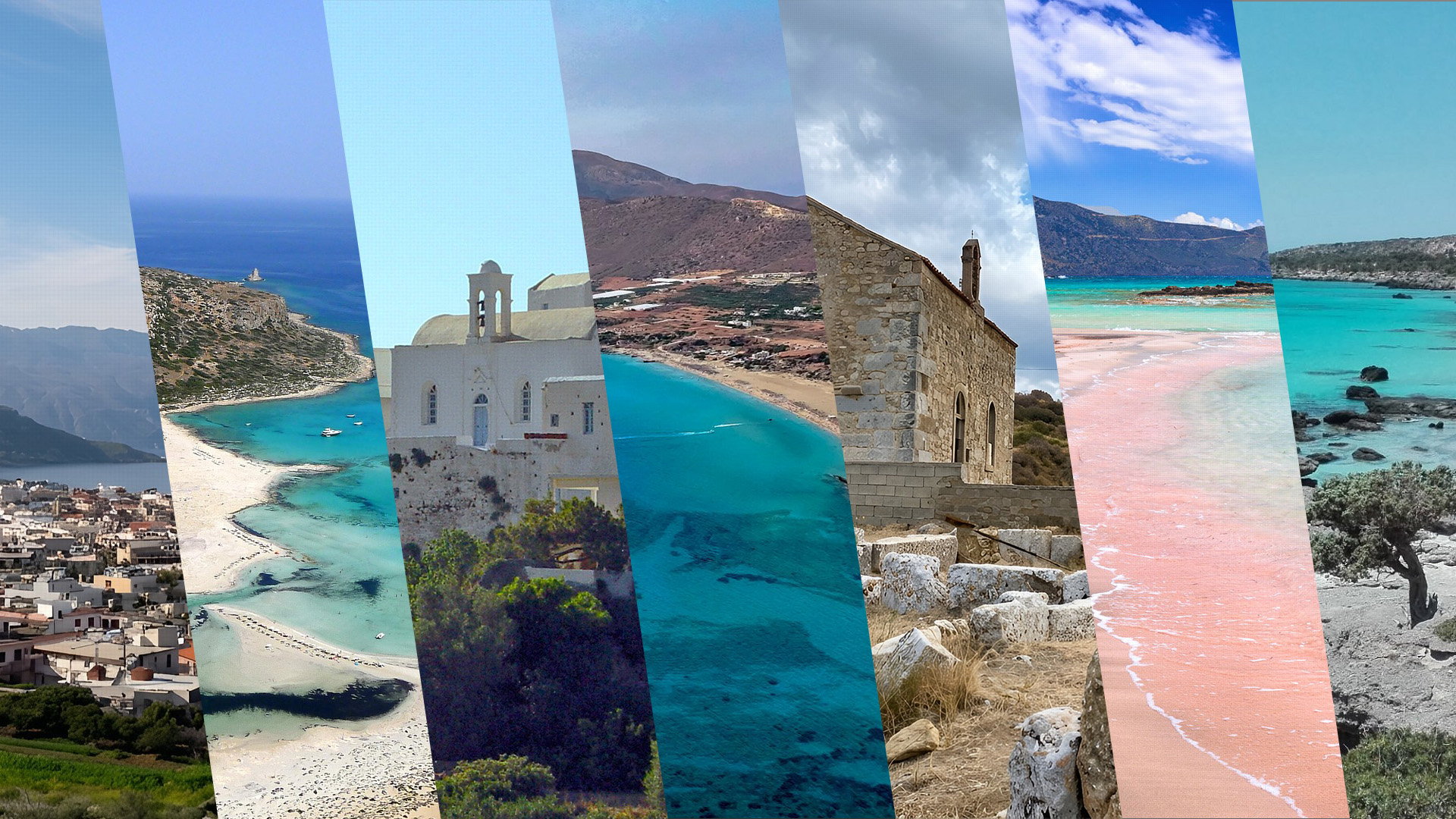
Kissamos far west Chania is one of the most rewarding corners of the entire island, and most visitors only scratch the surface. They do Balos on a boat day trip, tick it off the list, and drive back east. What they miss is everything else: Falassarna at sunset, the hilltop ghost-city of Polyrrenia, the cedar forest at Kedrodasos, and the monastery perched on a cliff above the Libyan Sea. This region alone could fill a week. It rarely does, because people are in a hurry.
Located 42 km west of Chania, Kissamos is the capital of Kissamos County. It goes by two names. Unlike many tourist destinations, Kissamos has not become overcrowded, and its economy is primarily focused on wine, olive oil, raki, and other agricultural products. That is the key thing to understand about this area. Tourism exists here, but it has not taken over. Kissamos is a Greek town that has embraced tourism but has not been spoilt by it. Use it as a base. Stay two nights minimum.
| Distance from Chania | Kissamos: 40 km, about 45 min. Balos: 56 km, 75 min. Falassarna: 59 km, 60 min. Elafonisi: 76 km, 90 min. |
|---|---|
| Best season | May, June, September, October |
| Rental car needed? | Yes, essential |
| Family friendly? | Yes, for most sites |
| Entrance fees | Small fees at some sites. Check official sites for current prices. |
Kissamos Town: What Kissamos Far West Chania Actually Looks Like
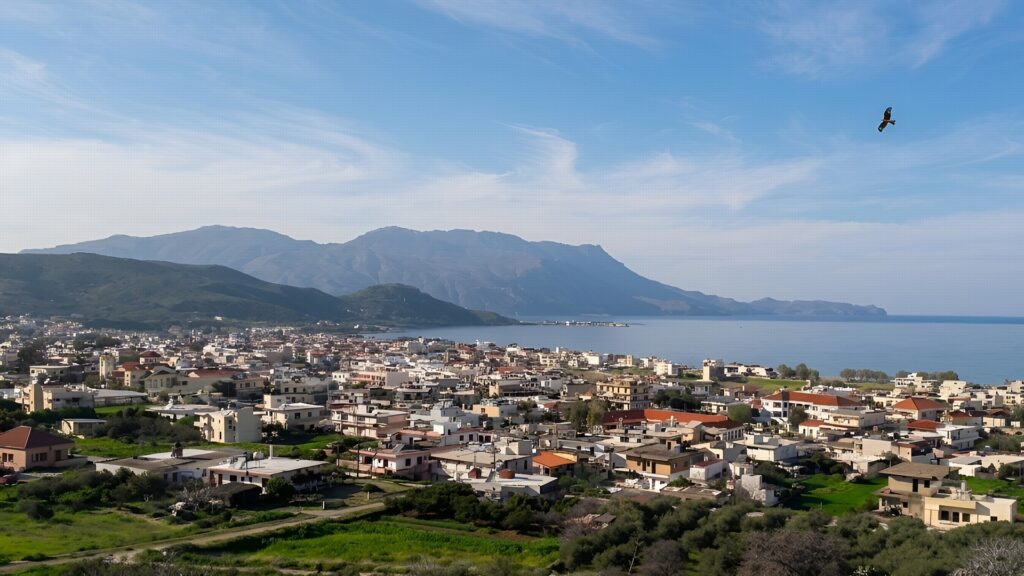
Most guides skip the town itself. Do not make that mistake.
The Archaeological Museum of Kissamos, situated in the central square Stratigou Tzanakaki, is a recently renovated listed building housing local archaeological finds from the Hellenistic and Roman periods, including very impressive mosaics. Special emphasis is placed on the Roman city of Kissamos, to which the upper floor is dedicated. It is small. One hour is enough. But those floor mosaics are genuinely remarkable, and most visitors walk past better examples in Chania’s museums without knowing what they are looking at. Seeing them here, in context, makes the whole region make sense.
The museum is open Wednesday to Sunday, 08:30 to 15:30, closed on Tuesdays. Check the official website for current entrance prices.
There is also a street called Skalidi that runs through the centre of the old section of the town with traditional arched buildings and small local tradesmen and shops. Walk it in the morning before you head to the coast. Get a coffee on the main square. There are tavernas along the waterfront that are genuinely local, not tourist traps.
The Kissamos port serves as the connection between Crete and the Peloponnese, linking to destinations such as Kythira, Githio, and Kalamata. This port is also the departure point for boats embarking on day-long voyages to the island of Gramvousa and Balos beach.
Local tip: If you are staying in Kissamos, the town beach of Mavros Molos is not the reason you are there, but it is perfectly fine for an evening swim after a day of driving. Park anywhere on the main street and walk down. No charge, no fuss.
Balos Lagoon and Gramvousa Island
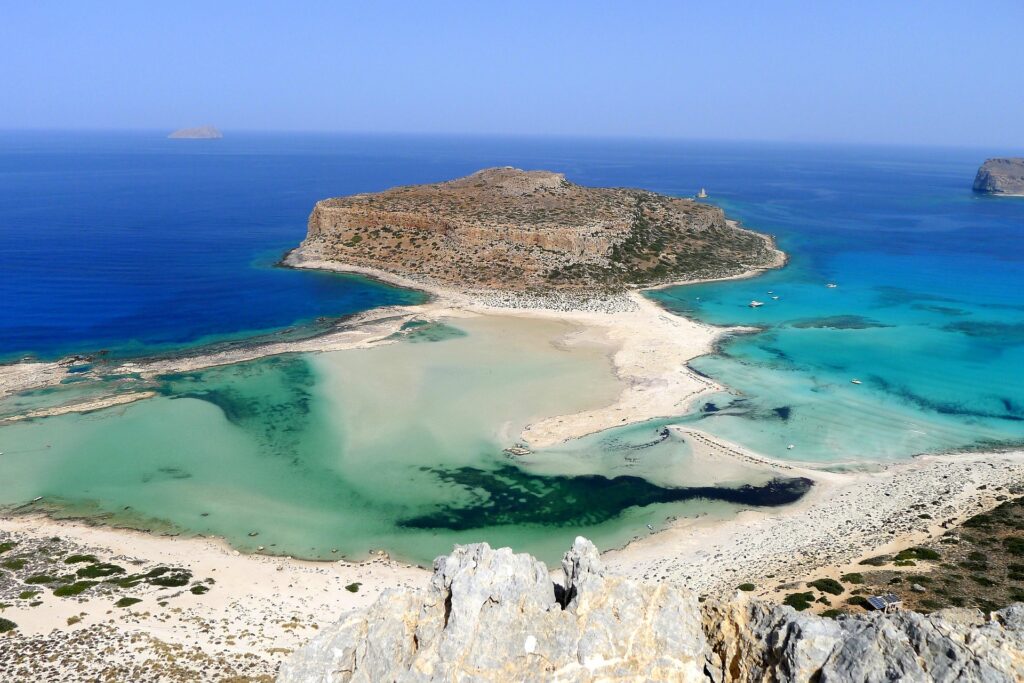
The lagoon of Balos is located approximately 56 km northwest of Chania and 17 km northwest of Kissamos, formed between Cape Gramvousa and the small Cape Tigani. It is the most photographed beach in Crete. Full stop. The lagoon has white sand and exotic vivid blue and turquoise waters. The sea is very shallow and warm, ideal for young children. In many places the sand has a pinkish colour, because of millions of crushed shells.
You can reach Balos two ways: by boat from Kissamos port, or by car along an unpaved road.
By Boat
Boats depart from Kissamos Port between 10:00 AM and 12:00 PM, with different companies offering a range of capacities. Particularly during high season, it is common for ferries to be fully booked in advance. Book ahead. The ferry journey takes about 75 to 80 minutes each way and includes a stop at Gramvousa, known as the “pirates’ island,” where you have time to swim or hike up to the Venetian fortress for panoramic views. Check the official website for current boat ticket prices.
By Car
The final stretch is an 8 km dirt road that is unpaved and can be quite rough. Many rental companies prohibit getting there by car due to the very rough dirt road. This is not a bluff. Check your rental agreement before you attempt it. If your contract excludes unpaved roads, and most do, you drive it uninsured.
From the parking area, there is a hike of about 20 to 30 minutes down to the beach. The walk down is not difficult. The walk back up in August heat is a different matter.
Warning: Most standard rental car agreements void your insurance on unpaved roads. The Balos dirt road will void yours. Either take the boat, or book a 4×4 jeep tour specifically for this trip. Do not drive a standard hatchback up there and expect your deposit back.
Key conservation measures in 2025 included reduced ferry services and a cap on visitor numbers. For a more peaceful experience, visit Balos during the quieter months of May, June, September, or October.
It is better to arrive in the morning, because around 11 am the boats land and the lagoon loses its charm. If you are going by car, leave at dawn.
One honest note: the seabed is muddy and the shallow waters facilitate the growth of microorganisms, which sometimes cause an unpleasant smell. It is not always present, but it happens in midsummer. The lagoon is still worth it. But do not go expecting the Caribbean.
Local tip: The view from the top of the car park, before you descend to the beach, is genuinely one of the best views in western Crete. Even if you arrive and the lagoon is crowded, stop at that viewpoint first. Give yourself five minutes. It is worth it for that alone.
Falassarna Beach
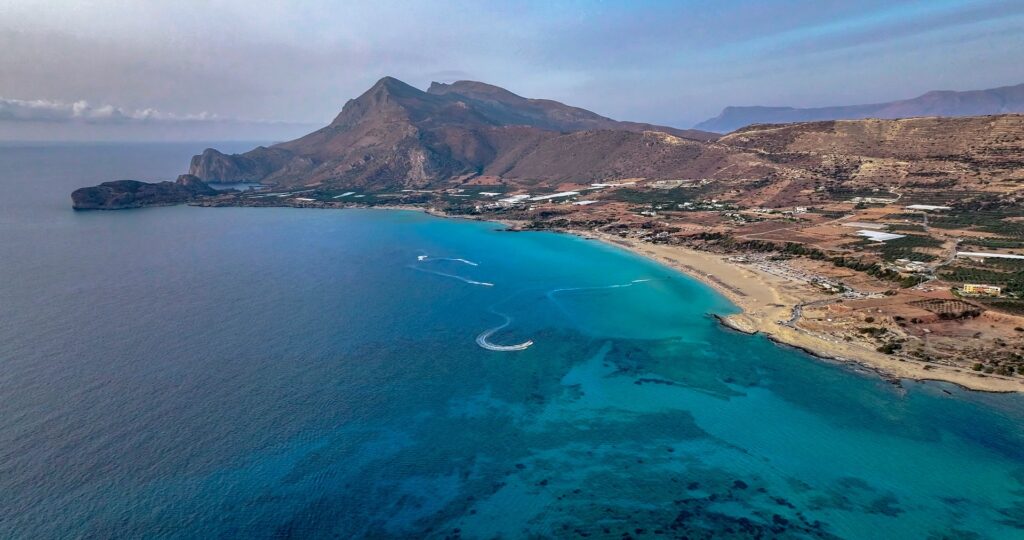
The beach of Falassarna is located 59 km west of Chania and 17 km west of Kissamos. It is a very different experience to Balos. Where Balos is famous for its drama and its view, Falassarna is famous for its sand, its sunsets, and the fact that it is genuinely swimmable.
Falassarna is a series of magnificent beaches on the northwest coast of Crete. The main Falassarna beach is a gorgeous 1 km stretch of golden sand, with plenty of facilities and activities. Falassarna actually consists of several beaches of variable size. All have fine sand and none feel crowded even on busy days because they are so wide and long.
The facing direction matters. The beaches face west, which makes it a wonderful place to watch the sunset from. That is what you come for in the afternoon. Arrive by 16:00. Stay for the light.
Some of the smaller beaches at the northern end have an almost end-of-the-earth, wilderness feel. There are also two natural sheltered pools protected by rocks, ideal for kids.
Be aware of two things. First, the wind. If you are here on a day that is not blowing from the west, which is rare in west Crete, you will be enchanted by the beach. Some reviewers mention the potential for strong winds, especially from the west, so check conditions before visiting. Second, the north section. Because of the rocks and secluded spots, this area is popular with nudists. If you are visiting with children, you may want to steer clear of that section.
Warning: Sunbed prices at Falassarna have increased significantly in recent years. Multiple visitors on TripAdvisor report paying well above the island average. If you want to avoid the cost, bring your own towel. There is free sand. A lot of it.
Just north of the main beach, there is history to look at. The ancient city of Falassarna was a key maritime city-state during the Hellenistic period. The ruins include remnants of harbour facilities, fortified walls, residential buildings, and a famous stone throne believed to have served a ceremonial function. Because of a sudden uplift of the west of Crete 1500 years ago, the harbour is now located inland. That is one of those facts that lodges in your memory. The sea was once here. Now it is fields.
The ancient site is typically open Tuesday to Friday, with standard summer hours from 9:00 am to 3:00 pm. Check the official site for current entrance fees and any changes.
Polyrrenia: The Hilltop City Most People Skip
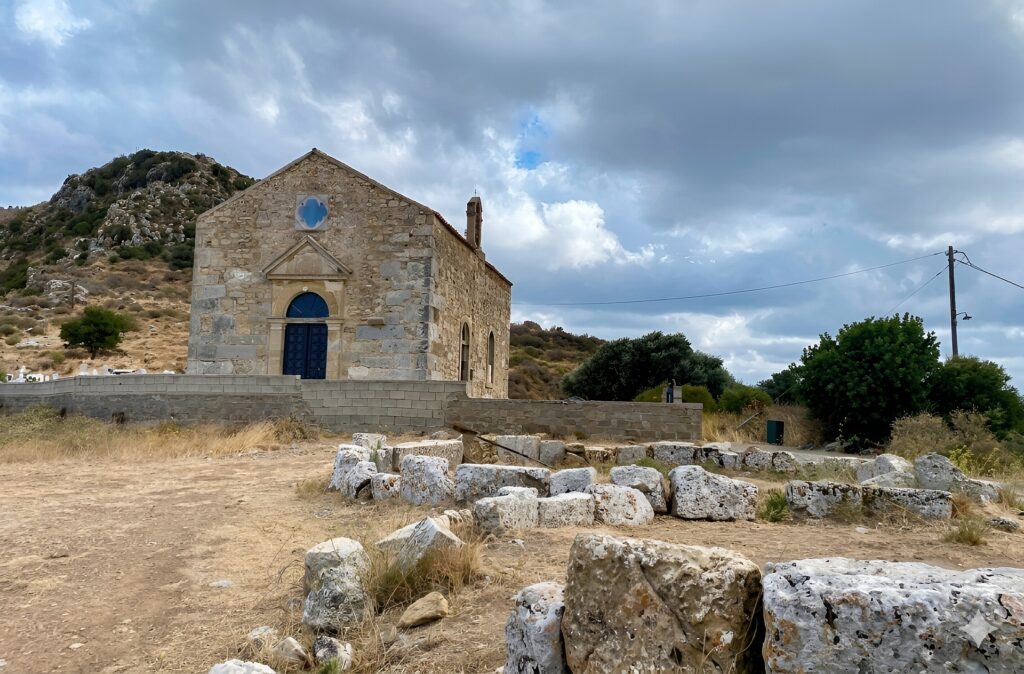
Ancient Polyrrenia is an open-air archaeological site in the Chania region of Crete, no more than 7 km from the modern town of Kissamos. Almost no one goes. The car parks at Balos are full. Polyrrenia has a small taverna at the top and goats.
Built strategically on a steep hill at an altitude of 481 metres, it was an important city-state that commanded views of two seas. After Kydonia (today’s Chania), it was the most important classical city in western Crete. It was a traditional enemy of Knossos, Kydonia, and the nearby harbour of Falassarna.
The ruins belong to different historical periods, showing continuity of settlement during the Hellenistic, Roman, and Byzantine periods. On the Acropolis stood the Temple of Artemis Dictynna, where a small church now stands, built in 1894 using material from the ancient temple. Ancient inscriptions are set into the church walls, and part of the ancient altar has been used in the Christian one. That is the kind of layering that makes Crete unusual.
The site is open-air with free access at any time.
Bear in mind it is quite a steep climb to the ancient acropolis. It is no problem for young, healthy people, but elderly visitors or those with health problems may find it difficult, especially in summer heat. Go early in the morning or late in the afternoon.
The coins minted by Polyrrenia are on display in the Archaeological Museum of Kissamos in town. Visit the museum first, then drive up to the site. It makes more sense that way.
Chrissoskalitissa Monastery and Elafonisi
The road south from Kissamos to Elafonisi takes about 90 minutes. It goes through the Topolia Gorge, past the chestnut village of Elos, and eventually drops down to the southwest coast. The drive is part of the experience.
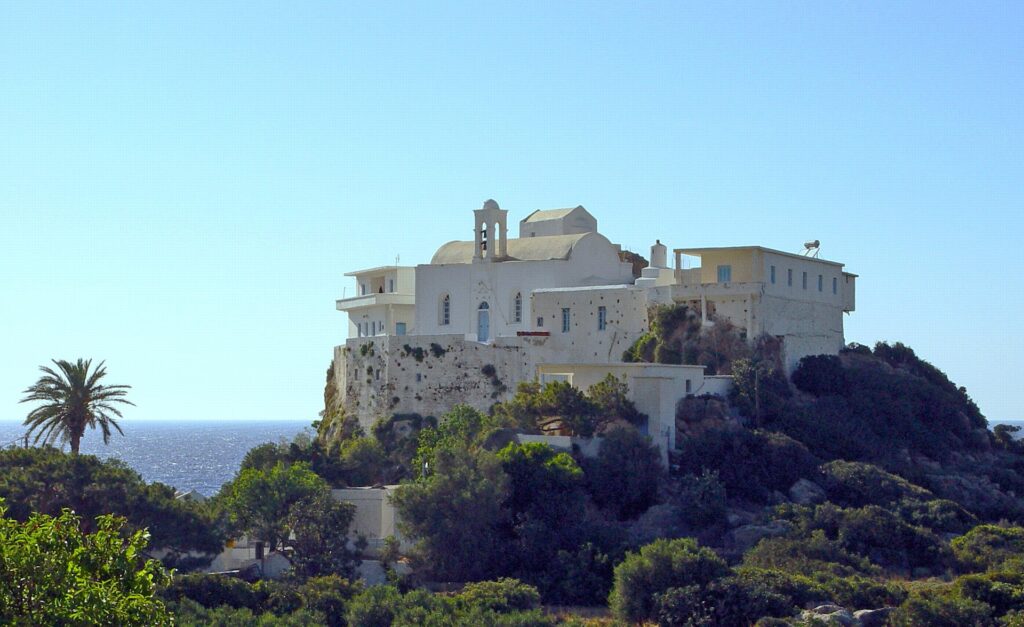
The Monastery of Panagia Chrissoskalitissa is on the southwestern side of Chania, perched on top of a 35-metre cliff, dedicated to the Holy Trinity and the Dormition of Mary. The name translates as “of the golden step,” as tradition has it that one of the 98 steps leading to the monastery is golden but only the devout can see it.
A single monk still resides in the monastery during the summer, and in recent years it has been lovingly restored. It is home to a small folkloric museum as well as the former nuns’ cells, whose furnishings speak of a frugal, Spartan way of life. It takes 20 minutes. Worth the stop.
Five kilometres further south is Elafonisi. Elafonisi, a protected nature reserve, received numerous international awards. In 2025, it was crowned the number one beach in the world by TripAdvisor, as featured in a CNN article. That ranking comes with consequences.
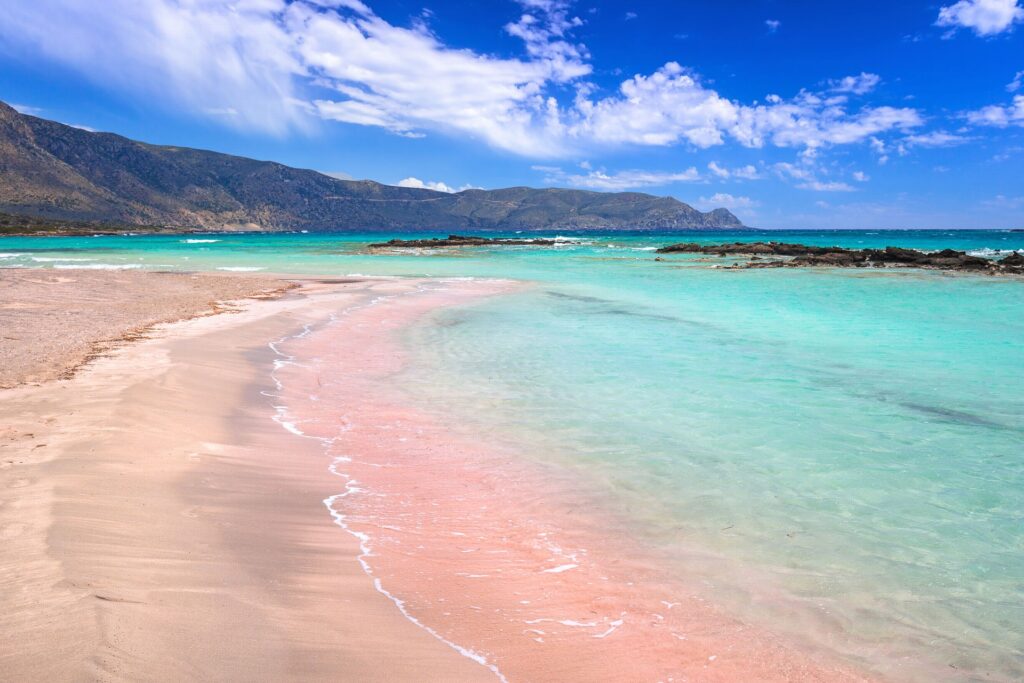
Elafonisi is located 76 km west of Chania. It is an oblong peninsula which often separates from the mainland by water, giving the impression of being a separate island. The sand is pinkish in many places, from millions of crushed shells.
Warning: In July and August, Elafonisi is genuinely overwhelmed. Buses from Chania, organised tours, rental cars, the works. By 10 am on a peak-season day, the beach is packed. Either arrive before 9 am, or go in May, June, September, or October. This is not an exaggeration.
It is strictly forbidden to remove any plants, animals, shells, or sand from the area. This is enforced.
Kedrodasos: The Beach Next Door
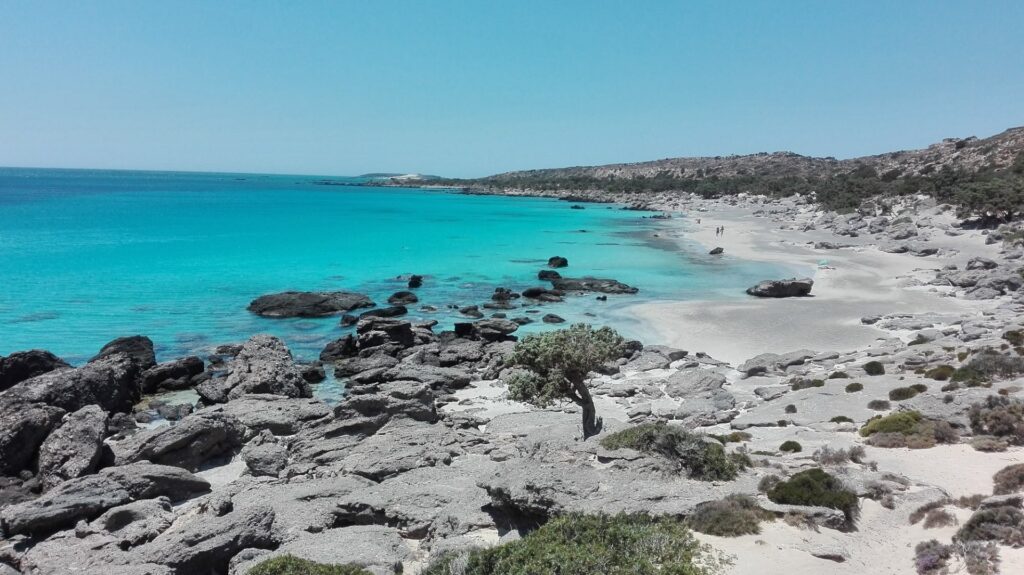
Kedrodasos beach lies on the southwestern coast of Crete, just a few kilometres from Elafonisi. Unlike Elafonisi, Kedrodasos remains largely untouched by mass tourism, offering a more authentic and quiet experience. The beach is famous for its dense cedar forest that grows right up to the sand, creating a rare coastal ecosystem.
There are three ways to reach Kedrodasos: by following a 40-minute coastal hiking trail from Elafonissi, by driving via a dirt road and then hiking down a short but steep path to the beach, or by joining a private boat trip.
Most people walk from Elafonisi. The trail takes about 40 minutes each way. Bring your own supplies. There are no shops or restaurants on the beach. Parking is limited and the beach fills up during peak hours.
Local tip: If Elafonisi is overwhelmed when you arrive, do not give up. Walk the coastal trail to Kedrodasos instead. Forty minutes on foot. You will likely find a fraction of the people, the same quality of water, and cedar trees growing to the shoreline. It is often the better day.
The Honest Notes
This region is the best of western Crete. It is also the most logistically demanding. A few things that other guides do not tell you:
Warning: Do not try to combine Balos and Elafonisi in a single day by car. They are on opposite sides of the peninsula and the roads between them are not fast. People attempt this every summer and spend most of the day in a car on mountain roads. Pick one. Do the other tomorrow.
Key conservation measures introduced in 2025 at Balos included reduced ferry services and a cap on visitor numbers. Plans for shuttle buses from Kaliviani are also in place to limit car traffic. This area is under pressure. Some regulations may tighten further.
If you do not like crowds, avoid visiting Balos in July and August. The same is true for Elafonisi, Falassarna and, increasingly, Kissamos town itself on peak weekends.
The road to Balos by car is genuinely risky for standard rental vehicles. Multiple visitors have reported rattling or damage to their rental car after driving the route. Take the boat, or book a 4×4 jeep tour. It is not worth arguing with a rental company over your deposit.
Before You Go
- Water: Carry at least 1.5 litres per person. At Balos by car and at Polyrrenia there are no water sources on the route.
- Shoes: Proper footwear for any of the hikes. Flip-flops are dangerous on the Balos descent and the Polyrrenia acropolis path.
- Sun: Balos, Polyrrenia, and the Falassarna ruins have almost no shade. Hat and high-factor sunscreen are essential.
- Cash: Some entrance points and beach facilities do not accept cards. Bring small bills.
- Monastery dress code: Chrissoskalitissa requires covered shoulders and knees. Carry a scarf or sarong.
- Timing: Do not plan Elafonisi or Balos for a Tuesday if combining with the Kissamos museum or the Falassarna ruins, as these close or have reduced hours on certain days.
Getting There
By Car
The E75 national road runs west from Chania directly to Kissamos. It is fast, well-surfaced, and takes about 40 to 45 minutes. From Kissamos, branch roads lead north to Balos (via Kaliviani), west to Falassarna (via Platanos), and south to Polyrrenia (7 km inland), Chrissoskalitissa, and Elafonisi (via Topolia Gorge and Elos). A rental car is not optional in this region. There is no Uber or Bolt in Crete.

By Bus
KTEL buses run from Chania bus station to Kissamos several times daily. The KTEL public bus runs daily from Chania to Elafonisi during the tourist season, April to October. The trip takes slightly over two hours. A bus also runs to Falassarna, with four departures a day in the shoulder seasons of May, June, September, and October. For Balos and Polyrrenia, there is no practical bus option. You need a car or a guided tour.
By Organised Tour
Boat tours to Balos and Gramvousa depart daily from Kissamos port during the season. Tours from Chania city are also available, collecting from hotels. These are a solid option if you do not want to worry about the dirt road.
Practical Information
| Kissamos Archaeological Museum | Closed Tuesdays. Open 08:30 to 15:30. Small entrance fee. Tzanakaki Square. |
|---|---|
| Balos by boat | Daily ferries from Kissamos port. Book in advance in high season. Check operator websites for current timetables and prices. |
| Balos by car | Unpaved road. Most rental car insurance void on this road. Small entrance fee at toll point plus parking fee. |
| Falassarna ancient ruins | Open Tuesday to Friday. Check official sites for current hours and fees. |
| Polyrrenia | Open-air site. Free. Accessible at any time. |
| Chrissoskalitissa Monastery | Small entrance fee. Covered clothing required. |
| Elafonisi | Protected Natura 2000 site. No sand or wildlife removal. |
| Kedrodasos | No facilities. Bring everything you need. |
| Petrol | Fill up in Kissamos before heading to Balos, Falassarna, or Elafonisi. There is nothing out there. |
Local tip: The drive back from Elafonisi via the Topolia Gorge at late afternoon, when the light falls sideways through the gorge walls and the road drops into shadow, is one of those drives you do not plan for but end up remembering longer than the beach. Do not rush it. Stop at the first taverna you see in Elos, eat whatever they are cooking that day, and take the long way home.