Chania on a budget is more achievable than most travel sites will tell you. This is one of the most beautiful corners of the Mediterranean, and yes, high summer prices have crept up in recent years. But the bones of the place are still generous to travellers who plan carefully. Free beaches. Free archaeology. A public bus network that actually works. Tavernas where locals eat for a fraction of the tourist-facing prices on the waterfront.
The trick is knowing where the money goes unnecessarily and where it does not need to go at all. Most tourists in Chania spend too much on the wrong things and miss the best things entirely. A sunrise walk through the old town costs nothing. The same view from a harbour-side cocktail bar costs a lot. This guide is about choosing the former more often than the latter.
This is not a guide for people who want to sacrifice comfort. It is for people who want to spend their money on the things that are actually worth it.
| Best season | May, June, September, October |
|---|---|
| Who is this for | Travellers on a limited daily budget |
| Rental car needed? | Recommended for day trips, not essential in the city |
| Family friendly? | Yes |
| Budget level | Low to moderate |
What Budget Actually Means in Chania
Before anything else, it helps to be honest about what budget travel in Chania looks like in practice. This is not Southeast Asia. You are in the European Union, on a popular Greek island, in peak season. Accommodation, transport and food have real costs.
That said, there is a significant gap between what tourists typically spend and what they need to spend. The old town waterfront is the most expensive kilometre in western Crete. Walk two streets back and prices drop noticeably. Walk ten minutes to the Splantzia neighbourhood and you are eating where people who actually live here eat.
The biggest variable is the rental car. If you want to explore beyond the city, you need one. Public buses cover some routes well but not all. A rental car shared between two or three people, booked in advance for the shoulder season, is very affordable per person. In July and August, book at least three to four weeks ahead or prices spike.
Local tip: Book accommodation slightly outside the old town, in areas like Halepa or Koum Kapi, rather than inside the Venetian quarter. You pay considerably less, you are still walkable to everything, and you avoid the noise on weekend nights in high summer.
Free Things to Do in Chania That Are Actually Worth Doing
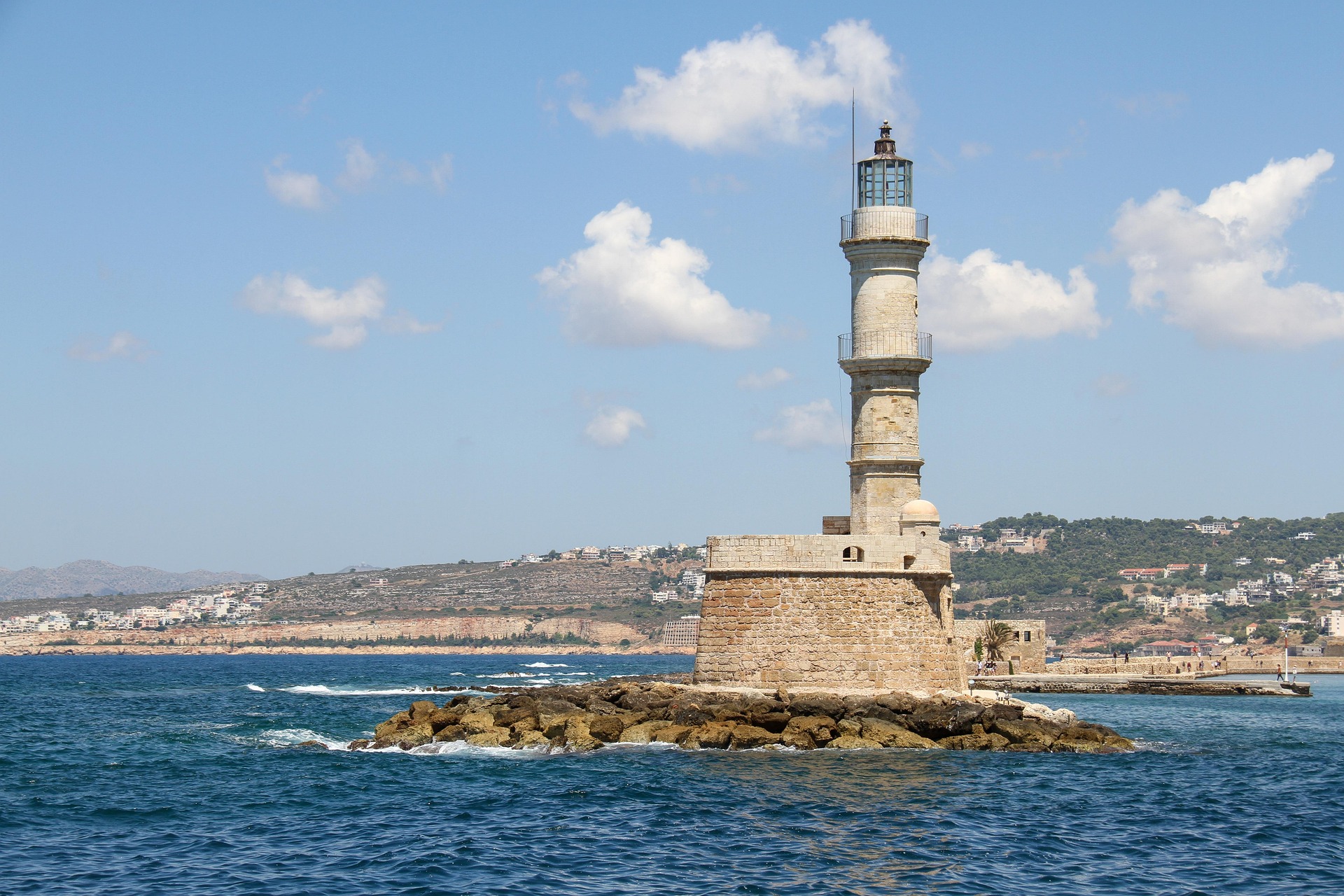
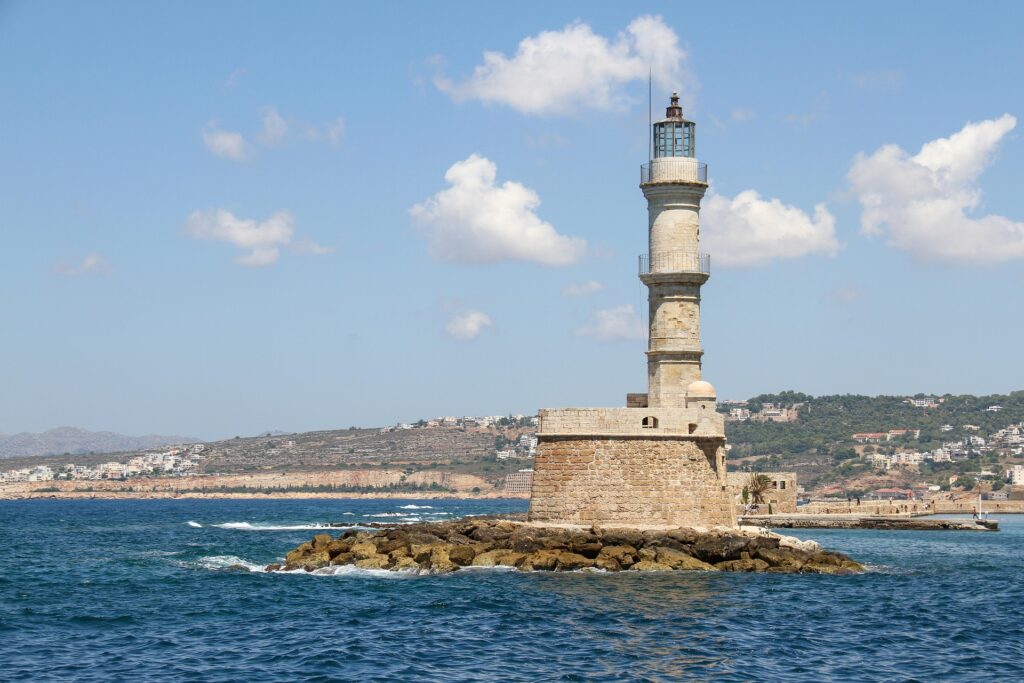
The old town of Chania is best experienced on foot, early in the morning or in the evening. Before 9am, the streets around the Venetian harbour are quiet. The lighthouse, the mosque, the Venetian loggia, the Egyptian lighthouse. These are among the most atmospheric streets in Greece and they cost nothing to walk through.
The Archaeological Museum of Chania charges a small entrance fee and is worth it, particularly if you have any interest in Minoan Crete. Check the official website for current prices and opening times. The Maritime Museum at the harbour is similar. Neither will take more than an hour or so.
The municipal market, known as the Agora, is a covered market hall built in the early 20th century in a cruciform shape. Go in the morning when it is active. This is not a tourist attraction. It is a working market where locals buy cheese, olives, herbs and fish. It costs nothing to walk through and tells you more about Crete than most paid experiences.
The beaches closest to Chania city, Nea Chora and Koum Kapi, are free, have showers and toilets, and are a 10-minute walk from the old town.
The Venetian fortifications and the old harbour itself require no entry fee. The lighthouse at the end of the breakwater is a 15-minute walk from the harbour square and gives you the best view back over the city. Go at sunset. The entire walk is free.
Budget Eating in Chania
The waterfront restaurants charge what the waterfront allows them to charge. That is fair enough. But you do not have to eat there.
The Splantzia neighbourhood, a 10-minute walk from the harbour, is where you will find smaller family-run places that serve Cretan food at reasonable prices. Look for places with handwritten menus, paper tablecloths, and where you can hear Greek being spoken at most of the tables. These are generally your better options.
For the cheapest proper lunch in the city, look for a tyropitadiko or a bakery selling spanakopita, tiropita, or bougatsa. A piece of bougatsa, the warm semolina pastry filled with cream and dusted with icing sugar, is a Chania institution and costs very little. The best-known place is near the market. Go in the morning, before 10am.
Local tip: Supermarkets in Chania are well-stocked and cheap. For a beach day, buying provisions the evening before, bread, local cheese, olives, tomatoes, fruit, is a far better meal than most beach taverna food and costs a fraction of the price.
Fresh produce markets and the permanent stalls inside the Agora sell local cheeses, olive oil, and honey at prices that are a fraction of what you pay at souvenir shops. If you have access to a kitchen or even just want to bring things home, this is where to shop.
Chania on a Budget: The Best Free and Cheap Beaches
This is where budget travel in Chania genuinely thrives. The coastline around western Crete is extraordinary and much of it is free.
Kalathas and Tersanas on the Akrotiri Peninsula are small, relatively sheltered coves about 20 minutes from Chania. Both are free to access. Kalathas has a small beach bar if you want a coffee, but no obligation to use it.
Marathi, also on Akrotiri, is a wider sandy beach and even quieter. Free parking, no entrance fee, clear water.
For the dramatic beaches further west, you do need a car. Falassarna is about an hour from Chania and is one of the longest and widest beaches on the island. It is a free beach. No entrance fee. Some sunbed areas for hire, but wide stretches where you can put your own towel down at no cost. Elafonisi has a small entrance fee in high season, check the official website for current prices, but remains among the most extraordinary coastal landscapes in Greece.
Warning: In July and August, beaches like Elafonisi and Balos are genuinely very crowded. If you are visiting on a budget and sharing a car between a few people, go early, before 9am, or late afternoon. The experience is substantially better and the parking is easier.
Seitan Limania on Akrotiri is free to access but requires a steep, rough descent on foot. Do not attempt it in sandals. The water is exceptional.
Getting Around Without Spending a Fortune
Within the city of Chania, you do not need a taxi. The old town is walkable and most of what you want to see is within 20 minutes on foot from any point in the centre.
The public bus service, KTEL, connects Chania to several key destinations at low cost. The main bus station is just outside the old town on Kidonias Street. There are regular services to Rethymno, Heraklion, Kissamos, and several other towns. For reaching the western beaches like Falassarna, bus connections exist but are infrequent. Check the KTEL Chanion website for current timetables before you plan around them.
For a day trip to Elafonisi or Balos, a shared rental car split between two or three people is cheaper than a taxi and more flexible than an organised tour. If you prefer not to drive, organised day trips run from Chania to both locations.
Warning: There is no Uber or Bolt in Chania. Taxis are the only option if you are not driving. For airport transfers in a group, a taxi is reasonable. For daily use around the city, it adds up fast.

A Suggested Budget Day in Chania
Start early. Walk the old town harbour before 8am when it is quiet. Have bougatsa at the market for breakfast. Walk out to the lighthouse along the breakwater.
Mid-morning, drive or take a taxi to one of the Akrotiri beaches. Kalathas, Marathi, or Tersanas. Pack your own food. Swim until early afternoon.
Back in the city, walk through the Agora in the afternoon. Browse without buying. Have a Greek coffee at a kafeneion somewhere off the main tourist drag.
For dinner, look for a taverna in Splantzia or further up the hill behind the harbour. Order the daily specials, usually the most affordable items and often the freshest. A carafe of house wine is almost always good value in Crete.
The shoulder seasons, May, June, September and October, offer meaningfully lower prices across accommodation, car hire and flights, with weather that is excellent for outdoor activity.
The Honest Notes
Warning: Budget accommodation in the old town itself can mean thin walls, no air conditioning, and significant noise on Friday and Saturday nights in high season. Read recent reviews carefully. A slightly quieter location 10 minutes from the harbour often provides a much better night’s sleep for less money.
The cheapest weeks to visit Chania are early May, late June (before 20th), the first two weeks of September, and October. In July and August prices rise across all categories and roads to popular beaches are genuinely congested by mid-morning.
If you are flying in from Northern Europe or North America, the flight is likely your largest single expense. From the UK, connections via Athens or direct charters to Chania Airport (CHQ) are usually the cheapest routes. Budget airlines including Ryanair and easyJet operate seasonal routes. Book as far ahead as possible.
Before You Go
- Cash: many smaller tavernas and market stalls still prefer or require cash. Bring euros or withdraw at an ATM on arrival.
- Water: tap water in Chania is safe to drink but has a strong mineral taste. A refillable bottle and a filter or large supermarket water is more practical for daily use.
- Sun: June to September the sun is intense. Hat and high-SPF sunscreen are essential, especially on open beaches with little shade.
- Booking: accommodation and car hire should be booked in advance for July and August. Leaving it late in peak season significantly increases cost.
- Language: English is widely spoken in Chania, especially in the tourist areas. A few words of Greek go a long way in local tavernas.
Getting There
Chania is served by its own international airport, Ioannis Daskalogiannis Airport (CHQ), located on the Akrotiri Peninsula about 15 kilometres from the city centre. In summer, direct charter and low-cost flights operate from many northern and western European cities. From North America, connections are typically via Athens.
From the airport to the city, the public bus connects to the city centre for a small fare. Check the KTEL website for current timetables. A taxi from the airport to the old town is a fixed-rate fare. If you are hiring a car, most of the major car hire desks are at or near the airport.
If you are coming from Heraklion, the KTEL bus between the two cities runs regularly and takes approximately two to two and a half hours. It is one of the better value intercity bus routes in Crete.
Practical Information
| Airport | Chania Airport (CHQ), Akrotiri Peninsula |
|---|---|
| Airport to city | 15km, bus or taxi |
| Best months for budget | May, June, September, October |
| Buses | KTEL Chanion, main station on Kidonias Street |
| Rental car | Recommended for day trips beyond the city |
| ATMs | Available throughout the city centre |
| Supermarkets | Several within the city, open daily |
| Emergency number | 112 (EU standard) |
Combine With
If you are spending several days in Chania on a budget, these nearby destinations add value without significant cost.
Georgioupolis and Lake Kournas are about 40 kilometres east of Chania. Georgioupolis has a long free beach. Lake Kournas is the only freshwater lake in Crete and is free to walk around. A good half-day combination.
Kissamos is about 40 kilometres west and is a working town rather than a tourist one. The museum there has excellent Minoan finds. The town beach is free and rarely crowded.
The Apokoronas villages, roughly 30 kilometres east, offer traditional Cretan hill village atmosphere without tourist infrastructure. Drive through Vamos or Gavalochori, stop for a coffee, walk around. It costs very little.
Akrotiri Peninsula is the closest rewarding driving loop from Chania. Gouverneto Monastery, the old Venetian airport, the war cemetery, and several free beaches are all within 30 minutes of the city.
Frequently Asked Questions
Is Chania expensive compared to other Greek destinations?
Chania is not the cheapest destination in Greece, but it is not the most expensive either. Athens and Mykonos are significantly pricier for accommodation. The key in Chania is avoiding the waterfront tourist trap restaurants and booking accommodation and car hire well in advance. Shoulder season visitors will find it genuinely affordable.
What is the cheapest way to get around Chania?
On foot within the city. The old town, the market, the harbour and the beaches at Nea Chora and Koum Kapi are all walkable from most central accommodation. For day trips beyond the city, a shared rental car is the most cost-effective option.
Can you do a day trip to Elafonisi cheaply?
Yes, if you have a rental car shared between two or more people. The beach itself has a small entrance fee in peak season but no other costs. Bring your own food and water. Alternatively, organised day trip buses run from Chania, which removes the need for a car.
Which beaches near Chania are free?
Most of them. Nea Chora, Koum Kapi, Kalathas, Tersanas, Marathi, Falassarna and the majority of beaches on the Akrotiri Peninsula have no entrance fee. Elafonisi charges a small seasonal fee. Balos, if you take the boat, has a boat ticket cost. If you drive to Balos, check whether a parking or access fee applies at the current time.
Is it worth visiting Chania in May or October for the budget?
Strongly yes. Prices for accommodation and car hire are noticeably lower than July and August. The weather in May and early June is warm and mostly reliable. October is excellent, cooler than summer but still very swimmable until mid-month. The beaches are far quieter and the overall experience is more relaxed.
Do I need to tip in Chania restaurants?
Tipping is not obligatory in Greece but leaving small change or rounding up is common practice. In tourist-facing restaurants you may feel more pressure. In local tavernas, leaving a few euros on a larger bill is appreciated but entirely optional.
Getting There
See the practical section above for airport logistics. Within western Crete, the main routes relevant to budget travellers are the Chania to Kissamos road (westward along the north coast), the Chania to Sfakia road (south over the White Mountains), and the Chania to Georgioupolis road eastward. All are well-surfaced and straightforward to drive in a standard rental car.
Local tip: The KTEL bus between Chania and Rethymno runs frequently, is cheap, and the route along the northern coast is genuinely scenic. If you are doing a wider Crete itinerary without a car, this connection is the one that works well. The bus stops are clearly signed and the journey takes just over an hour. It is one of those practical things that actually delivers an unexpectedly good experience.